
Wednesday, November 11, 2026Nov 11

Dissidents free but questions hang over US-Cuba deal

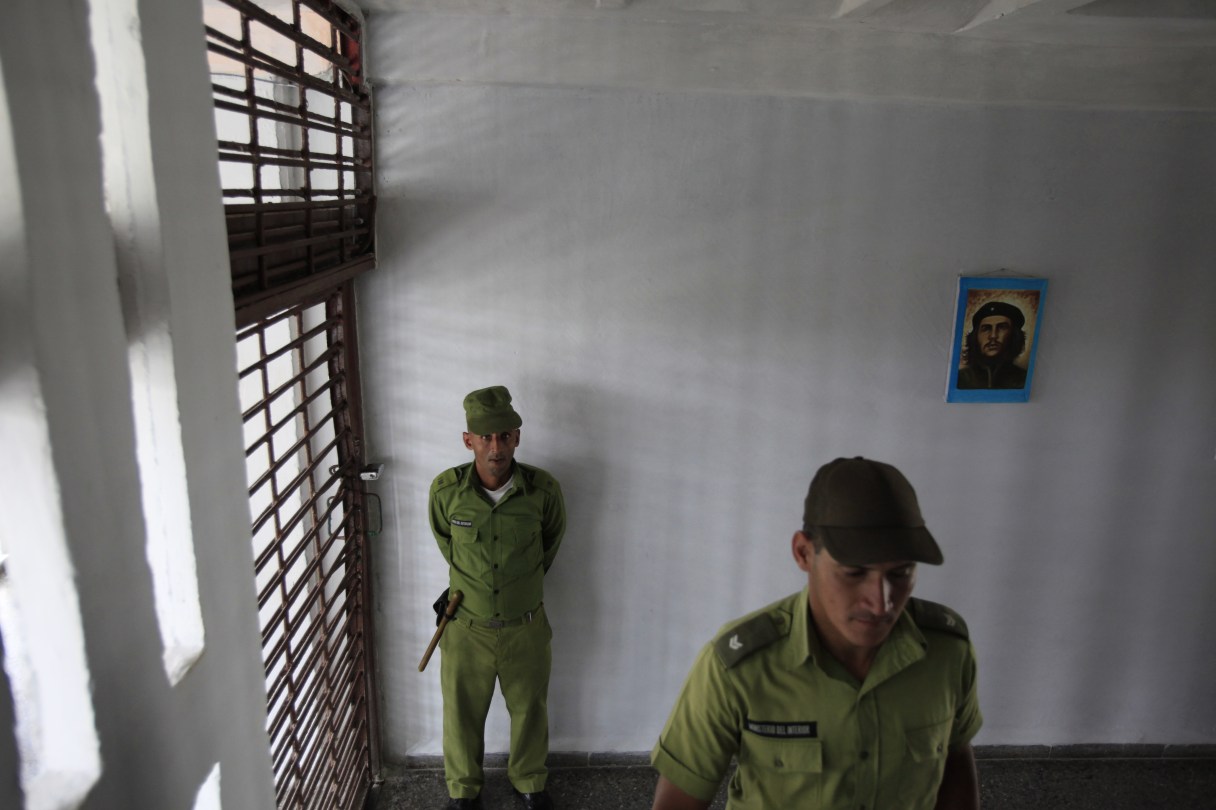
FILE - In this April 9, 2013 file photo, military guards stand in a room decorated with an image of revolutionary hero Ernesto "Che" Guevara outside prison cells at the Combinado del Este prison during a media tour in Havana, Cuba. Three Cuban political prisoners were freed Wednesday, Jan. 7, 2015 and a leading human rights advocate said he believed their liberation was part of a U.S.-Cuban deal to release 53 dissidents. The three freed prisoners are Enrique Figuerola Miranda, Diango Vargas Martin and his twin brother Bianko Vargas Martin, according to Cuba's Human Rights and Reconciliation Commission. (AP Photo/Franklin Reyes, File)
FILE - In this April 9, 2013 file photo, military guards stand in a room decorated with an image of revolutionary hero Ernesto "Che" Guevara outside prison cells at the Combinado del Este prison during a media tour in Havana, Cuba. Three Cuban political prisoners were freed Wednesday, Jan. 7, 2015 and a leading human rights advocate said he believed their liberation was part of a U.S.-Cuban deal to release 53 dissidents. The three freed prisoners are Enrique Figuerola Miranda, Diango Vargas Martin and his twin brother Bianko Vargas Martin, according to Cuba's Human Rights and Reconciliation Commission. (AP Photo/Franklin Reyes, File) FILE - In this April 9, 2013 file photo, military guards stand in a room decorated with an image of revolutionary hero Ernesto "Che" Guevara outside prison cells at the Combinado del Este prison during a media tour in Havana, Cuba. Three Cuban political prisoners were freed Wednesday, Jan. 7, 2015 and a leading human rights advocate said he believed their liberation was part of a U.S.-Cuban deal to release 53 dissidents. The three freed prisoners are Enrique Figuerola Miranda, Diango Vargas Martin and his twin brother Bianko Vargas Martin, according to Cuba's Human Rights and Reconciliation Commission. (AP Photo/Franklin Reyes, File)

HAVANA (AP) – Three dissidents were free Thursday after being abruptly released in what a leading human rights advocate said was part of Cuba’s deal with Washington to release 53 members of the island’s political opposition.

Neither the Obama administration nor the Cuban government spoke publicly about the releases, adding to the unanswered questions swirling around the deal and the broader detente that the two countries announced Dec. 17.

President Barack Obama ended five decades of official U.S. hostility toward communist-governed Cuba by announcing that, along with an exchange of men held on espionage charges, he would move toward full diplomatic ties, drop regime change as a U.S. goal and use his executive authority to punch holes in the longstanding trade embargo.

His Cuban counterpart, Raul Castro, welcomed the announcement but said detente would not lead Cuba to change its single-party political system or centrally planned economy.

U.S. officials told reporters on Dec. 17 that Cuba had agreed to free the 53 detainees, considered by Washington to be high-priority political prisoners. Castro said they would be released in “a unilateral way.” But since then, neither Cuba nor the United States has publicly identified anyone on the list or announced they have gone free.