
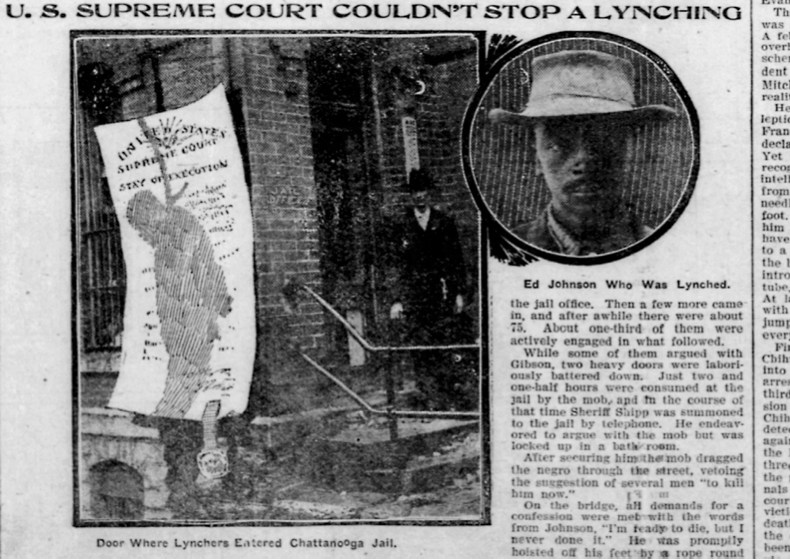
Editor’s note: This is the second of three parts. Read the first part here.
On the evening of Jan. 23, 1906, Nevada Taylor, a 21-year-old white woman, was raped and beaten as she walked home from the trolley stop in St. Elmo.
News of the crime spread rapidly through the community. The Chattanooga News in front page headlines described the assailant as a “Negro Fiend.” Miss Taylor told Sheriff Joseph Shipp she was attacked from behind and choked into unconsciousness, did not see her assailant, and could not say whether he was black or white.
Two days passed without an arrest. The uneasy community demanded action from the sheriff and County Judge Samuel McReynolds. On Jan. 25, a $375 reward was posted for anyone who could identify the attacker.
On Jan. 26, Will Hixson, a white man, identified Ed Johnson as the man he saw with a strap in his hand near the scene of the crime that evening.