
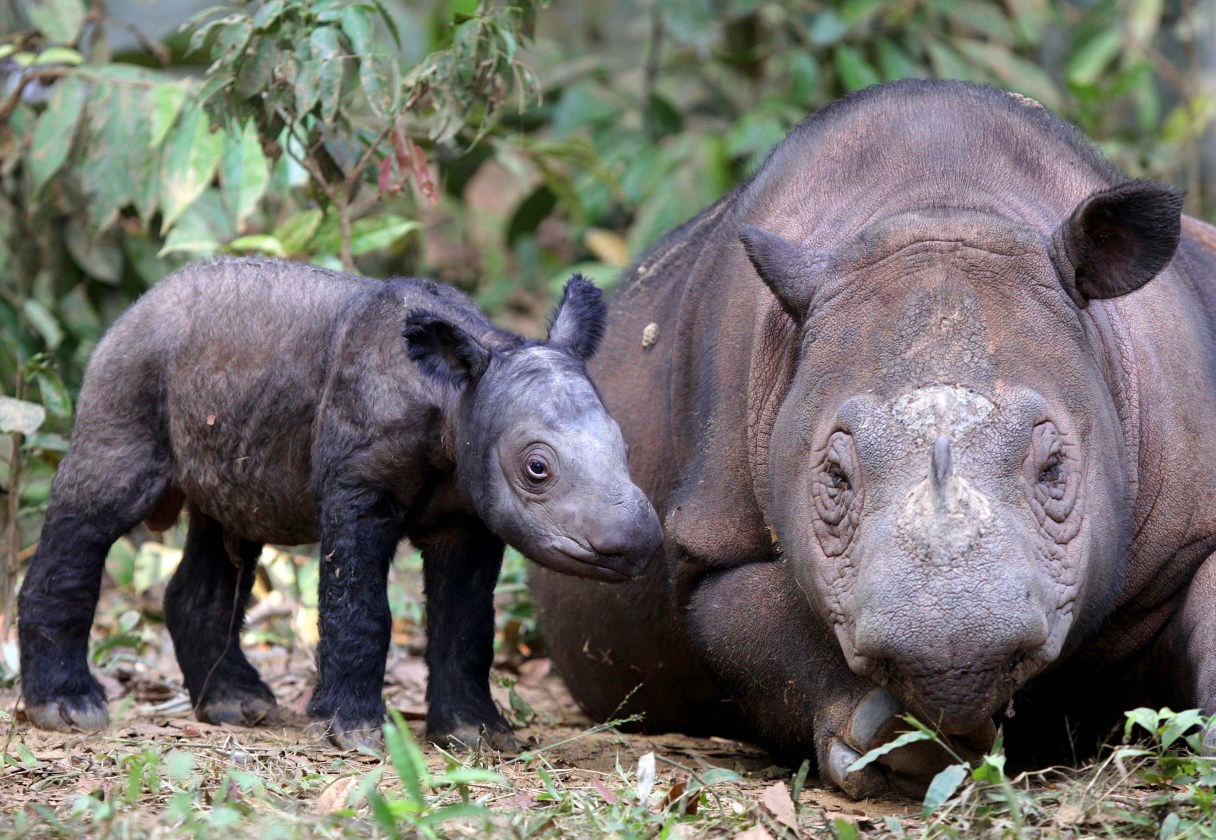
WASHINGTON — In Africa, the average cost of an AK-47 is a little over $300. A single rhinoceros horn – reputed (falsely) in Asia to have cancer-healing properties – can bring $300,000 on the black market. So a criminal gang or a terrorist group knows what a dead rhino is worth: several hundred assault rifles (less the commission owed middlemen).
So what is a rhino worth to us? At one level, we value rhinos because we want endangered species and wild places to exist, even if we never see them. Respecting and preserving nature reflects an ethical impulse.
 Michael Gerson
But determining the full value of a rhino is more difficult. In some countries, where preserving animals and habitats are keys to tourism, losing these things imposes a steep economic cost.
The difficult task of conservation – really of all environmentalism – is to place a value on things that we thought were free. Fresh water, the soil, pollinators, watersheds, rain forests – a certain kind of environmentalism views these things as priceless. A less sentimental, more effective variety gives them a price – to make them count in the calculations of communities and nations.
The contrast between these approaches is found in the evolution of Conservation International, one of the main global conservation groups. “When we started,” says its intense, visionary founder, Peter Seligmann, “we were just about biodiversity.” But then came what he calls an “epiphany.” “It is not about nature,” Seligmann told me, “it is about people. Nature would figure out a way to survive, but would people? Human development and progress can’t be successful unless conservation is a core issue, not a parallel track.”
The organization has set out to put an accurate price on nature.
With the growth of world population, and the expansion of a resource-ravenous global middle class, environmental stresses are found everywhere, feeding economic insecurity, political instability and security challenges. Illegal logging causes both deforestation and unfair economic competition. Access to fresh water is a growing issue in megacities such as Mexico City, which is sinking as it depletes its aquifer. Protests against air pollution have become common in China. Overfishing and pollution threaten ocean protein sources.
A cuddly conservationism – finding some macaque or manatee to hug – can’t respond on a sufficient scale. Instead, Conservation International is providing struggling nations with scientific tools to measure ecological health, creating economic models to properly price natural assets, and building capacity to protect and secure forms of natural wealth. The goal is to bring, not just conservation officials, but ministers of finance into the process – incorporating resource protection at the center of economic planning. This might involve anything from paying landowners not to harvest forests, to imposing fishing limits, to passing carbon taxes, to building a disciplined, transparent response to poaching.
Seligmann has offended some environmentalists by inviting multinational corporations into the conservation business – trying to make sound environmental practices, not an ornament, but part of their essence. So Wal-Mart is working toward a 20 percent reduction in the energy use of its stores. Disney is engaged in conservation efforts in Peru. (The iconic and laconic actor Harrison Ford, who is vice chairman, told me, “I’ll give you a quote: People need nature. Nature doesn’t need people.”)
This is what effective environmentalism will look like in the future. Rather than all-or-nothing international regulatory schemes, conservation is likely to proceed country by country, as the economic, political and security costs of a stressed environment become undeniable. Businesses will need to be part of the solution.
And all of us will need to consider the value of resources that only appear to be free.
Washington Post Writers Group