
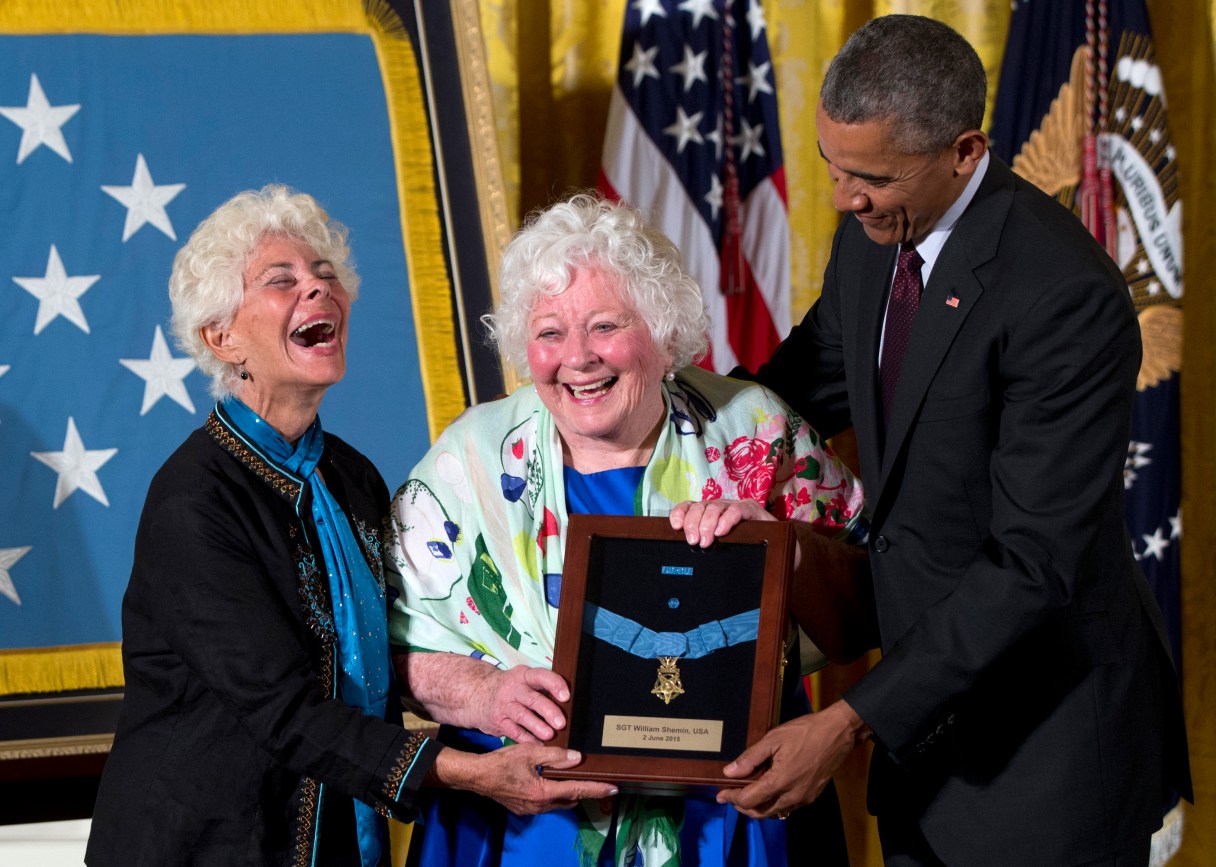
Their ethnic differences were not enough to keep them out of the fighting forces in World War I, but those differences were enough to keep them from being honored with our nation’s highest recognition of bravery and military service — the Medal of Honor. Until now.
On Tuesday, nearly 100 years after their heroic deeds under fire, President Barack Obama and military officials righted the prejudice and wrongs done to Sgt. William Shemin, the son of Russian Jewish immigrants, and Henry Johnson, an African-American. Both distinguished themselves during combat in France.
Shemin was just 16 when he lied about his age and enlisted. On Aug. 7, 1918, in western France, he and other soldiers of the 4th Infantry Division were hunkered down in a trench separated from their enemies by a field that had become a bloodbath.
“Those in the trenches were left with a terrible choice,” Obama said in the awards ceremony. “Die trying to rescue your fellow soldier, or watch him die knowing that part of you would die along with him.”
The president said William Shemin couldn’t stand to watch. “He ran out into the hell of no man’s land and dragged a wounded comrade to safety. And then he did it again. And again. Three times he raced through heavy machine gun fire, and three times he carried his fellow soldiers to safety.”