
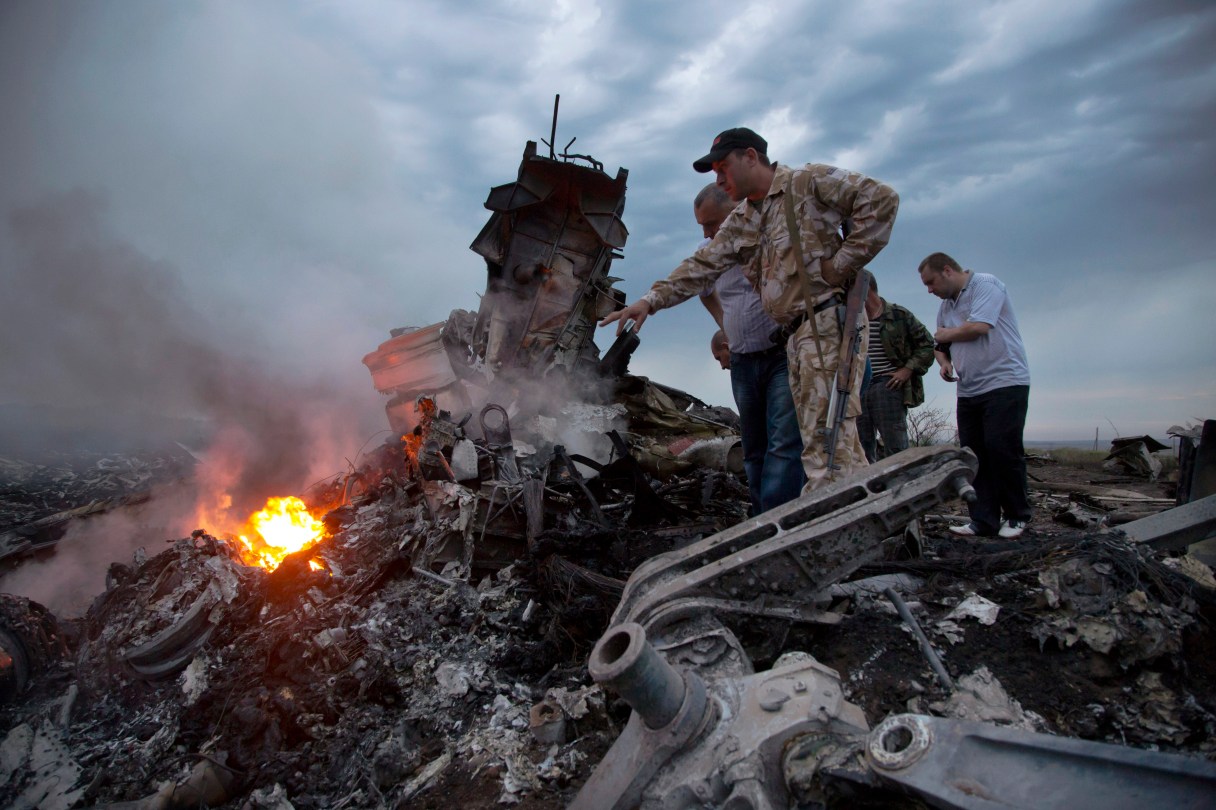
LONDON (AP) – When air travel goes wrong, the modern world has given us a script to follow.
Forensic workers in coveralls descend on the crash scene. Police tape seals off the site and keeps the full horror at a distance. There is an orderly numbering of the dead and gathering of the evidence. Bodies are repatriated, funerals are held. Eventually, there is explanation.
The bereaved, and the rest of us, take solace in science, logic, investigation, the gradual restoration of order. It’s a process that organizes tragedy into a shape the mind can process and the heart can grieve. Whether it was mechanical failure, human error or terrorism, we are reassured by the notion that knowledge brings the power to stop it from happening again.
But 2014 has been different.
Twice this year, when disaster struck two Malaysia Airlines planes, fate has torn up the script. One plane disappeared, leaving investigators combing a vast ocean, a disaster with no wreckage and no bodies.