
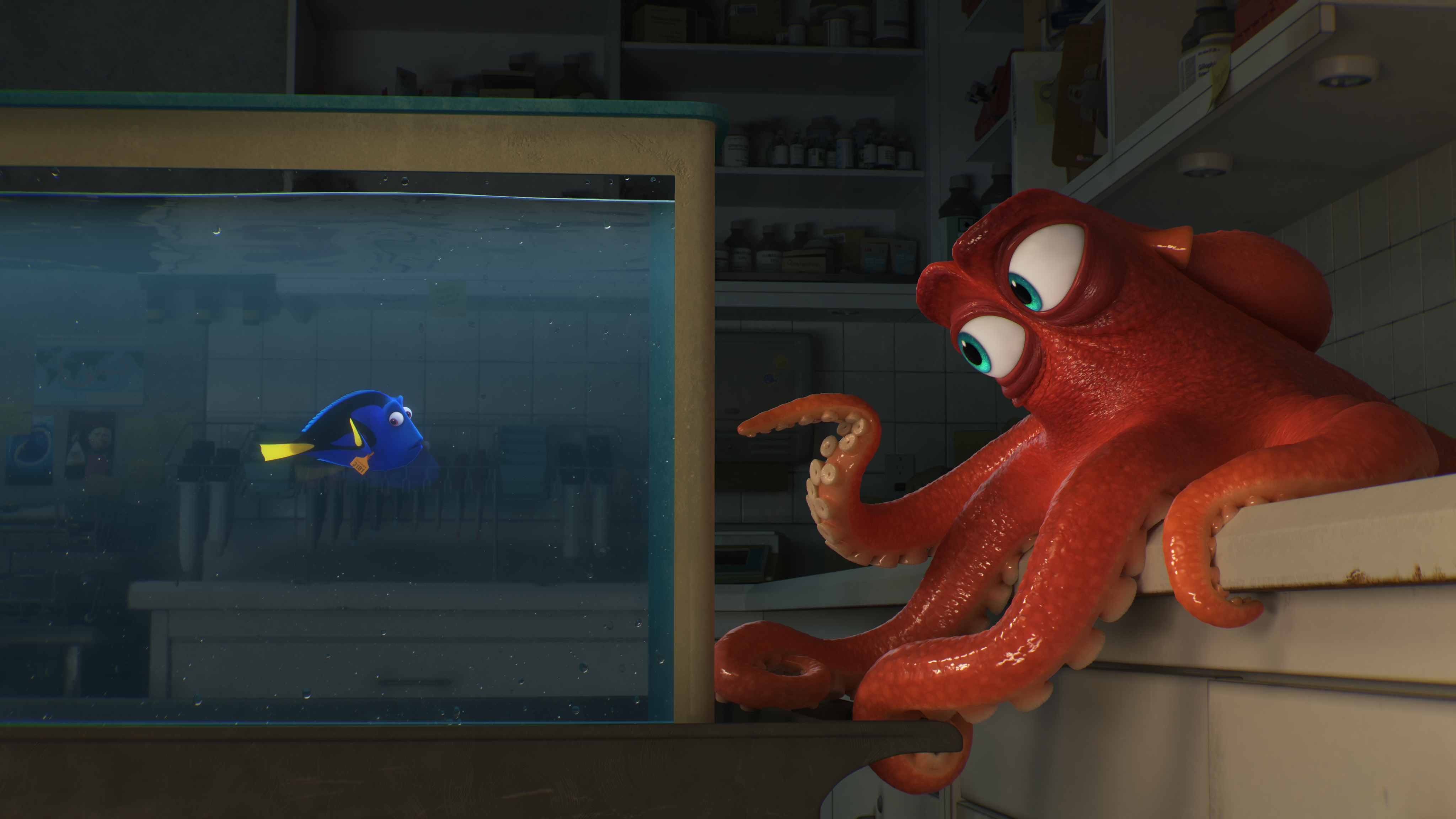
 This image released by Disney shows the characters Hank, voiced by Ed O’Neill, right, and Dory, voiced by Ellen DeGeneres, in a scene from “Finding Dory.” (Pixar/Disney via AP)
More Info
‘Finding Dory’› Rating: PG for mild thematic elements.› Running time: 1 hour, 37 minutes.
In Pixar’s hands, the ocean – equal parts danger and wonder – is a vast metaphor for the choppy waters of parenting. Cloistered coral reefs of home are surrounded by frightful drop-offs and strong currents that can sweep a little fish out to an immense sea. When the difference between survival and shark bait is flipper thin, how much line do parents give before reeling in?
“Finding Dory,” a sequel to 2003’s “Finding Nemo,” shifts the tale from Nemo, the clownfish with a weak fin, to Dory, the blue tang with short-term memory loss – or as the baby Dory seen early in the film says, “remembery loss.”
The adventures of both Dory and Nemo are born out of straying too far from anxious parents. The gulf of separation stretches wider and longer in “Finding Dory,” but it’s covered the same way: by pluckily overcoming genetic handicaps and trusting in the Pacific-size love of family. In the Pixar brood, the sweetly sentimental “Finding” movies are the most ready-made for parent-kid bonding; they would surely inspire countless father/son fishing trips if that didn’t mean hooking the movies’ heroes.
“Finding Dory” promotes the original’s daffy supporting character (so perfectly voiced by Ellen DeGeneres) to protagonist. But it’s not a simple switch in perspective: In seeing through her forgetful fish eyes, you realize how terrifyingly disorienting it is to be Dory. “Finding Dory” is “Memento” under the sea, with a much more chipper lead who is forever at pains to remember why and where she’s going.