
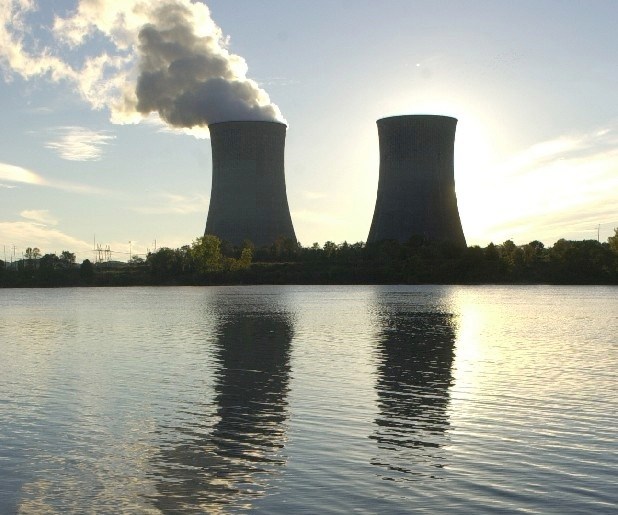
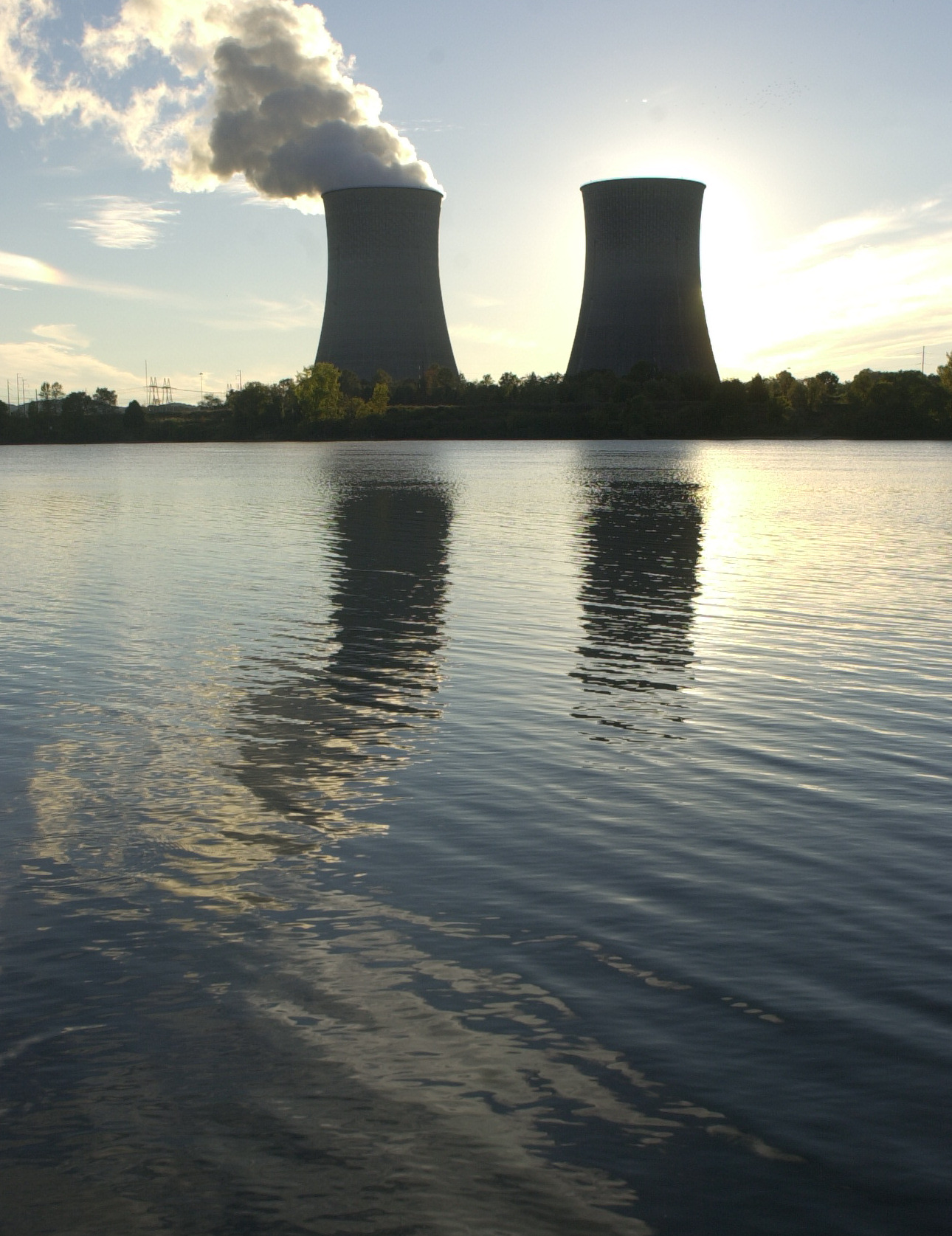
 The nuclear power plant towers at Watts Bar are reflected in Watt’s Bar lake during a clear late evening sun set.
About Watts BarSite: Located on a 1,770-acre site near Spring City, Tenn., just below the Watts Bar Dam on the Tennessee RiverOwner: Tennessee Valley AuthorityPlant design: Two Westinghouse pressurized water reactors, each capable of generating about 1,200 megawatts of powerHistory: Construction began in 1973 but was suspended in 1988 when power demand slowed. Unit 1 was finished on 1996 and work resumed on Unit 2 construction in 1999.Status: Unit 2 is more than 90 percent completeInvestment: More than $10 billion in both units, including capitalized interest expenses over the past 40 yearsPath to power productionThe key milestones remaining before the Unit 2 reactor is finished include:* October 30, 2014 – NRC commission hearing to update construction and testing work* December, 2014 – NRC safety evaluation report is due* January, 2015 – Operational readiness assessment of plant will be completed* February, 2015 – Advisory Commission on Reactor Safety does final review of Watts Bar* March, 2015 – Readiness letter from NRC staff and TVA officials for plant licensing* April, 2015 – NRC commission decision on granting an operating license for Unit 2* Spring of 2015 – Nuclear fuel is loaded in Unit 2* December 2015 – Start up and power generation beginsSources: Nuclear Regulatory Commission, TVA
Four decades after workers began construction of the Watts Bar Nuclear Plant, TVA successfully passed a critical test this week toward finally completing a second reactor at the Spring City, Tenn., power plant.
TVA workers and contractors on Tuesday successfully completed a cold hydro-static pressure test to ensure that key reactor equipment and systems did not leak or fail under pressure in the Unit 2 reactor under construction at Watts Bar.
“This is a significant milestone and success for Watts Bar yesterday to ensure that the workmanship used to construct the reactor coolant system and other associated systems were constructed in the right manner,” said Ray Hruby, general manager for Watts Bar Unit 2 construction services.
Hruby and other TVA officials on Wednesday briefed top regional officials with the Nuclear Regulatory Commission on the status of Watts Bar.
TVA plans to submit a request in early 2015 for an operating license for the Unit 2 reactor. Hruby said the current schedule calls for TVA to begin loading nuclear fuel in the reactor on May 14, 2015, pending regulatory approval.
“We’re still on track to go into commercial operation (by December 2015) in accordance to what we told the board of directors,” Hruby said.
TVA estimates more than 90 percent of the construction work on the Unit 2 reactor is now complete. TVA failed three years ago to meet its original construction schedule and is having to spend nearly $2 billion more to complete the project under Hruby.
But the TVA project manager stressed that the quality of the work at Watts Bar is more vital than the schedule.
“We’re taking the time necessary to make sure that we have high quality construction,” Hruby said.
The planned startup of the Unit 2 reactor late next year comes nearly two decades after TVA started the Unit 1 reactor at Watts Bar in the spring of 1996 and more than 42 years after site work and building began at Watts Bar.
The plant has been delayed by whistleblower concerns, changing plant regulations and shifting power demands. Watts Bar Unit 1 was the last commercial nuclear reactor to be built in the United States and the Unit 2 reactor will likely be the first new reactor brought on line in America in the 21st century.
Southern Co. in Georgia and SCANA Corp., in South Carolina are building next-generation Westinghouse AP1000 reactors, but those will not be finished for at least another four to five years.
Nearly 3,000 TVA contractors and employees are now on site at Watts Bar Unit 2 finishing construction work and testing the installed equipment.
In the wake of the Japanese nuclear plant accident at Fukushima in March 2011, U.S. nuclear plants have had to upgrade their protection against earthquakes and floods. TVA has installed new buildings to house backup power generators and has raised key components above a worst-case flood scenario at the plant.
The post-Fukushima upgrades are about 95 percent complete, TVA spokesman Jim Hopson said.
Contact Dave Flessner at dflessner@timesfreepress.com or at 757-6340.