
LOUISVILLE, Ky. (AP) – Solid ground isn’t always a certainty. Sinkholes can lurk anywhere, beneath suburban homes, city streets or even football stadiums and museums.
It’s basic geology: Sinkholes open when soil collapses into large holes, caused by flowing water in underground limestone. Their toll can be dramatic, swallowing homes, trees or anything else on the collapsing ground – even prized Corvettes.
The Southeastern U.S. is prime territory for the geological phenomena – a potentially costly game of subterranean roulette.
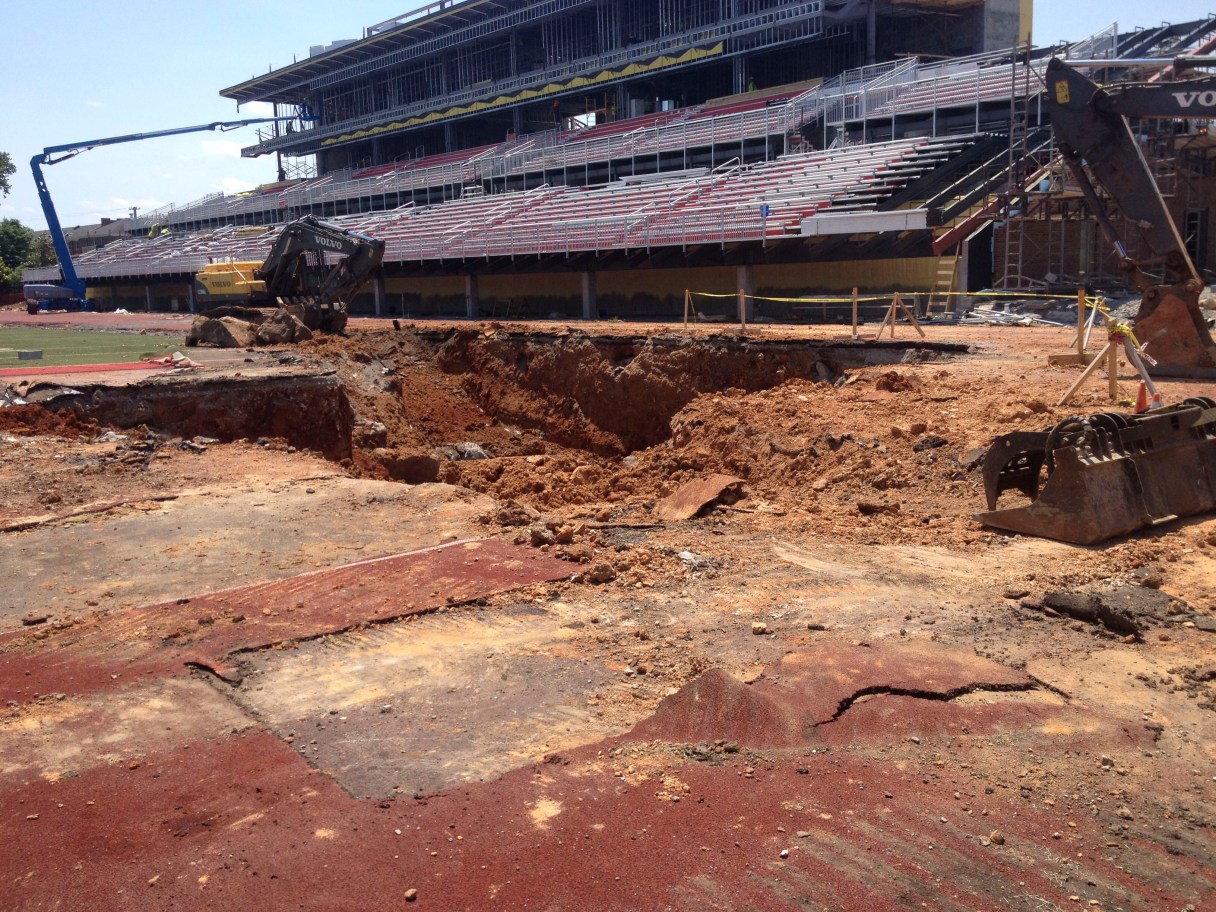
In Tennessee, a sinkhole opened during renovations on the football stadium at Austin Peay State University. What started as a small hole turned into a chasm 40 feet deep and 40 feet wide as a repair crew dug to find its source.
In Kentucky, a sinkhole gobbled eight classic cars on display at the National Corvette Museum in Bowling Green. Corvettes, piled like toys in a heap of dirt and concrete fragments, became an Internet sensation, boosting museum attendance.