
It is a given that many of us are deeply depressed over what this president is doing to our country.
A recent USA Today editorial put it succinctly: “[W]e can say with 100 percent certainty that in 2019, our president will be caught doing something else Republicans would have impeached Barack Obama or Bill Clinton for – twice, during breakfast. And we can be almost as sure that the only check elected Republicans will balance upon Trump is a mopey tweet from some ‘extremely troubled’ GOP senator who will still vote with the president almost 100 percent of the time.”
Just call them Trump’s Republican-enablers.
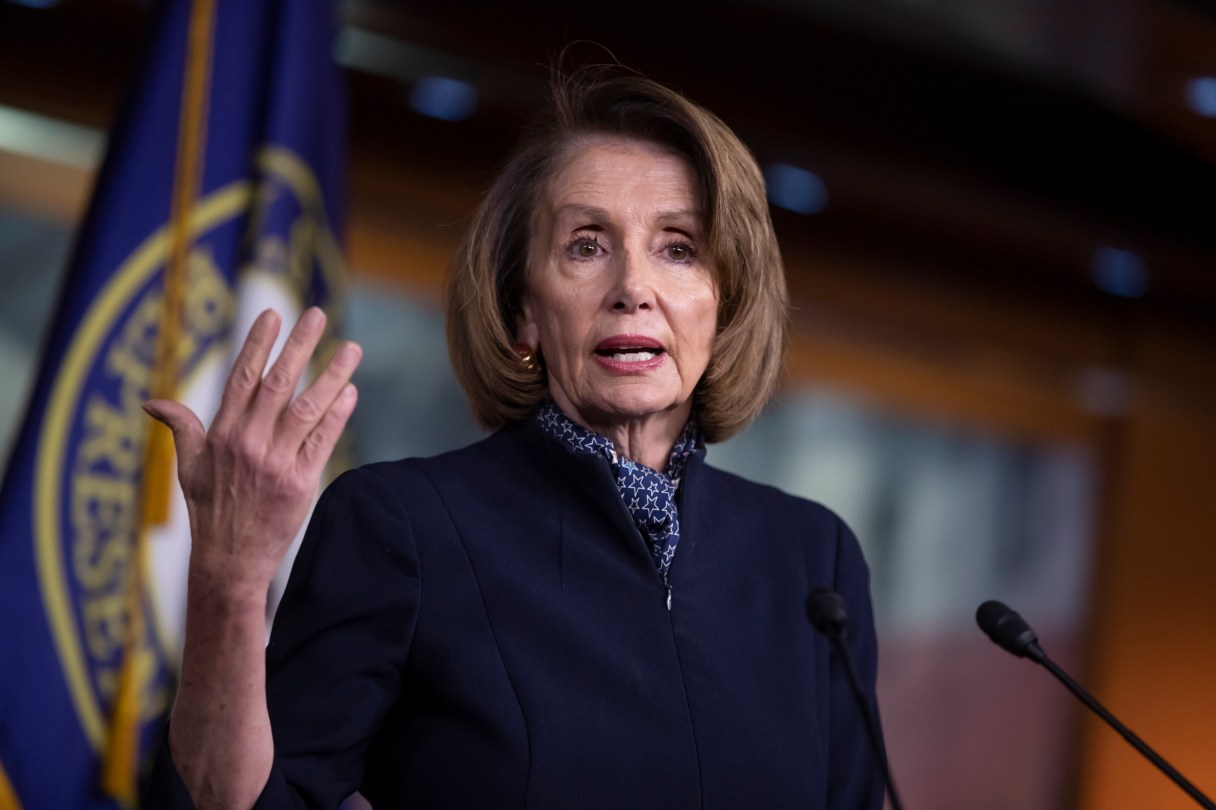
Enter the new Democratic-controlled House of Representatives. This new House majority possesses a great gift and faces a great challenge – how to use its new power, namely oversight and subpoena power, wisely.
Certainly savvy Republicans are nervous. Savvy Democrats are expectant. Sharks smell blood in the water.
Elizabeth Drew, a Washington-based journalist who covered Watergate, wrote in The New York Times last week: “The midterms were followed by new revelations in criminal investigations of once-close advisers as well as new scandals involving Mr. Trump himself. The odor of personal corruption on the president’s part – perhaps affecting his foreign policy – grew stronger. Then the events of the past several days – the president’s precipitous decision to pull American troops out of Syria, Secretary of Defense Jim Mattis’s abrupt resignation, the swoon in the stock market, the pointless shutdown of parts of the government – instilled a new sense of alarm among many Republicans.”
America also can sniff the wind with Mitt Romney’s recent op-ed in the Washington Post: “To a great degree, a presidency shapes the public character of the nation. … With the nation so divided, resentful and angry, presidential leadership in qualities of character is indispensable. And it is in this province where the incumbent’s shortfall has been most glaring.”
The entire op-ed hints that it may not be just Democrats who’ve had enough.
So what will Congress – especially Democrats in Congress – do with this new power?
The new House might pass some bills, but most likely those wouldn’t pass the still Republican-controlled Senate. If a bill did somehow miraculously pass the Senate, the president would veto it. That means much of the Democrats’ negotiating leverage lies primarily in oversight and subpoena power.
House oversight of America’s executive branch is almost as old as the country. It began during the presidency of George Washington when Thomas Jefferson and Alexander Hamilton agreed – and they rarely agreed on anything – that Congress should look into the failure of the St. Clair expedition when a force of about 1,000 Americans was decimated (only about two dozen lived) during an American Indian ambush in what was then the Northwest Territory.
Other notable oversight has included a probe of the Teapot Dome scandal, the Army-McCarthy hearings and, of course, Watergate.
Two decades or so after Watergate, Newt Gingrich, of Georgia, became speaker of the House and essentially “weaponized” the power of oversight, using it to gin up scandals against the Clinton Administration, according to “The Daily” podcast of The New York Times. Ultimately Bill Clinton gave them the keys to the kingdom in a White House affair with an intern, leading to his impeachment.
When the Democrats took back control of the house, they used oversight power to probe the outing of then-covert CIA officer Valerie Plame and the botched response to Hurricane Katrina – both under President George W. Bush.
Republicans then took House control again under President Obama and used their oversight grenades against political opponents: You’ll recall the Fast and Furious gun scandal that resulted in then-Attorney General Eric Holder being held in contempt of Congress, the IRS audit probe of the Tea Party tax exemption and, of course, Benghazi, Benghazi, Benghazi.
In the two years since Trump has been office, under GOP House and Senate control, there was no oversight. None. Zero. Unless you count the times that then-Intelligence Committee Chairman (and a former member of Trump’s transition team) Devon Nunes, R-California, created confusion and blocked the committee’s probe into possible Russian interference in the 2016 presidential election.
That ends now. At least for two years.
Last September, even before the midterms, Nancy Pelosi invited House oversight, intelligence and judiciary committee minority leaders to her office to plan what they would do with their new power if and when they regained it, according to “The Daily.”
The plan evolved that they will chose their targets carefully, look at things special counsel Robert Mueller isn’t pursuing or things for which Nunes wouldn’t OK subpoenas. They assured each other that they will not overreach and they will not conduct vendetta probes. Some examples of what they will pursue includes the owner of the blocked phone number Donald Trump Jr. called during the Trump Tower meeting. (Nunes didn’t want to know.) Aside from Trump/Russia questions, they discussed possible hearings on how U.S. immigration policy became one of tearing babies from their parents’ arms at our Southern border.
The Democrats will have to walk a tightrope as they look to get answers and reforms for Americans.
They must not stray into the land Republicans have consistently occupied: the territory of “weaponized” congressional oversight hearings.
Today is a new day.