
Monday, November 9, 2026Nov 9

California grooms utility giants to compete against Big Oil

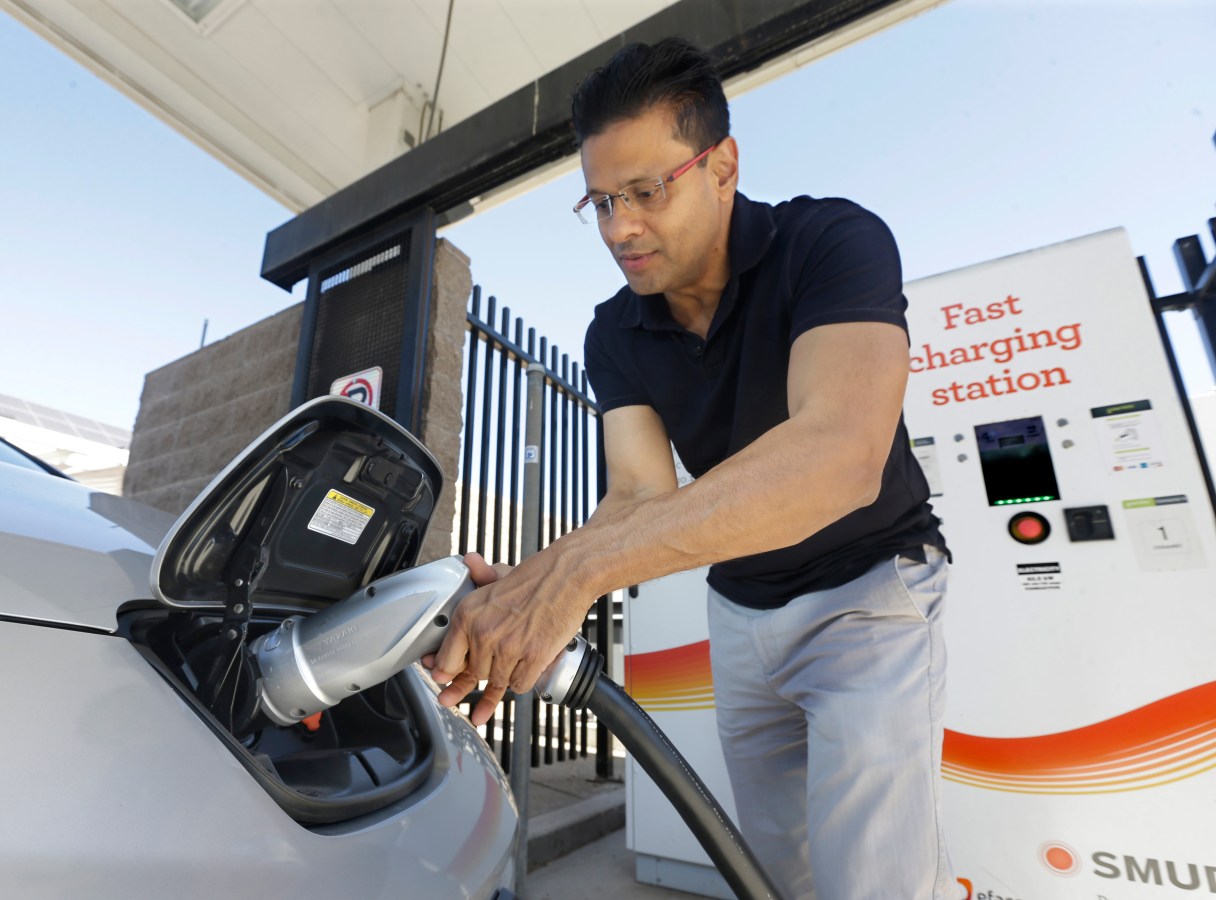
In this photo taken Thursday, Sept. 17, 2015, Darshan Brahmbhatt, plugs a charger into his electric vehicle at the Sacramento Municipal Utility District charging station in Sacramento, Calif.  Climate change legislation signed Wednesday, Oct. 7 by Gov. Jerry Brown calls for major utilities to compete as an alternative transportation fuel source by installing thousands of charging stations where people live, work and play. (AP Photo/Rich Pedroncelli)
In this photo taken Thursday, Sept. 17, 2015, Darshan Brahmbhatt, plugs a charger into his electric vehicle at the Sacramento Municipal Utility District charging station in Sacramento, Calif. Climate change legislation signed Wednesday, Oct. 7 by Gov. Jerry Brown calls for major utilities to compete as an alternative transportation fuel source by installing thousands of charging stations where people live, work and play. (AP Photo/Rich Pedroncelli) In this photo taken Thursday, Sept. 17, 2015, Darshan Brahmbhatt, plugs a charger into his electric vehicle at the Sacramento Municipal Utility District charging station in Sacramento, Calif. Climate change legislation signed Wednesday, Oct. 7 by Gov. Jerry Brown calls for major utilities to compete as an alternative transportation fuel source by installing thousands of charging stations where people live, work and play. (AP Photo/Rich Pedroncelli)

SACRAMENTO, Calif. (AP) – California wants more drivers to dump the pump.

Under new climate change legislation Gov. Jerry Brown signed Wednesday, the most populous state in the nation is encouraging major utilities to compete as an alternative transportation fuel source by installing thousands of charging stations where people live, work and play.

The new law, SB350, requires the state to boost renewable electricity use to 50 percent and double the energy efficiency of existing buildings by 2030, although Democratic leaders were forced to drop a key provision that would have pushed the state to cut oil use by half.

California is already on target to generate at least a third of its electricity from renewable sources by 2020; now state regulators will set efficiency targets for the 10 years after that.

One of the key ways state officials hope to cut greenhouse gas emissions is by encouraging residents to fuel their cars and trucks with electricity, a move that environmentalists say will pit utilities against oil companies in the marketplace.