
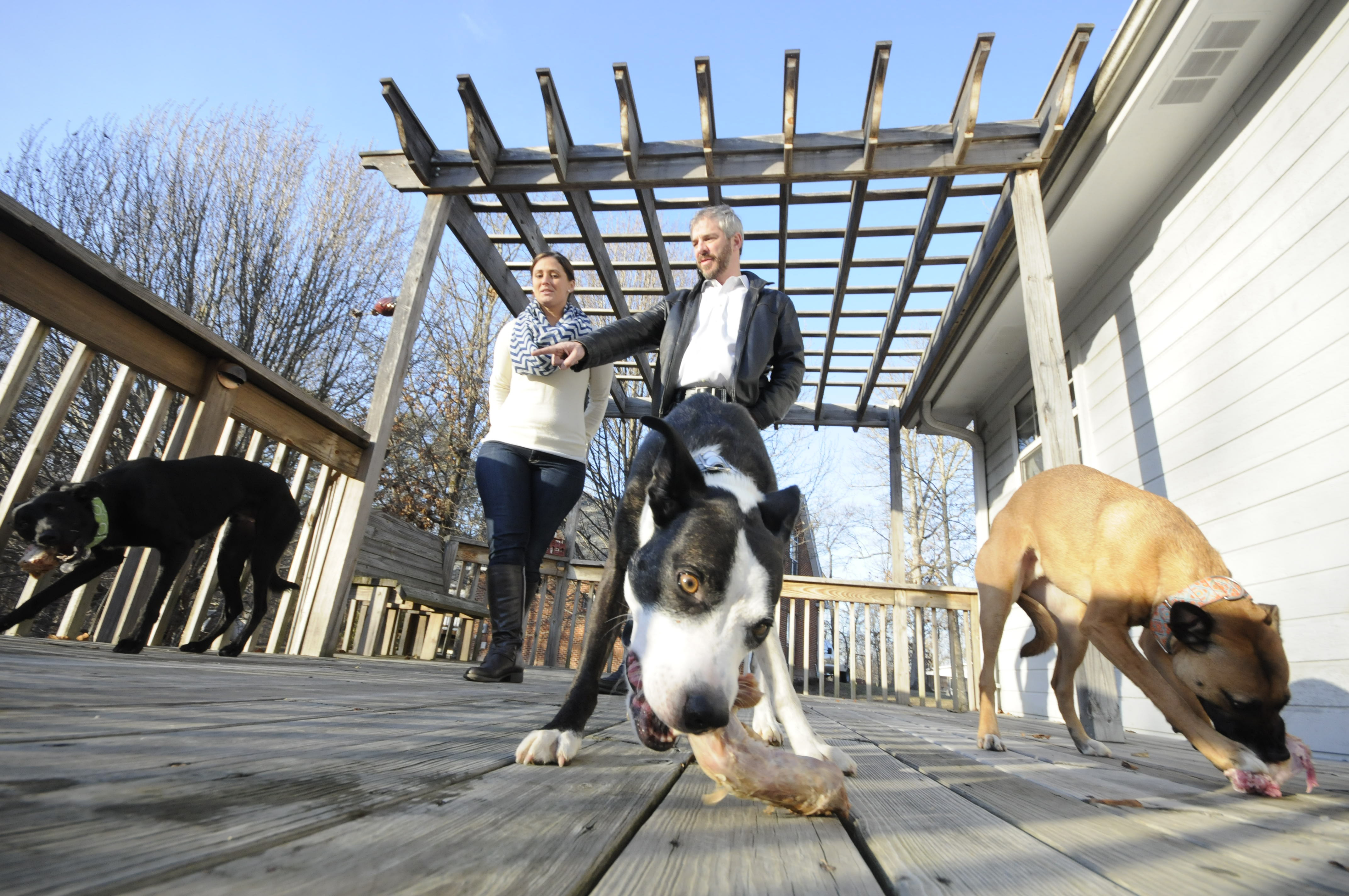
 Trey and Katie Corum feed their dogs turkey necks as part of their raw-food diet.
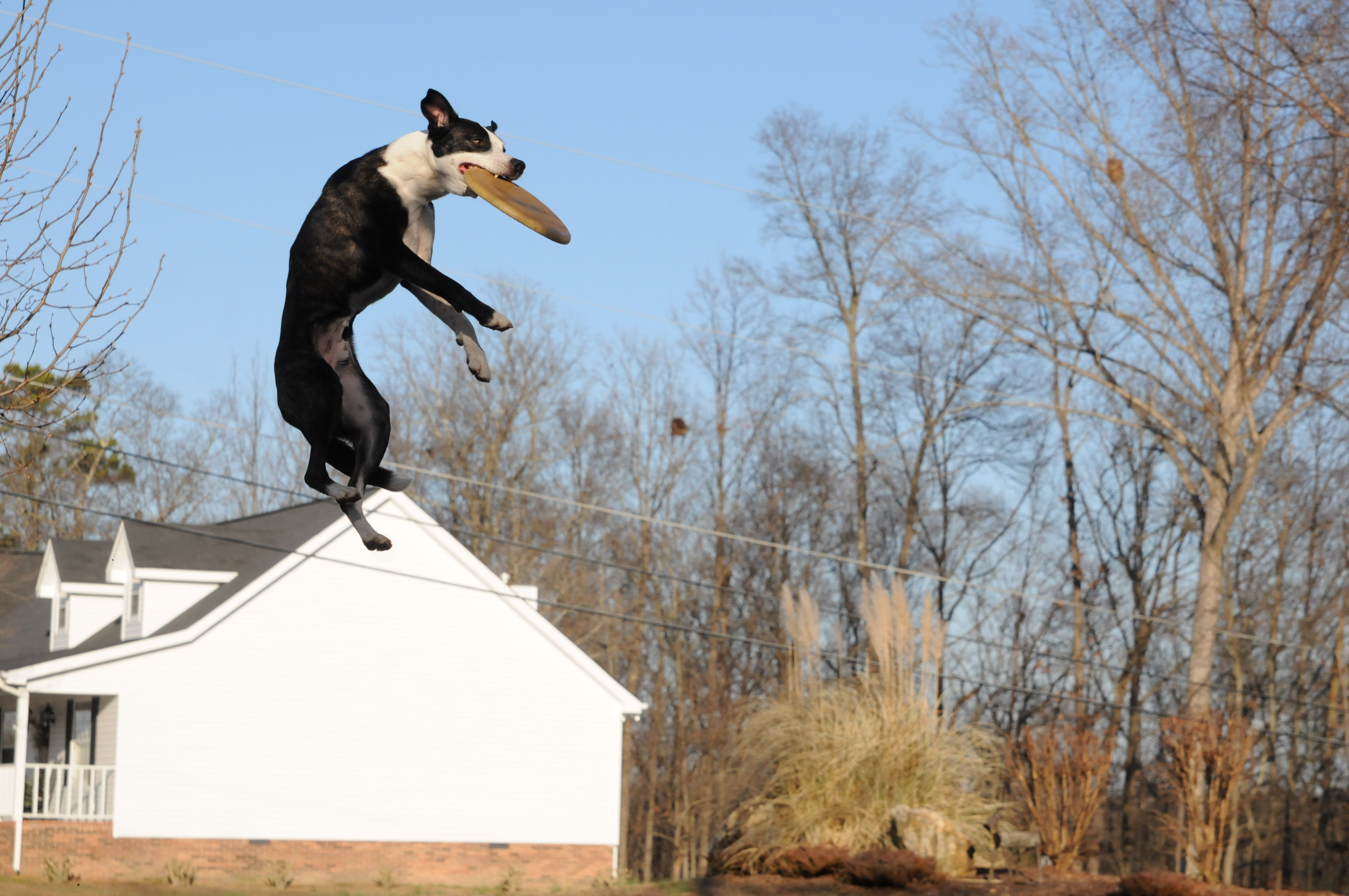 Trey and Katie Corum’s dog Vito, a six-year-old border collie/Staffordshire bull terrier mix, catches a frisbee at top speed in their Ringgold front yard.
If they were to suddenly find themselves transported 100,000 years into the past, Whiskers and Rover would probably be confounded by their ancestors’ eating habits. Modern pet foods might be convenient, but science has yet to uncover fossil evidence of kibble roaming the prehistoric plains.
Some say the manufacturing processes used to create the dry foods stacked on store shelves are robbing 21st-century cats and dogs of vital nutrients their paleolithic ancestors routinely consumed. To restore balance to the food bowl, some owners are embracing “raw” diets featuring unprocessed foods that more closely mirror the daily fare of their pets’ primal forebears.
Think sabertoothed tabby. Megalo-dachshund.
But the idea of a “pet paleo” diet, while embraced by some veterinarians, is considered bunk by others, who question its reported benefits as well as its expense, which can be three to four times higher than traditional pet foods.
About six years ago, Kate Corum’s three-year-old golden retriever Emma was suffering from medical issues including inflammatory bowel disease and chronic ear infections. A blood test showed that Emma had allergies to chicken, beef, fish and wheat, ingredients commonly found in many commercial dog foods.