

On first impression, Robert McCurry and Caleb Dills seem to be living outside of time.
McCurry, 22, is the proud owner of a mullet he has grown over the last year along with a thin moustache. On his left ear, he often wears a single earring, usually a cross, to complete the look.
Dills, 23, is similarly exploratory in his style choices, sporting a black-and-gold glasses as well as a series of short rattails that dangle down the nape of his neck.
Both are prone to wardrobe selections that were in vogue a few decades ago but have since been retired to the history books and early MTV episodes. The pair is equally comfortable with pegging their jeans and slinging sweaters around their necks as they are slipping on shock-white Reeboks with a suit.
The second impression of the pair is that neither of them have ever been bored over a weekend because they are perpetually busy channeling their maximalistic aesthetic into their music – an indie-pop DIY project called Superbody that’s rapidly attracting a devoted following in and around Chattanooga.
McCurry and Dills are the creators and backbone of group Superbody and, following their 2015 debut LP, “Hades Land,” they’re looking to release their sophomore work, “Youth Music,” in March.
Their sound draws on and amplifies the same frenetic energy that has been the lifeblood of the pop genre for decades, but the production and sound, similar to their fashion choices, is a modern nod to icons from the ’80s, which they consider a high-water mark for pop music.
“Our intention from the beginning with ‘Hades Land,’ and still now, was just trying to make the most creative pop music we could,” McCurry says. “It had to be: ‘I want to be a slave to the pop structure and actually make the most accessible, creative thing I can.'”
Accessibility is key for the members of Superbody, who believe one the best things about pop is how wide its audience can be.
“We don’t make this stuff for a certain type of people or for our friends or for people we think are cool. You’re selling yourself short if you’re promoting to a certain thing and you’re making pop music,” McCurry says. “I’m making pop music so that 5-year-olds and 80-year-olds alike can both enjoy it.”
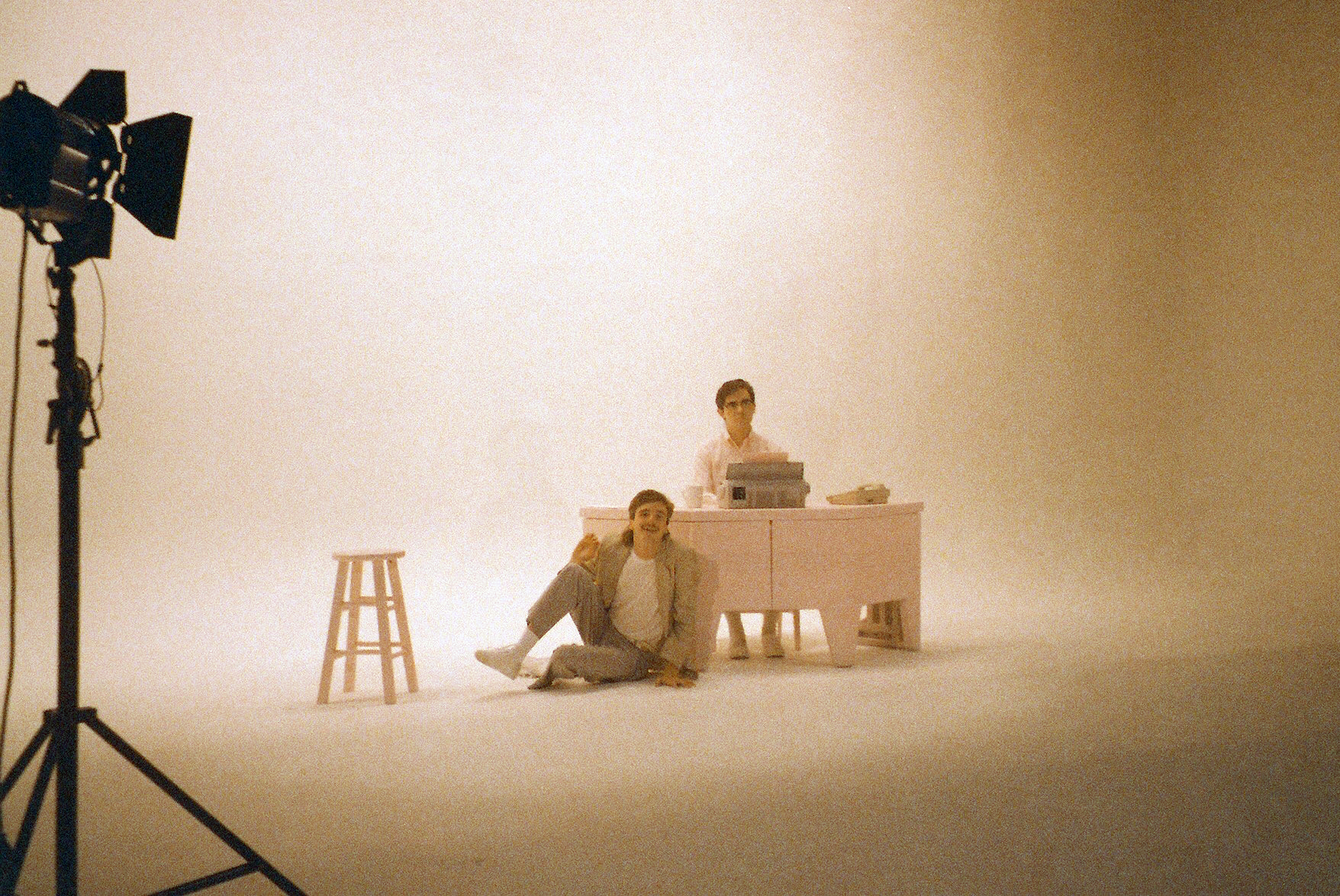
The group is already generating some buzz online after putting out a video for “Patricia,” one of the songs on “Youth Music” that features the pair performing against an off-white background while they wear retro, pastel-colored props and clothing.
In the video, as in real life, the pair are foils to one another – McCurry matches the pep of the music by bouncing and skittering across the screen while thin-lined geometric shapes flash around him. Dills, meanwhile, sits stolidly behind a pink desk, staring stony-faced ahead into the camera.
It’s easy to see the influences of bands like Soft Cell, Talking Heads or even Tears for Fears in their music, but Superbody isn’t intended to be entirely nostalgic or a throwback act. Instead, they’re looking at what has been good about the genre in the past and using it to propel themselves and pop into its next chapter.
“It’s not like we sit down and say, ‘Let’s make an ’80s song,'” Dills says. “You end up getting into this space where, if you play with a synthesizer, people are instantly going to draw those hard associations. But being creative in pop music – the ’80s are a pinnacle of that.”
McCurry echoes that sentiment, saying their reliance on the decade is more than a passing fascination, but they’re working to square that love with their own creativity.
“It’s an infatuation. It’s a strong, strong infatuation,” he says. “But it’s also very important to me that ‘Youth Music’ is a very 2017 thing and a culturally relevant thing now because I’m obsessed with current pop music just as much as I am with more nostalgic music.”
For Superbody, a full-time obsession with the past and present states of pop is easy to maintain because, according to McCurry, “pop music [in 2017] is the best it’s been since the early ’80s.” Because of that, their hands and creative energies have drifted toward the analog tools of their pop forebears.
Superbody isn’t shy about using synthesizers, which they often drape over the infectious guitar riffs and electric drum rhythms that drive their music, all of which is labored over intensely in production.
But rather than relying on whatever the latest gadgets in the industry might be, the pair has found enormous potential in the more-dated instruments artists used almost 40 years ago such as the electronic LinnDrum, which was used by groups like Wham! and Tears for Fears on some of their biggest hits. The strict boundaries and sounds of those tools encourage ingenuity, they say.
“If you don’t put yourself in a box somewhat, it stifles creativity,” Dills says. “You have to put that limitation on yourself in one way or another because now computers can do anything with audio. Hardware doesn’t matter anymore.”
But unlike decades past, Dills says two guys making music in a tiny studio can engineer the next great record – even if they’re unsigned.
“In 2017, pop stars and mainstream artists have to compete with people making stuff in their house,” he says. “That’s a good thing.”
It may be odd to think of a DIY project as having high production values, but Dills champions the amount of time dedicated in the studio for recording as a badge of honor.
“We are obsessed with overproduction, obviously. I don’t like things sounding raw,” Dills says.
That much is clear from a first listen of the unreleased “Youth Music,” which sounds decidedly more professional than its humble origins in a small studio south of Chattanooga. One of the most noteworthy tracks on the album, “Stupid, Stupid, Stupid,” opens with an explosive burst of drums before filling in with a rolling bass line and a string of poppy guitar riffs.
Superbody may be infatuated with a bygone era of synthesizers and cassette tapes, but as Dills says, “‘Youth Music’ is built around guitar chords.”
The album won’t be receiving much critical acclaim for the depth of its lyrics – one of the recurring lines on “Unusual” is, “She’s so strange; she’s unusual,” but when put up against the finely-tuned melodies that propel their music, the whole package becomes a sleek presentation bursting at the seams with barely contained, neon energy.
In the weeks leading up to the release of their next album, McCurry and Dills are planning to release a few more videos like the one for “Patricia” because, to them, Superbody is as much a multimedia project as it is a band. Their own style choices go hand-in-hand with their music and the overall aesthetic and music videos are one of the best ways to showcase that.
“I don’t think you truly understand what you’re getting from us unless there’s a video paired with it,” McCurry says. “I’m a huge theater person and, if I’m not involving that in my music, I’m not happy. Pop music is such an incredible thing to involve that in.”
Contact staff writer Emmett Gienapp at egienapp@timesfreepress.com or 423-757-6731. Follow on Twitter @emmettgienapp.