
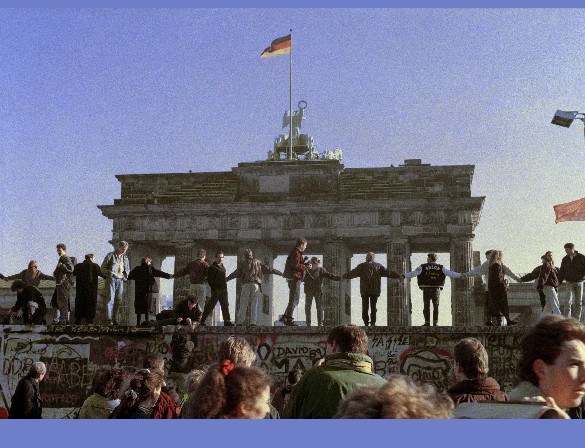
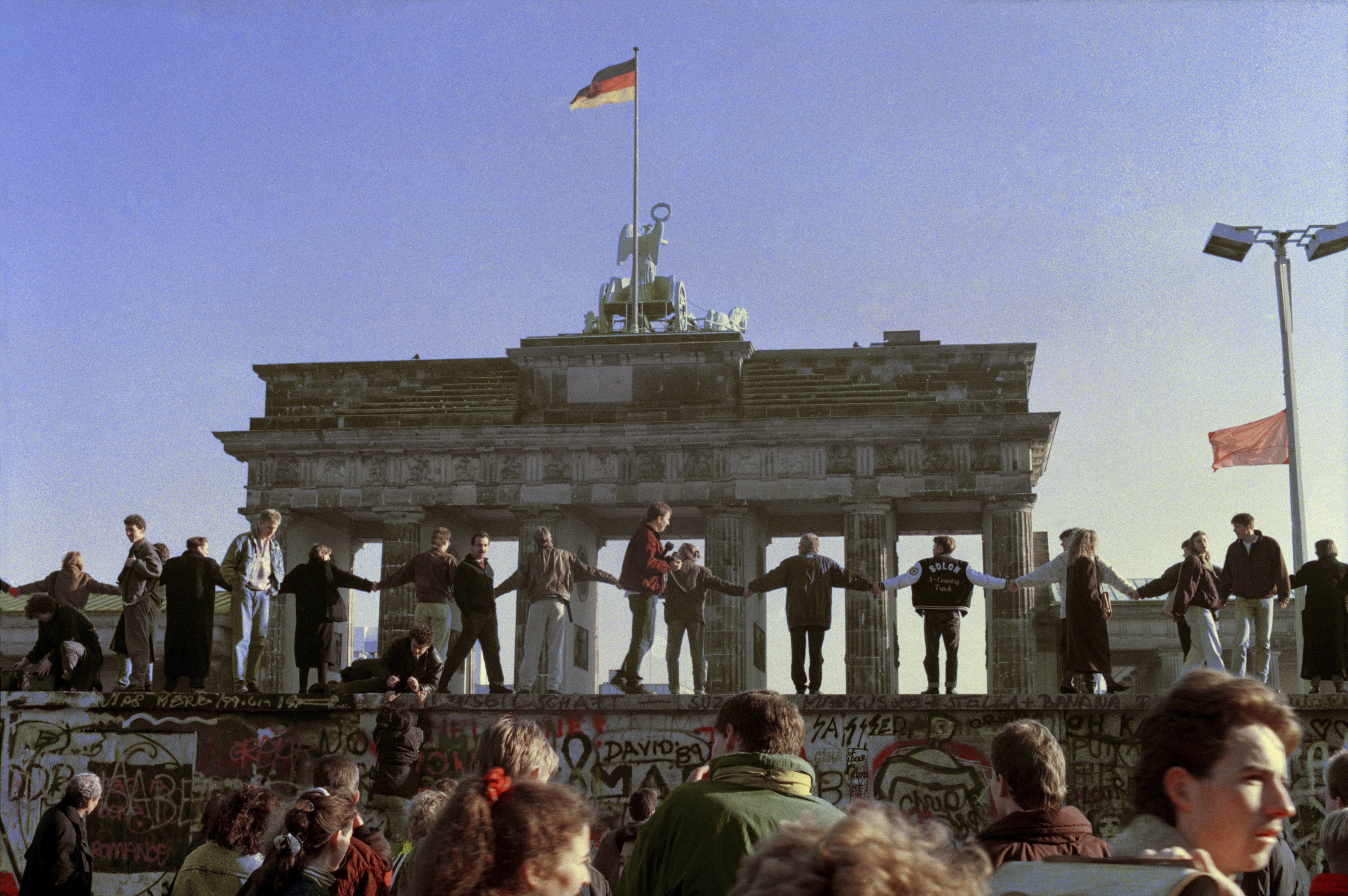
 In this Nov. 10, 1989, file photo, Berliners sing and dance on top of the Berlin Wall to celebrate the opening of East-West German borders. Thousands of East German citizens moved into the West after East German authorities opened all border crossing points to the West. In the background is the Brandenburg Gate.
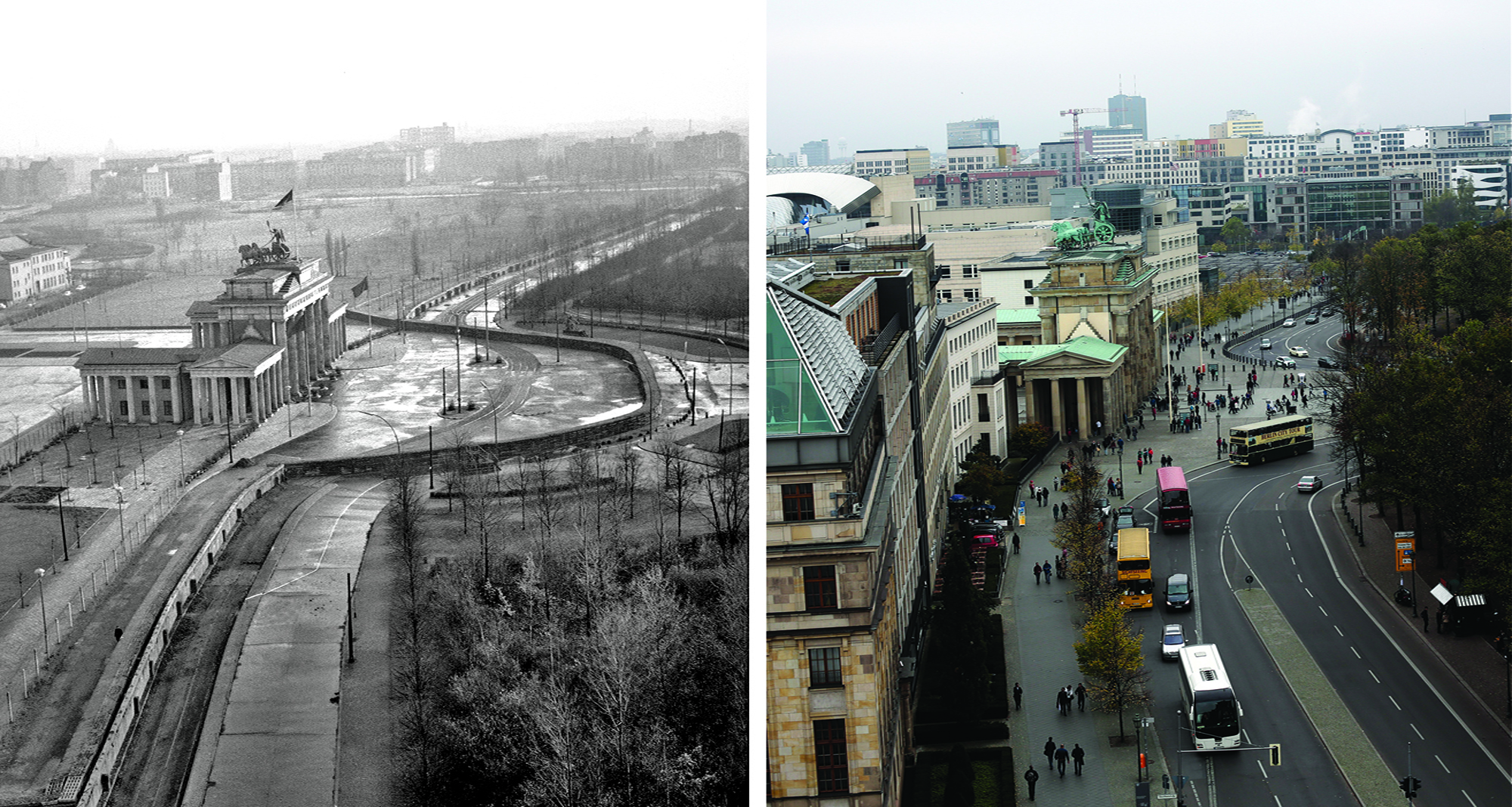 The combo shows the Berlin Wall around the Brandenburg Gate on Nov 19, 1961, left, and cars and busses passing by 25 years after the fall of the wall on Oct. 24, 2014. Berlin officials are expecting one million visitors this weekend to celebrate the fall of the wall.
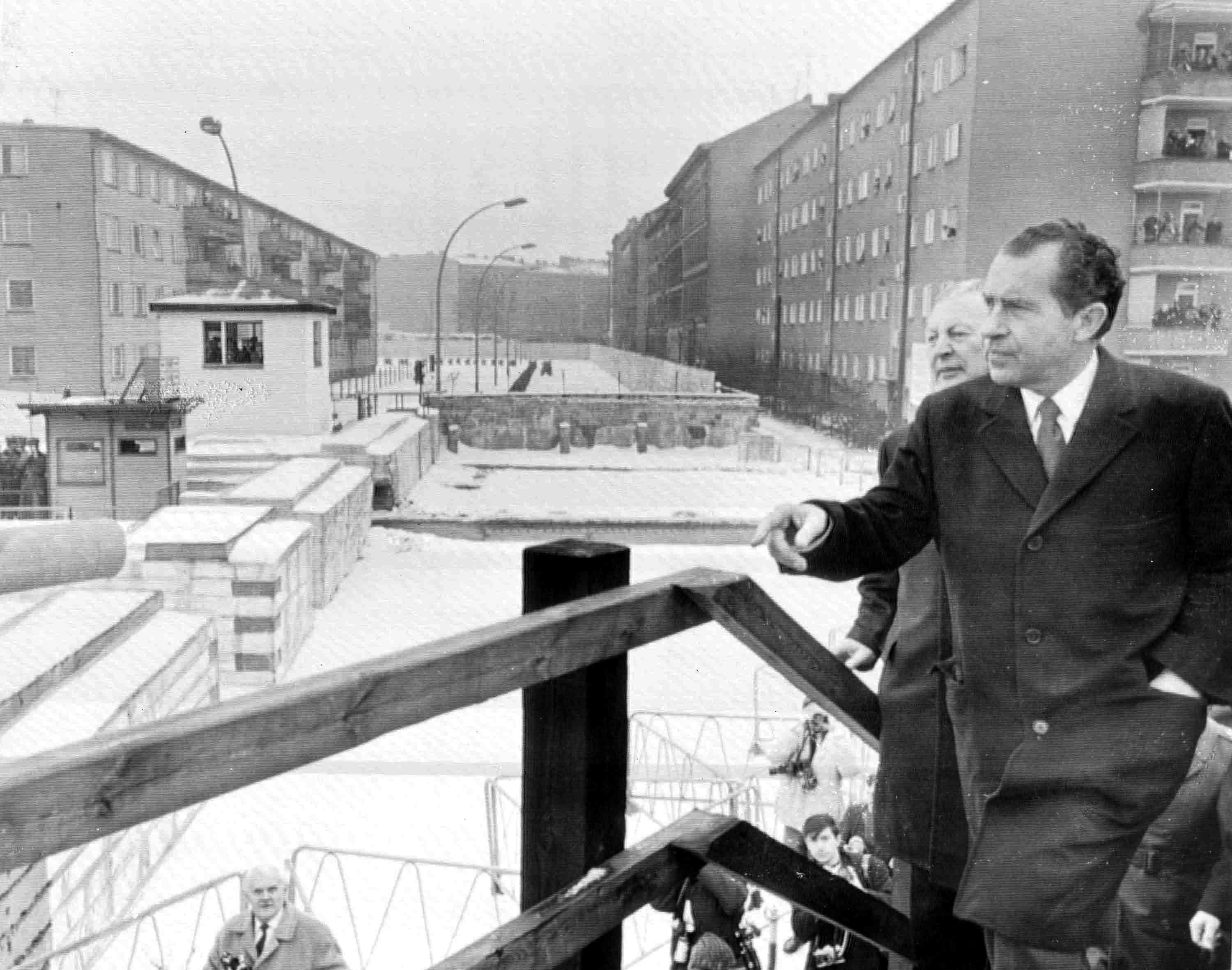 This Feb. 27, 1969, file photo shows U.S. President Richard Nixon looking across the Communist wall into East Germany from West Berlin during his stay in the divided city. Germany’s Chancellor Kurt Kiesinger is seen behind Nixon.
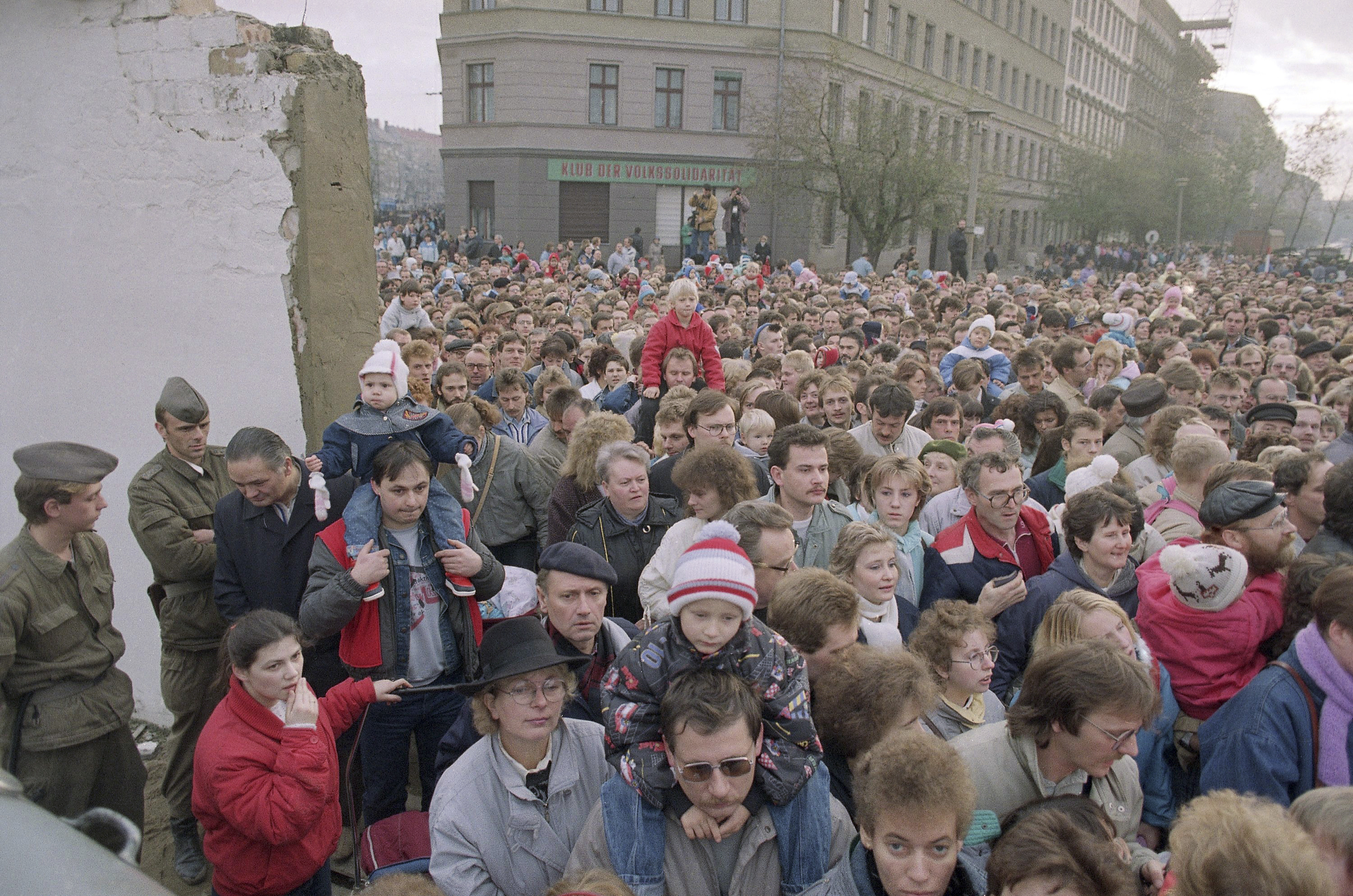 The Nov. 11, 1989, file photo shows east Berlin citizens crowding the new passage at Bernauer Strasse in Berlin where East German border police tore down segments of the wall two days after the border were opened in the divided city.
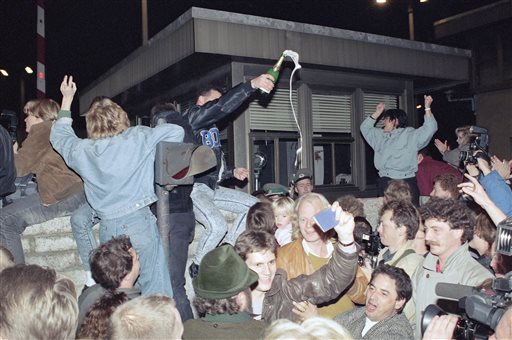 In this Nov. 10, 1989, file photo, East and West Berliners mingle as they celebrate in front of a control station on East Berlin territory, during the opening of the borders to the West following the announcement by the East German government that the border to the West would be open.
As an Army sergeant stationed in Berlin, Brian Watson of Chattanooga saw it all – the fear and nervousness that evolved into jubilation when the barrier that had split the historic city for 27 years came down.
Watson was in military intelligence, a technician in a listening post built atop Berlin’s only hill – built from the rubble left by World War II.
He and his then-wife, also in the Army, lived in an apartment about 100 yards from the Berlin Wall.
“From my balcony I could see the guard towers, the wall and stuff,” Watson remembers.
He arrived in Berlin just days before the first crowds of young Germans scrambled atop the wall on Nov. 9, 1989, the same day East German officials said citizens of the German Democratic Republic would be allowed to visit the West.
“It was so incredibly exciting. The people were scared, nervous, thinking they’re going to get shot in the back. People flooded across initially because nobody knew how long it would stay open,” Watson said.
He was there for the massive New Year’s Eve party on the last day of 1989.
“I heard somebody estimate 2 million people. The beer vendors just walked away from the trucks – they didn’t care. Everybody was happy, having the time of their lives.”
His apartment was near a street that dead-ended at the wall.
“In the spring they finally took that piece out and reconnected the roads through the no-man’s land. People just flooded through there,” Watson said.
“We Americans and a lot of West Germans would go down there and greet East Germans and give them candy and cookies. They were just crying. A lot of families had been separated since the wall was built. They hadn’t seen children or grandchildren, didn’t know if they were dead or alive.”
He’s still got a souvenir chunk of the Berlin Wall. It’s only about the size of a postcard, he said, but it has painted graffiti on it. He remembers he paid a couple of dollars for it – some of the city’s teens would sneak up near the Brandenburg Gate at night to chip off chunks of the wall to sell to tourists.
It’s a precious memory, Watson said.
“I just loved it. I actually got to live some history instead of just read about it.”