
Wednesday, November 11, 2026Nov 11

Trump’s AG pick has argued presidents have robust powers

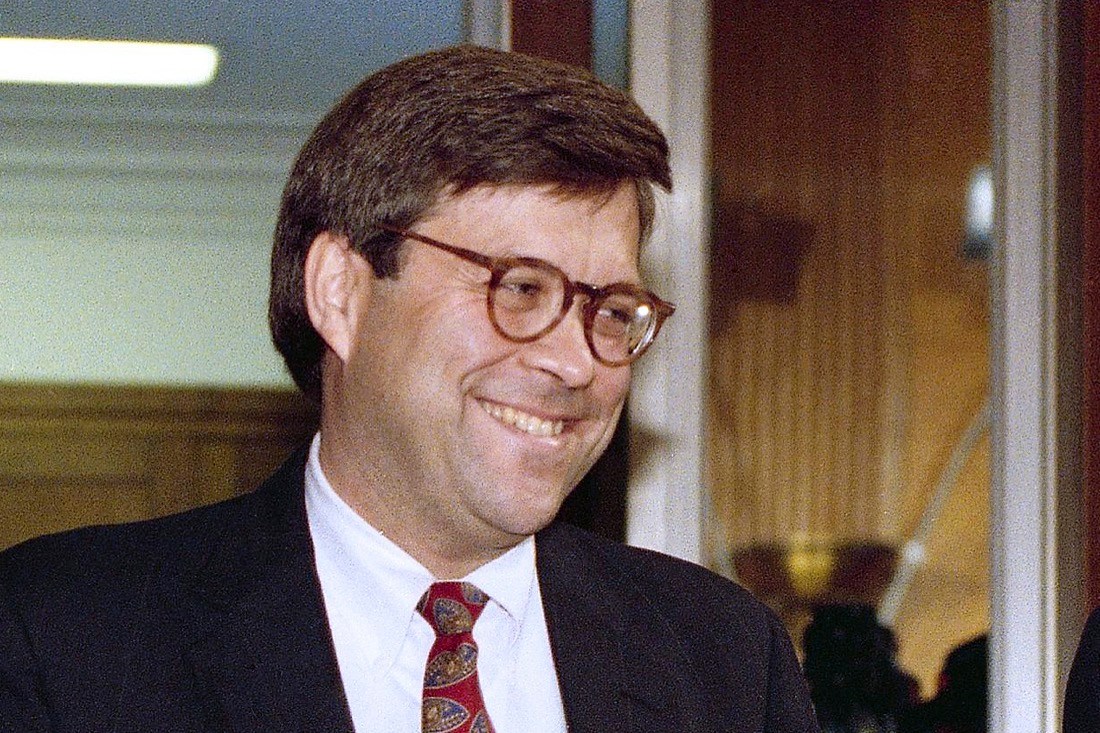
In this Nov. 12, 1991 file photo, then Attorney General nominee William Barr is shown on Capitol Hill in Washington. Barr once advised the U.S. government that it could attack Iraq without Congressional approval, arrest a deposed foreign dictator and capture suspects abroad without that country's permission. Those decisions reflect a broad view of presidential power that Barr, President Donald Trump's pick to reclaim his old attorney general job, demonstrated at the Justice Department and in the years since. (AP Photo/John Duricka)
In this Nov. 12, 1991 file photo, then Attorney General nominee William Barr is shown on Capitol Hill in Washington. Barr once advised the U.S. government that it could attack Iraq without Congressional approval, arrest a deposed foreign dictator and capture suspects abroad without that country's permission. Those decisions reflect a broad view of presidential power that Barr, President Donald Trump's pick to reclaim his old attorney general job, demonstrated at the Justice Department and in the years since. (AP Photo/John Duricka) In this Nov. 12, 1991 file photo, then Attorney General nominee William Barr is shown on Capitol Hill in Washington. Barr once advised the U.S. government that it could attack Iraq without Congressional approval, arrest a deposed foreign dictator and capture suspects abroad without that country's permission. Those decisions reflect a broad view of presidential power that Barr, President Donald Trump's pick to reclaim his old attorney general job, demonstrated at the Justice Department and in the years since. (AP Photo/John Duricka)

WASHINGTON (AP) – President Donald Trump’s nominee for attorney general, William Barr, once advised that a president didn’t need Congress’ permission to attack Iraq, that the U.S. could arrest a foreign dictator and capture suspects abroad without that country’s permission.

It’s an expansive view of presidential power and an unsettling one for Democrats as the Senate holds a confirmation hearing next week for Barr, who served in the 90s as AG for President George H.W. Bush.

Democrats already fear that Barr, if confirmed, would be overly deferential to Trump in a position where legal decisions aren’t supposed to be guided by political considerations. Trump has made clear he demands loyalty from an attorney general, repeatedly haranguing and ultimately forcing out his first one, Jeff Sessions, for not protecting the president from the Russia investigation.

Barr’s philosophy on presidential power adds to those concerns. As attorney general and in the years since, Barr has expressed his belief that presidents have broad authority, limiting the power of Congress and courts to hold them in check.

Those views were evident in an unsolicited memo Barr sent the Justice Department last year arguing Trump could not have obstructed justice by firing ex-FBI Director James Comey. Barr contended presidents cannot be investigated for actions like firing subordinates that they’re lawfully permitted to take, arguments similar to those of Trump’s lawyers. That document raised Democratic alarms that Barr could influence special counsel Robert Mueller’s investigation in ways that protect Trump.