
Thursday, October 29, 2026Oct 29

This story is free to read.

Business Briefs: Black farmers claim they were sold faulty seeds

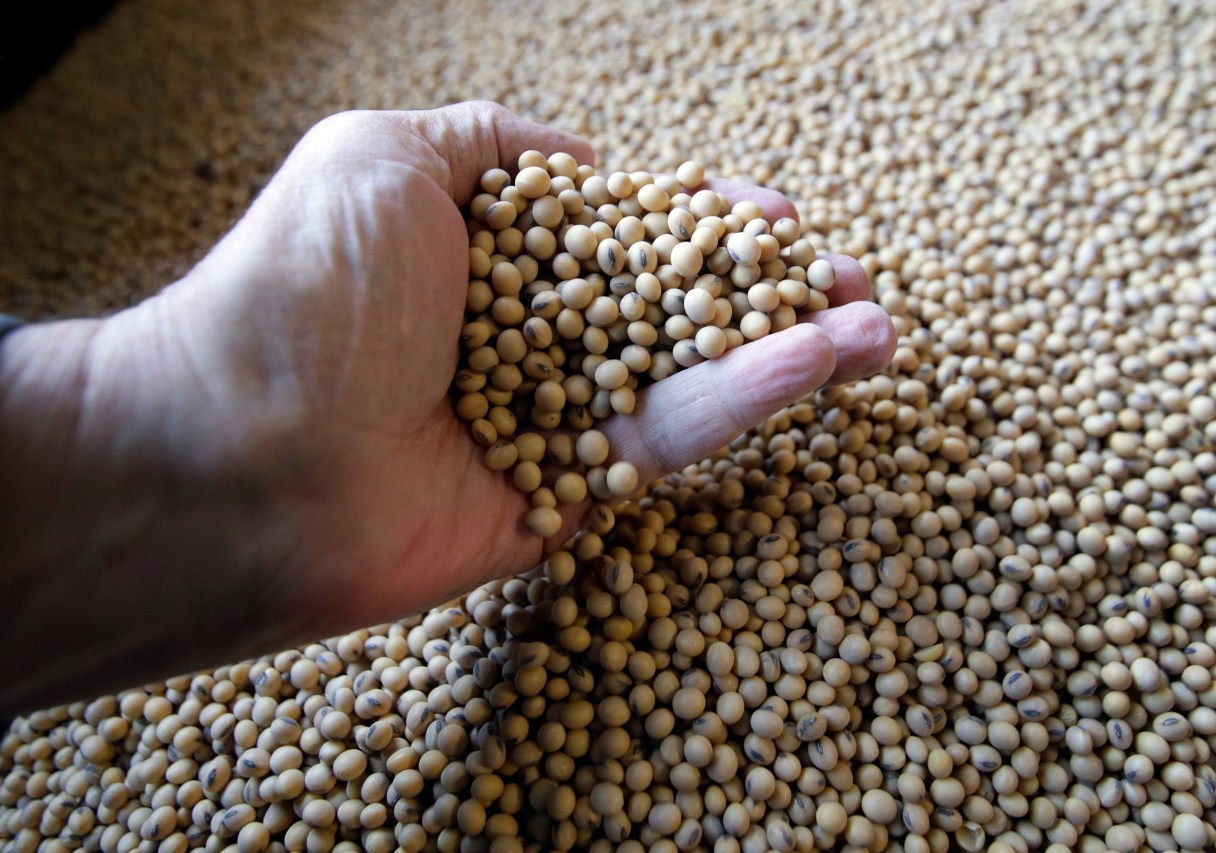
In this April 5, 2018, file photo sorted soybeans are ready for shipment and planting at Taylor Seed Farm near White Cloud, Kan. If the U.S. starts taxing Chinese imports Friday, July 6, 2018, Beijing plans to impose 25 percent tariffs on 545 U.S. products worth $34 billion a year, from soybeans and lobsters to sport-utility vehicles and whiskey. (AP Photo/Orlin Wagner, File)
In this April 5, 2018, file photo sorted soybeans are ready for shipment and planting at Taylor Seed Farm near White Cloud, Kan. If the U.S. starts taxing Chinese imports Friday, July 6, 2018, Beijing plans to impose 25 percent tariffs on 545 U.S. products worth $34 billion a year, from soybeans and lobsters to sport-utility vehicles and whiskey. (AP Photo/Orlin Wagner, File) In this April 5, 2018, file photo sorted soybeans are ready for shipment and planting at Taylor Seed Farm near White Cloud, Kan. If the U.S. starts taxing Chinese imports Friday, July 6, 2018, Beijing plans to impose 25 percent tariffs on 545 U.S. products worth $34 billion a year, from soybeans and lobsters to sport-utility vehicles and whiskey. (AP Photo/Orlin Wagner, File)

Black farmers claim they were sold faulty seeds

Soybean farmers David Allen Hall and Tyrone Grayer had high hopes when a farm-show salesman told them the seeds he sold would bring good yields in their fertile Mississippi Delta fields, and were less likely to be damaged by weeds.

But as the plants began to grow, Hall, Grayer and other black farmers who bought certified seeds from Stine Seed salesman Kevin Cooper in 2017 noticed that they were shorter and less uniform than plants from other seeds. A bad yield followed.

Now, Hall and Grayer are among a group of five black farmers in Tennessee and Mississippi who are suing Stine Seed Co., claiming the seeds were switched and they were given faulty, low-yield seeds. The farmers also make another claim: that Cooper and Stine sold them bad seeds because of their race.

The company and Cooper call the allegations baseless and irresponsible.