
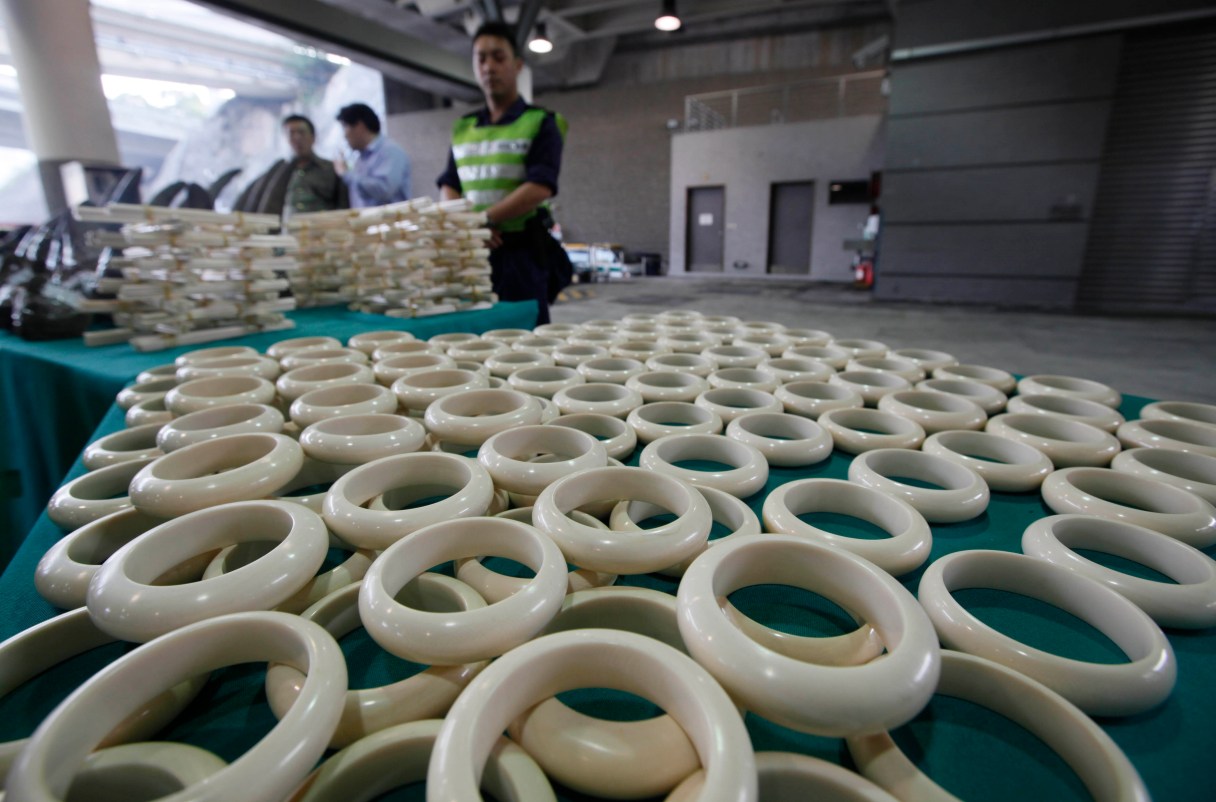
JOHANNESBURG (AP) – International traffickers have tried many ways to smuggle African rhino horns to Asia, concealing them inside wooden Buddha statues, stashing horn pieces in lobster heads kept in a refrigerated container and disguising horn portions as the bases of painted statues. Now, conservationists say, some criminal groups are processing rhino horns into powder and trinkets in South Africa before export, a trend that could reflect changing consumer tastes and make it harder for law enforcement to intercept the illegal cargo.
The development highlights the difficulty of countering criminal syndicates, some of which include Chinese nationals, that show versatility in the face of periodic anti-poaching successes by security officials, who have reported confiscations of intact rhino horns at the main international airport in Johannesburg in past months. South Africa, which has about 80 percent of the continent’s rhinos, has experienced record levels of poaching in the past decade.
Recent investigations by South African police discovered small, home-based workshops where rhino horns were cut into small pieces, beads and bracelets, or packaged as powder, TRAFFIC, a wildlife trade monitoring network, said in an analysis released Monday. The development will test overstretched law enforcement agencies if traffickers expand such operations, and growing evidence that swindlers are making fake rhino horn products out of cow horns adds to the challenge, the report said.
“If someone walks through an airport wearing a necklace made of rhino horn, who’s going to stop them?” said Julian Rademeyer, who co-wrote the report and is the author of “Killing for Profit,” a book about the illegal rhino horn trade.
Rademeyer said he had been aware of the increasing phenomenon of locally manufactured rhino horn products destined for export since last year. Similarly, elephant ivory products have also been produced in Africa before shipment to illegal markets elsewhere.