
Saturday, November 14, 2026Nov 14

German automakers lobby for US-EU trade deal

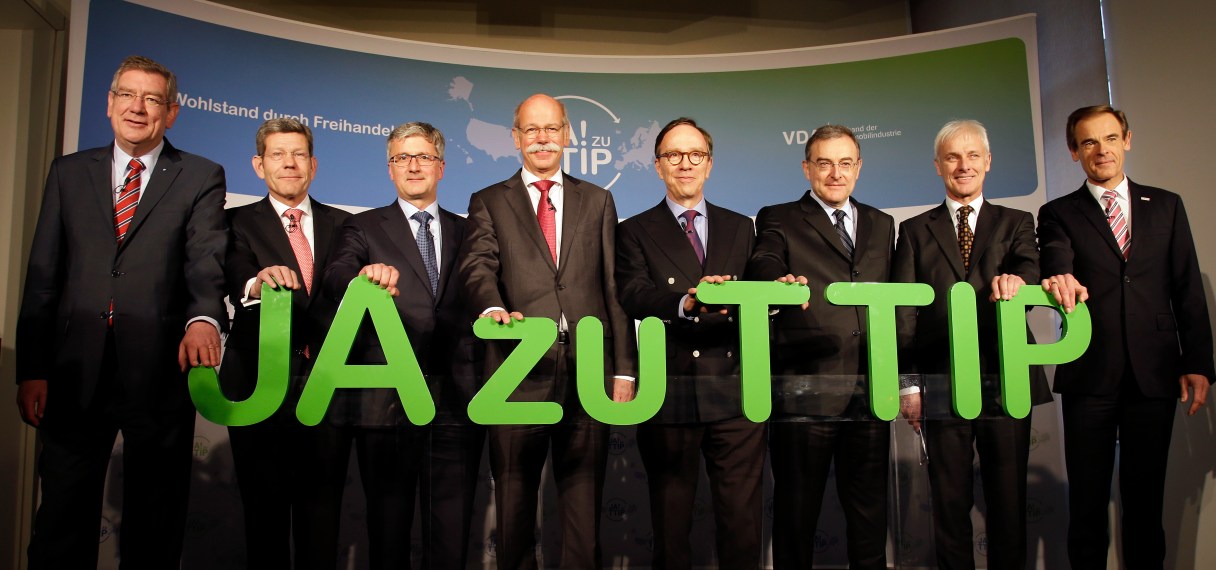
The CEO's of Kirchhoff Automotives, Arndt Kirchhoff,  German Ford Werke GmbH , Bernhard Mattes, Audi, Rupert Stadler, Daimler, Dieter Zetsche, German Association of the Automotive Industry, VDA,  President Matthias Wissmann, BMW, Norbert Reithofer, Porsche, Matthias Mueller and  electronics supplier  Bosch company , Volkmar Denner, from left, pose fore the media during a meeting to promote the  free Transatlantic Trade and Investment Partnership,  between the EU and the US, 'in Berlin, Germany, Wednesday, Jan. 28, 2015.  Words read : Say Yes to TTIP. (AP Photo/Michael Sohn)
The CEO's of Kirchhoff Automotives, Arndt Kirchhoff, German Ford Werke GmbH , Bernhard Mattes, Audi, Rupert Stadler, Daimler, Dieter Zetsche, German Association of the Automotive Industry, VDA, President Matthias Wissmann, BMW, Norbert Reithofer, Porsche, Matthias Mueller and electronics supplier Bosch company , Volkmar Denner, from left, pose fore the media during a meeting to promote the free Transatlantic Trade and Investment Partnership, between the EU and the US, 'in Berlin, Germany, Wednesday, Jan. 28, 2015. Words read : Say Yes to TTIP. (AP Photo/Michael Sohn)

BERLIN (AP) – German automakers are throwing their support behind a new trade deal being negotiated between the European Union and the United States.

Representatives from major car manufacturers like Daimler, BMW, Porsche and Volkswagen lobbied Wednesday for the deal at an event in Berlin.

Organizer Matthias Wissmann, of the German Association of the Automobile Industry, says Germany, as one of the world’s biggest exporters, “benefits from and lives, like virtually no other country, on globalization.”

Negotiations on the Transatlantic Trade and Investment Partnership, or TTIP, started in 2013 but many Europeans remain skeptical over concerns about environmental protections, labor security and other issues.

Volkswagen CEO Martin Winterkorn called TTIP a “historic opportunity” that would allow Europe and the US to set joint standards, “which will shape our world in the coming decades.”