
Monday, November 2, 2026Nov 2

This story is free to read.

Fiery risk? Air shipments of batteries questioned

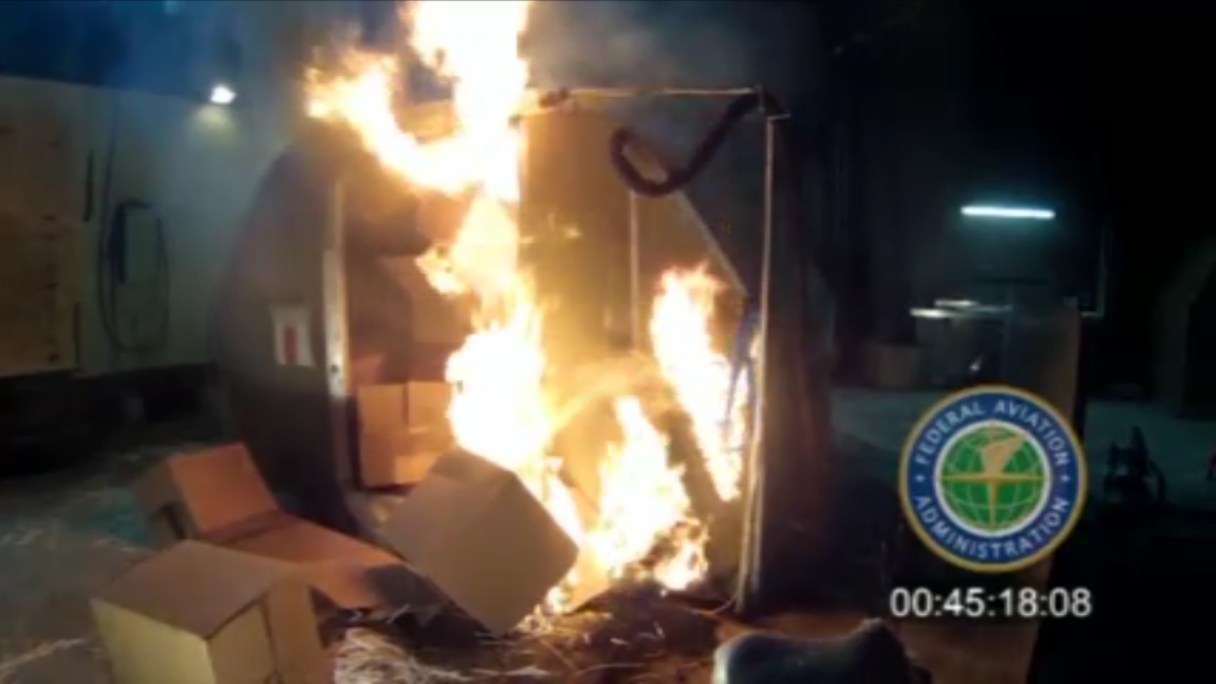
This frame grab from video, provided by the Federal Aviation Administration (FAA) shows a test at the FAAs technical center in Atlantic City, N.J. last April, where a cargo container was packed with 5,000 rechargeable lithium-ion batteries. A cartridge heater was inserted to simulate a single battery experiencing uncontrolled overheating. Forty-four minutes into the test a build-up of flammable gases inside the container caused an explosion that blew open the container’s door and sent boxes flying. The container was soon fully engulfed in flames. New U.S. government tests are raising concern that rechargeable lithium batteries carried as cargo on passenger airliners around the world are susceptible to fires or explosions that could destroy the planes. Yet U.S. and international officials have been slow to adopt safety restrictions that might affect both powerful industries that depend on the batteries and the airlines that profit from shipping them. The batteries are for products ranging from cellphones and laptops to hybrid cars. (AP Photo/FAA)
This frame grab from video, provided by the Federal Aviation Administration (FAA) shows a test at the FAAs technical center in Atlantic City, N.J. last April, where a cargo container was packed with 5,000 rechargeable lithium-ion batteries. A cartridge heater was inserted to simulate a single battery experiencing uncontrolled overheating. Forty-four minutes into the test a build-up of flammable gases inside the container caused an explosion that blew open the container’s door and sent boxes flying. The container was soon fully engulfed in flames. New U.S. government tests are raising concern that rechargeable lithium batteries carried as cargo on passenger airliners around the world are susceptible to fires or explosions that could destroy the planes. Yet U.S. and international officials have been slow to adopt safety restrictions that might affect both powerful industries that depend on the batteries and the airlines that profit from shipping them. The batteries are for products ranging from cellphones and laptops to hybrid cars. (AP Photo/FAA) This frame grab from video, provided by the Federal Aviation Administration (FAA) shows a test at the FAAs technical center in Atlantic City, N.J. last April, where a cargo container was packed with 5,000 rechargeable lithium-ion batteries. A cartridge heater was inserted to simulate a single battery experiencing uncontrolled overheating. Forty-four minutes into the test a build-up of flammable gases inside the container caused an explosion that blew open the container’s door and sent boxes flying. The container was soon fully engulfed in flames. New U.S. government tests are raising concern that rechargeable lithium batteries carried as cargo on passenger airliners around the world are susceptible to fires or explosions that could destroy the planes. Yet U.S. and international officials have been slow to adopt safety restrictions that might affect both powerful industries that depend on the batteries and the airlines that profit from shipping them. The batteries are for products ranging from cellphones and laptops to hybrid cars. (AP Photo/FAA)

WASHINGTON (AP) – Dramatic government tests results are raising concern that bulk shipments of rechargeable lithium batteries carried in passenger airplanes are susceptible to fires or explosions that could destroy the airliners.

A loophole in battery shipment regulations permits shippers to pack many small boxes containing thousands of rechargeable batteries into a single cargo pallet or container.

In one Federal Aviation Administration test, a cartridge heater was added to a container with 5,000 batteries to simulate a single battery experiencing uncontrolled overheating. As the overheating spread, flammable gases caused an explosion that blew the container door open and sent boxes flying. The container was in flames within seconds.

A second test in September produced similar results.