
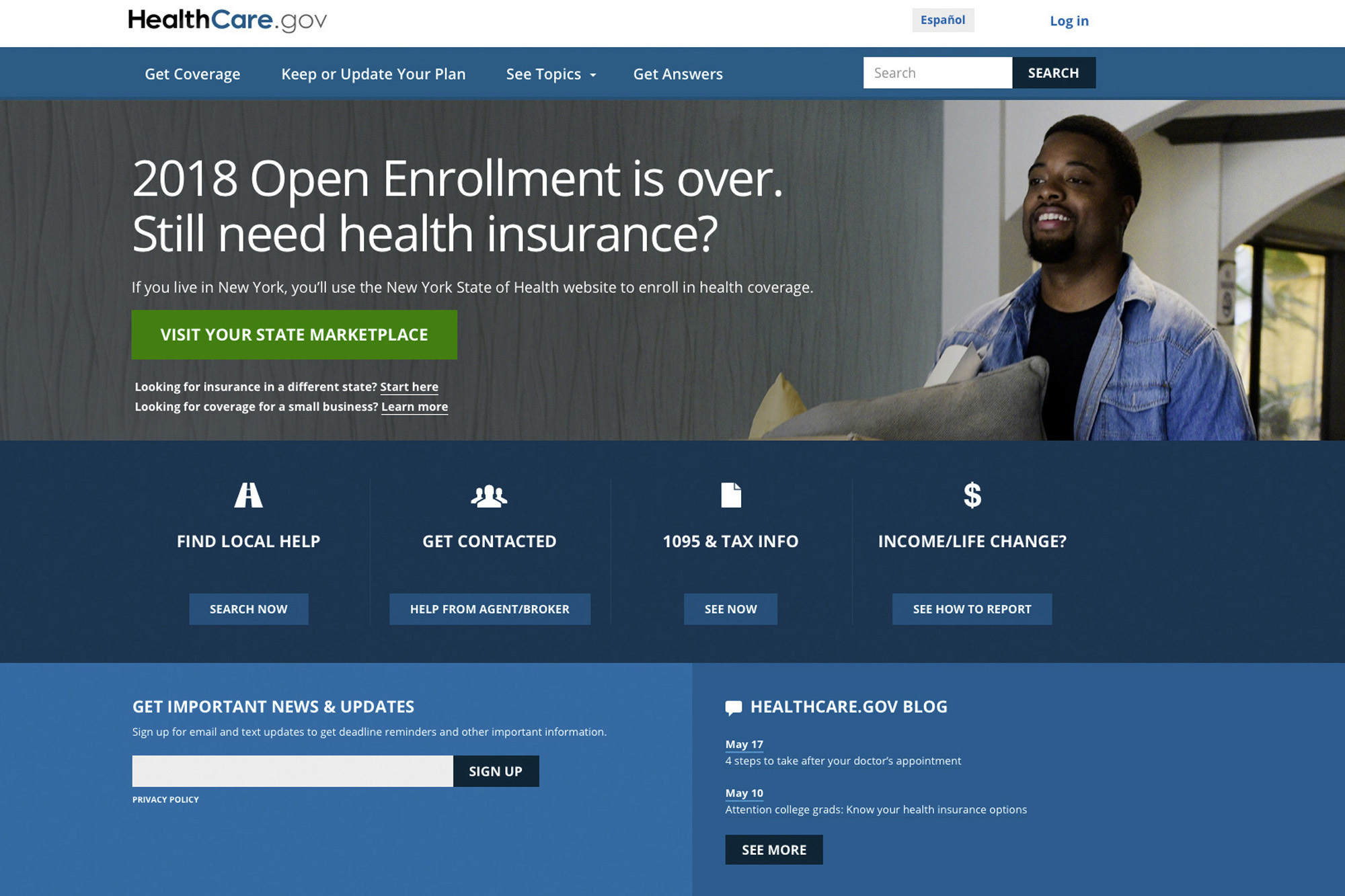
 This May 21, 2018 image shows the main page of the healthcare.gov website in Washington. On Wednesday, June 13, 2018, two independent experts said that the Trump administration appears to be taking aim at provisions of the Affordable Care Act that protect people in employer plans, not just those consumers who buy a policy directly from an insurer. The new position was outlined a week earlier in a legal brief the Justice Department filed in a Texas case challenging the health law. (HealthCare.gov via AP)
As health insurers prepare to file their rate requests today for individual plans in Tennessee next year, the Trump administration has thrown a wrench into the current payment method that adjusts payments to insurers to compensate for plans to cover higher risk individuals.
Over the weekend, the Centers for Medicare and Medicaid Services (CMS) decided to freeze more than $10 billion of planned risk adjustment payments to health insurers under the Affordable Care Act, or Obamacare. CMS Administrator Seema Verma said the agency sided with a court decision in New Mexico which ruled that the risk-adjustment formula was illegal even though another court challenge in Massachusetts upheld the federal program.
The Blue Cross and Blue Shield Association, which represents the 36 Blue Cross plans in America including the Chattanooga-based BlueCross plan in Tennessee, said removing risk adjustment payments “will significantly increase 2019 premiums for millions of individuals and small business owners.” Even though some insurers might save money by not having to pay the adjustment fees, the uncertainty about the pool of those insured is likely to cause companies to charge more to cover their higher risk.
Tennessee’s market had appeared to be stabilizing with two new insurers entering the market next year and BlueCross BlueShield of Tennessee said it expected relatively stable rates next year. But the suspension of the federal payments for insurers who take on riskier consumers could complicate next year’s market and boost prices yet again.
Julie Mix McPeak, commissioner of the Tennessee Department of Commerce and Insurance and president of the National Association of Insurance Commissioners, said she hopes the uncertainty about the payments can be resolved quickly to allow regulators and insurers to know the path forward.