
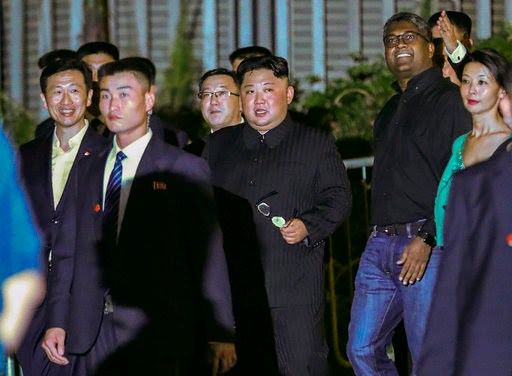
SINGAPORE (AP) — They came with scores of aides, bodyguards and diplomats in tow: Donald Trump from Washington, Kim Jong Un from Pyongyang. But for the better part of an hour, the two men will square off one on one, alone but for a pair of translators, raising concerns about the risk of holding such a monumental meeting with barely anyone to bear witness.
After greeting each other for the first time Tuesday in front of reporters, the American president and the North Korean leader will seclude themselves on Singapore’s Sentosa Island for roughly 45 minutes while their entourages wait nearby. The intimate huddle will precede a larger meeting and a working lunch attended by Trump’s chief of staff, national security adviser and secretary of state, the White House said, along with some of their North Korean counterparts.
Word of the private tete-a-tete on Monday immediately unleashed a torrent of criticism on social media from national security veterans. After all, having aides present in high-stakes meetings — especially ones with adversaries like the leader of North Korea — provides a president with a modicum of protection, ensuring there are staffers on hand to take accurate notes.
Absent a detailed historical record and corroborating witnesses, the president’s interlocutor could potentially leave the meeting and misrepresent what transpired, creating a he-said-he-said showdown that could turn into a major headache for the U.S. leader.
“Bad idea,” tweeted Paul Haenle, a former China director at the White House National Security Council in the Obama and George W. Bush administrations. “I could see Trump giving up a lot for very little in return.”