
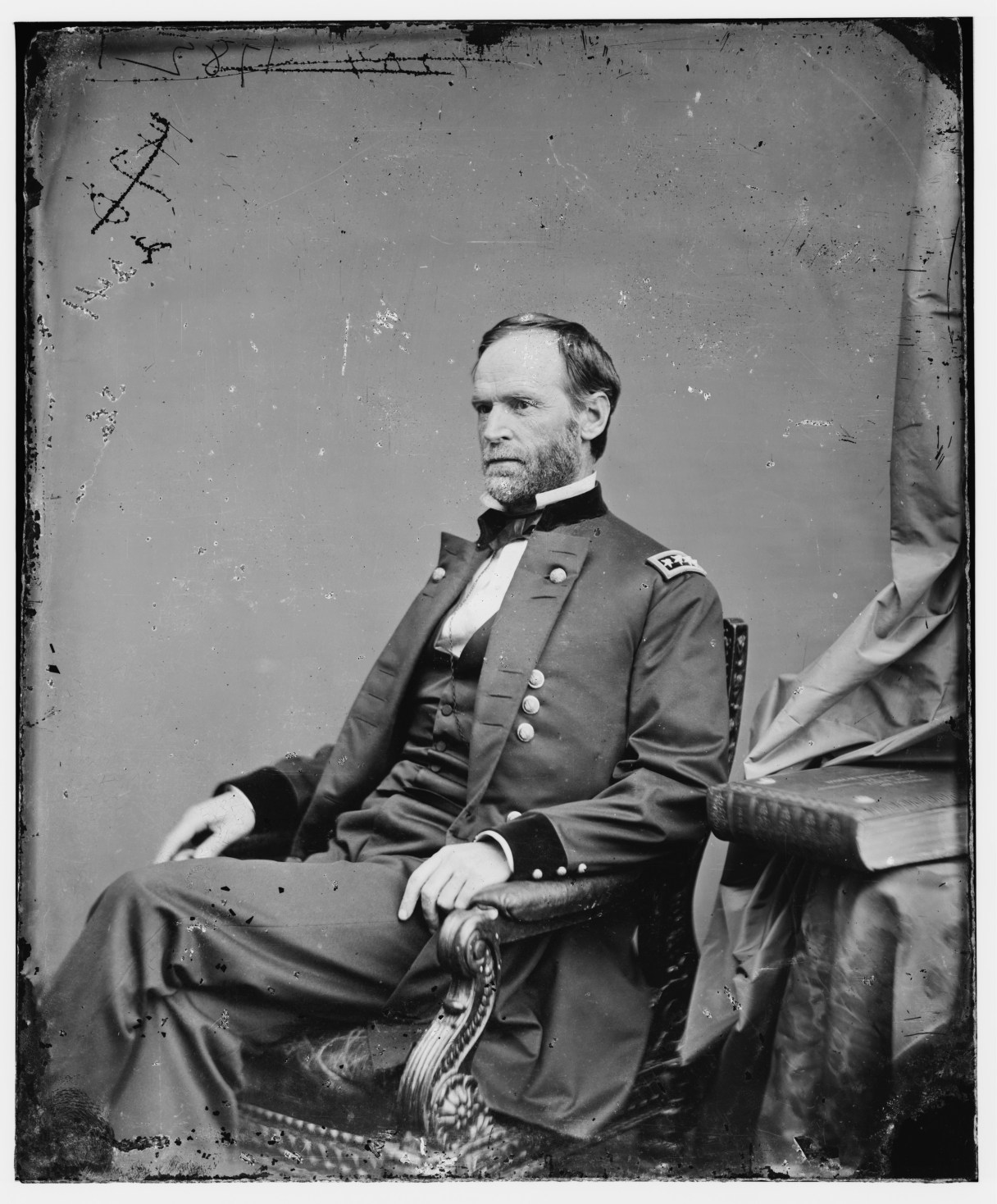
A turning point in the Civil War came 150 years ago this week, when Union Gen. William Tecumseh Sherman left the smoking ruins of Atlanta and launched his scorching March to the Sea. Here are five questions and answers about the commander whose name, even today, evokes admiration or hatred – and about his march, which hastened the war’s end:
WHY MARCH TO THE SEA?
The Civil War was in its third year in 1864, and casualties continued to mount. Sherman’s capture of Atlanta in September helped President Abraham Lincoln win a second term on Nov. 8, ensuring that his fight to preserve the Union would continue. At the same time, the Confederacy showed no sign of giving up.
With the top Union general, Ulysses S. Grant, confronting Robert E. Lee in Virginia, Sherman proposed an arcing campaign, first southward across Georgia to Savannah, then through the Carolinas toward Virginia to aid Grant. His army would leave a trail of destruction. This plan, Sherman reasoned, would conquer land but also send the enemy a message.
“If we can march a well-appointed army right through his territory, it is a demonstration to the world, foreign and domestic, that we have a power that (Confederate President Jefferson) Davis cannot resist,” Sherman wrote to Grant.