
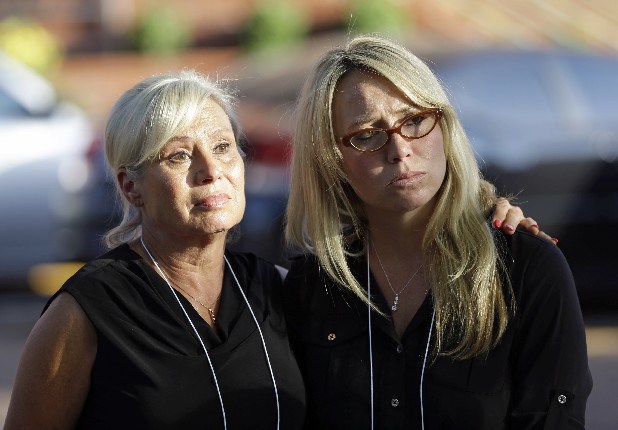
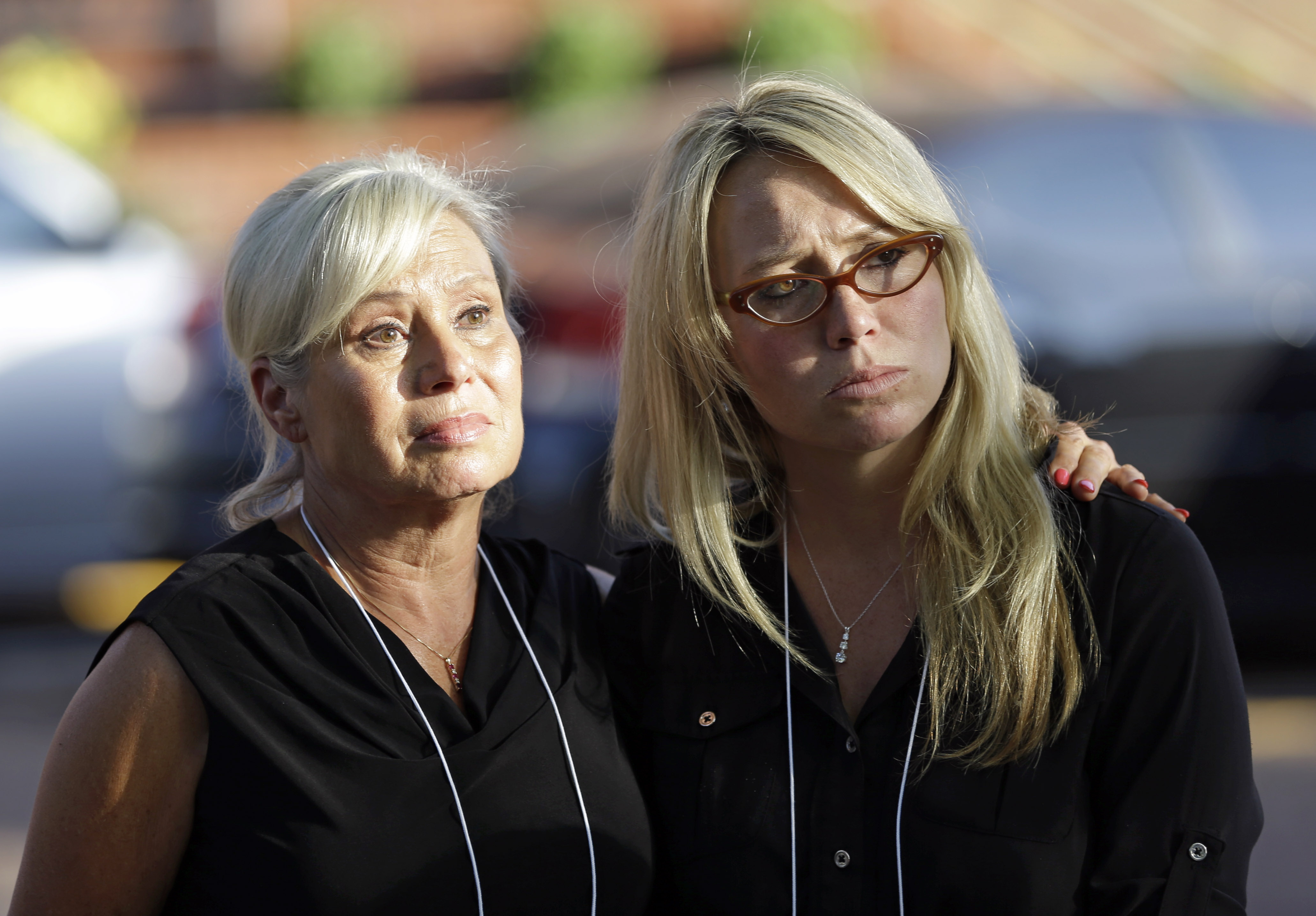
 Donna Aldred, left, and her daughter, Leslie Lambert, right, listen during a news conference after the execution of Kimberly McCarthy at the Texas Department of Criminal Justice Huntsville Unit, where the death chamber is located in Huntsville, Texas. Aldred’s mother, Dorothy Booth, was killed by McCarthy in 1997. In debate over slow executions, victim families wrestle with whether those condemned should suffer.
Randy Browning watched from behind the glass as Kimberly McCarthy slipped quietly into unconsciousness, snored briefly, then finally stopped breathing. It didn’t matter to him that this woman – who’d brutally stabbed and mutilated his beloved godmother and mentor – was allowed a peaceful, painless death.
For Browning, it was enough to know that Dorothy Booth’s murderer was no more.
“I’m happy not to share the planet with Kimberly McCarthy,” he said from his home in Austin, Texas. “But would I want her to be strung up and tortured? No.”
The prolonged – some say “botched” – execution of double murderer Joseph Rudolph Wood last week in Arizona fanned the flames of the unending debate over whether vicious killers should suffer as they die for their crimes. The controversy follows two other recent executions that went awry: In January, an Ohio inmate snorted and gasped for nearly a half hour before dying; in Oklahoma, a man died of a heart attack minutes after prison officials halted his execution because the drugs weren’t being administered properly.
Talk with loved ones of their victims, and you’ll find some on all sides of the issue.