
Tuesday, November 10, 2026Nov 10

Bird flu takes biggest toll yet as virus hits chicken farms

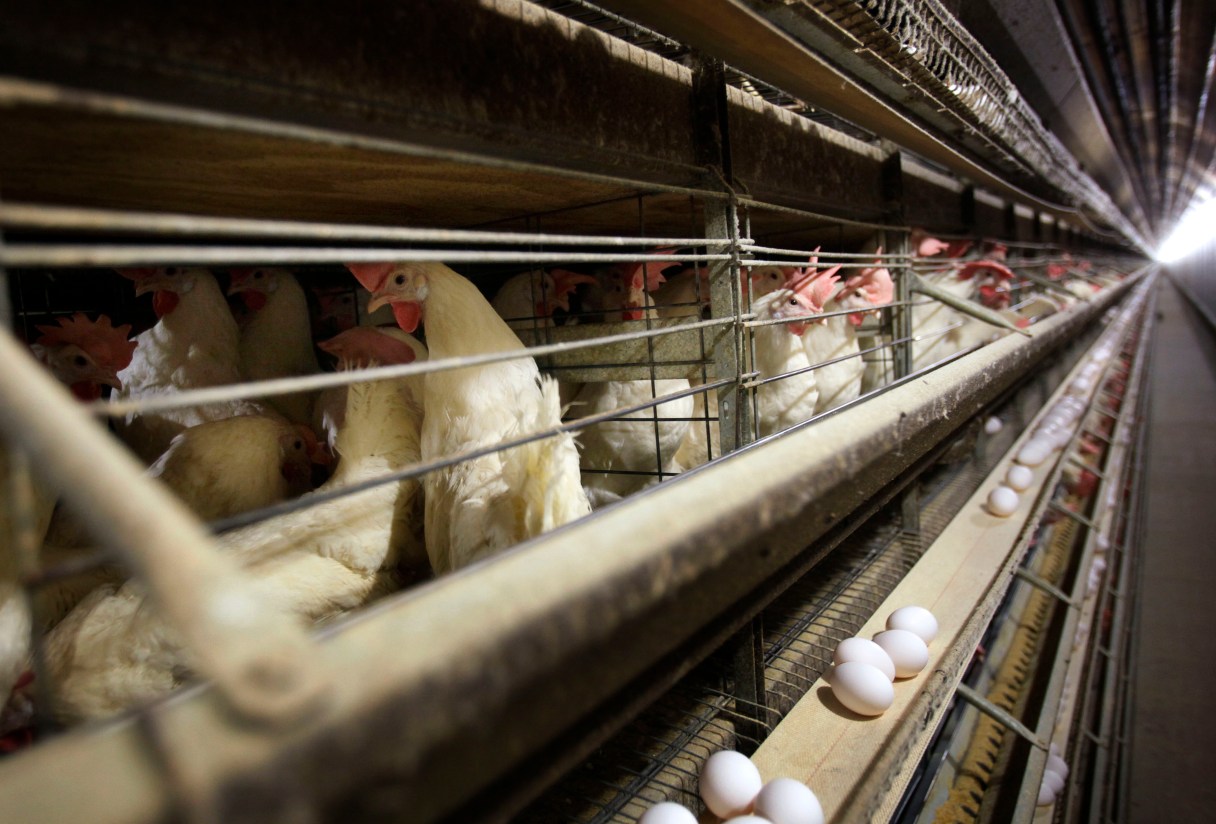
FILE - In this Nov. 16, 2009 file photo, chickens stand in their cages at a farm near Stuart, Iowa. Discovery of the bird flu on an Iowa turkey farm has raised serious concerns that the bird killer could find its way into chicken barns in the nation’s top egg-producing state and rapidly decimate the flocks that provide the U.S. with its breakfast staple. (AP Photo/Charlie Neibergall, File)
FILE - In this Nov. 16, 2009 file photo, chickens stand in their cages at a farm near Stuart, Iowa. Discovery of the bird flu on an Iowa turkey farm has raised serious concerns that the bird killer could find its way into chicken barns in the nation’s top egg-producing state and rapidly decimate the flocks that provide the U.S. with its breakfast staple. (AP Photo/Charlie Neibergall, File) FILE - In this Nov. 16, 2009 file photo, chickens stand in their cages at a farm near Stuart, Iowa. Discovery of the bird flu on an Iowa turkey farm has raised serious concerns that the bird killer could find its way into chicken barns in the nation’s top egg-producing state and rapidly decimate the flocks that provide the U.S. with its breakfast staple. (AP Photo/Charlie Neibergall, File)

MINNEAPOLIS (AP) – Poultry producers and scientists have been hoping warmer weather would knock down a virulent strain of bird flu that has hammered the Midwest, but the virus recently took its biggest toll yet, hitting a farm in Iowa that held nearly 10 percent of the state’s egg-laying chickens. Here are some questions and answers about the outbreak:

WHAT’S THE LATEST?

The U.S. Department of Agriculture said Monday that the deadly H5N2 bird flu virus was found at a farm in northwest Iowa’s Osceola County. The confirmation means up to 5.3 million hens there must be destroyed in a state that produces one in every five eggs consumed in the country. Seven other Midwestern states have been hit by the virus, dooming nearly 7.8 million turkeys and chickens since March.

WHAT’S THE OUTLOOK?

U.S. Department of Agriculture officials say the virus could be a problem for several years. The USDA’s chief veterinary officer, Dr. John Clifford, also said last week that while new cases should drop to close to zero once the weather warms up and kills off the virus, there’s “very likely” to be a resurgence this fall when the wild waterfowl that are natural carriers of avian influenza fly south for the winter.