
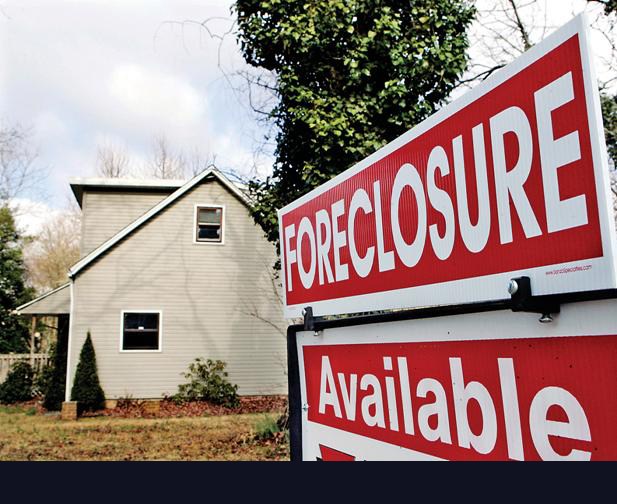
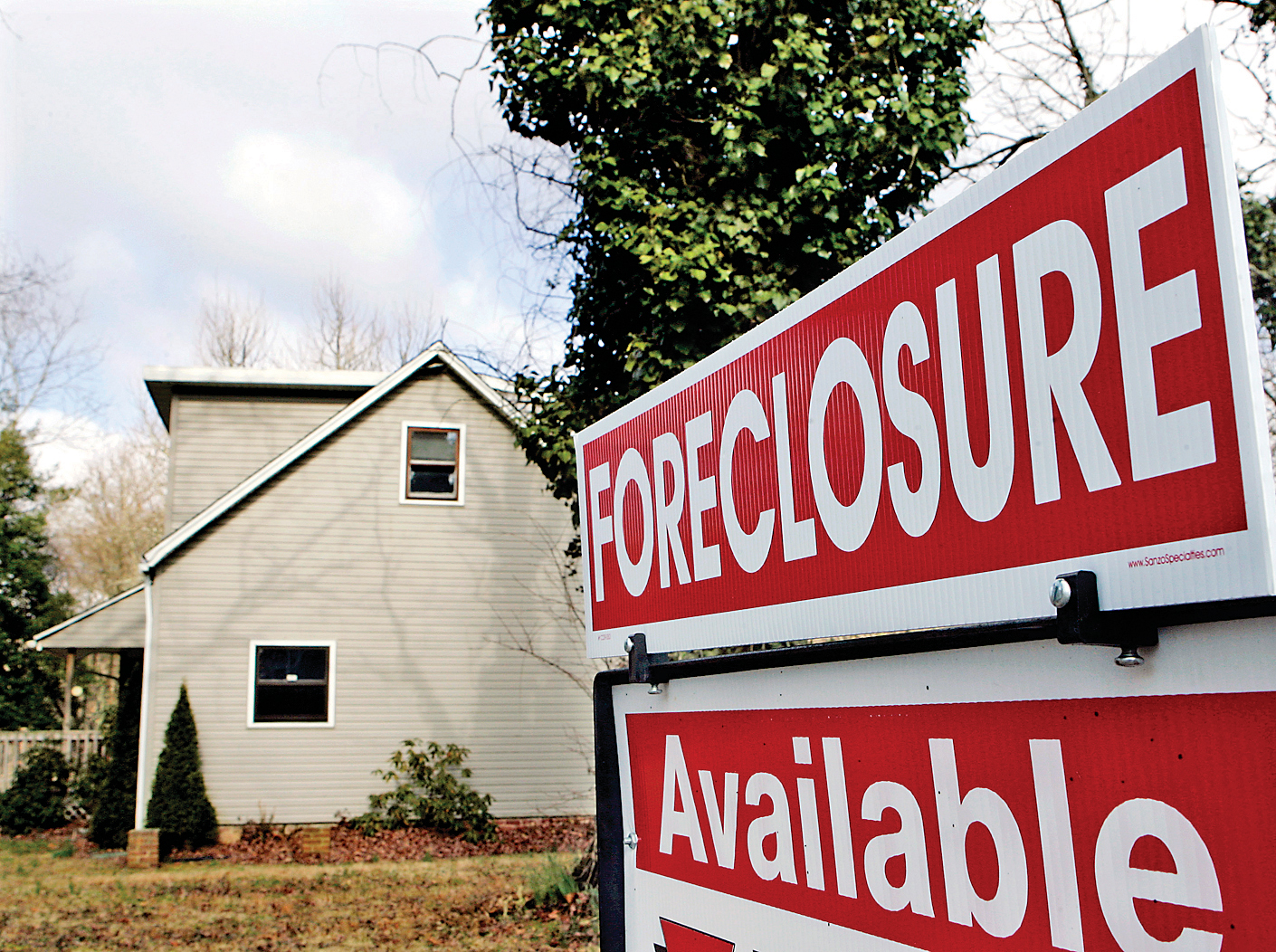
 A realtor’s sign is seen on the lawn of a foreclosed home in Egg Harbor Township, N.J.
Relief for home buyers who were abruptly, often wrongly, forced into foreclosures or denied refinancing in the housing bust that ignited the 2008 financial crash has dragged on far too long. The post-crash haze has left too many wronged homebuyers uncompensated, even as it has hindered a revival of the housing market. The $20 billion-plus in settlements for mortgage abuse reached Monday by the government with 10 of the nation’s biggest banks and mortgage lenders won’t correct all the rapacious wrongdoing claimed by consumers against the banks. But it will help a significant number of beleaguered or former homeowners, and it certainly will aid the shift back to a more normal housing market.
The biggest payer is the Bank of America, which agreed in a separate settlement to pay around $11 billion to Fannie Mae, the giant government-backed housing authority long used as a federal sink for mortgages off-loaded by private lenders to keep capital markets primed for new housing. The agency suffered huge taxpayer-backed losses in the housing bust, mainly because BOA and other lenders in the 2000-2008 housing boom invited and knowingly made risky, deceitful or blatantly bad loans easily available to homebuyers who couldn’t afford their ballooning housing costs.
BOA’s individual settlement gave Fannie Mae $3.6 billion in compensation for bad mortgages, and $6.75 billion to buy back mortgages that yet could cause future losses to the agency. It also agreed to sell to other companies the right to service or collect payments on other home loans worth $306 billion.
The $8.5 billion group settlement agreed to by the Bank of America, Wells Fargo, Citigroup and JPMorgan Chase, among others, is to be used to settle claims surrounding abuse of foreclosure rules. The terms provide $3.3 billion in cash to borrowers whose homes were wrongly foreclosed in 2009 and 2010, and $5.2 billion to help troubled mortgage holders who still need help to avoid foreclosure proceedings. The funds may be used to reduce mortgage debt by cutting the principle amount owed, or to reduce monthly payments. The agreement covers around 3.8 million mortgages, and could provide payments from a few hundred dollars to as much as $125,000.
Though late, the settlements could be a godsend to purchasers who have a taken a financial beating while trying to hold on to homes under mortgages that are now under water, and to those who were wrongly foreclosed. Certainly it’s clear that most mortgage holders caught in the housing crash have suffered far more than their bankers.