
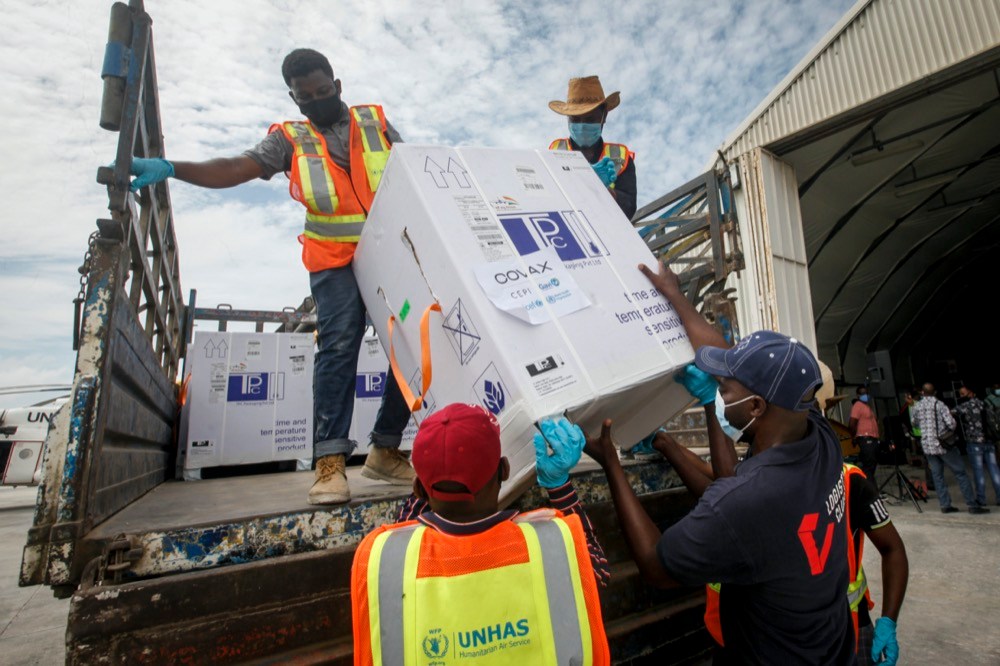
CAPE TOWN, South Africa (AP) – Health officials and experts around the world on Thursday welcomed a U.S. plan to donate 500 million more COVID-19 vaccines to developing countries, but the celebrations came with hesitation.
For instance, when exactly will those vaccines reach regions left behind in the global race and that are feeling the bite right now with deadly new waves of virus infections? And how many other wealthy nations will follow the lead of the U.S. to fill the gaping need?
The Biden administration’s promise to purchase and share Pfizer vaccines was “clearly a cause for celebration,” said Dr. John Nkengasong, the director of the Africa Centers for Disease Control and Prevention, particularly at a time when virus infections are aggressively increasing on the continent, and there are still countries that haven’t administered a single dose.
“Absolutely, it’s going to be a big help,” Nkengasong said, although he added he was eager to understand the exact timeline for the shots hopefully heading to his continent.
Two hundred million doses – enough to fully protect 100 million people – will be provided this year, with the balance donated in the first half of 2022, according to the White House. The U.S. will work with the U.N.-backed COVAX alliance to deliver the shots. Some have noted that since the Pfizer vaccines require extremely cold storage, they present an extra logistical challenge for countries with struggling health systems and poor infrastructure.