
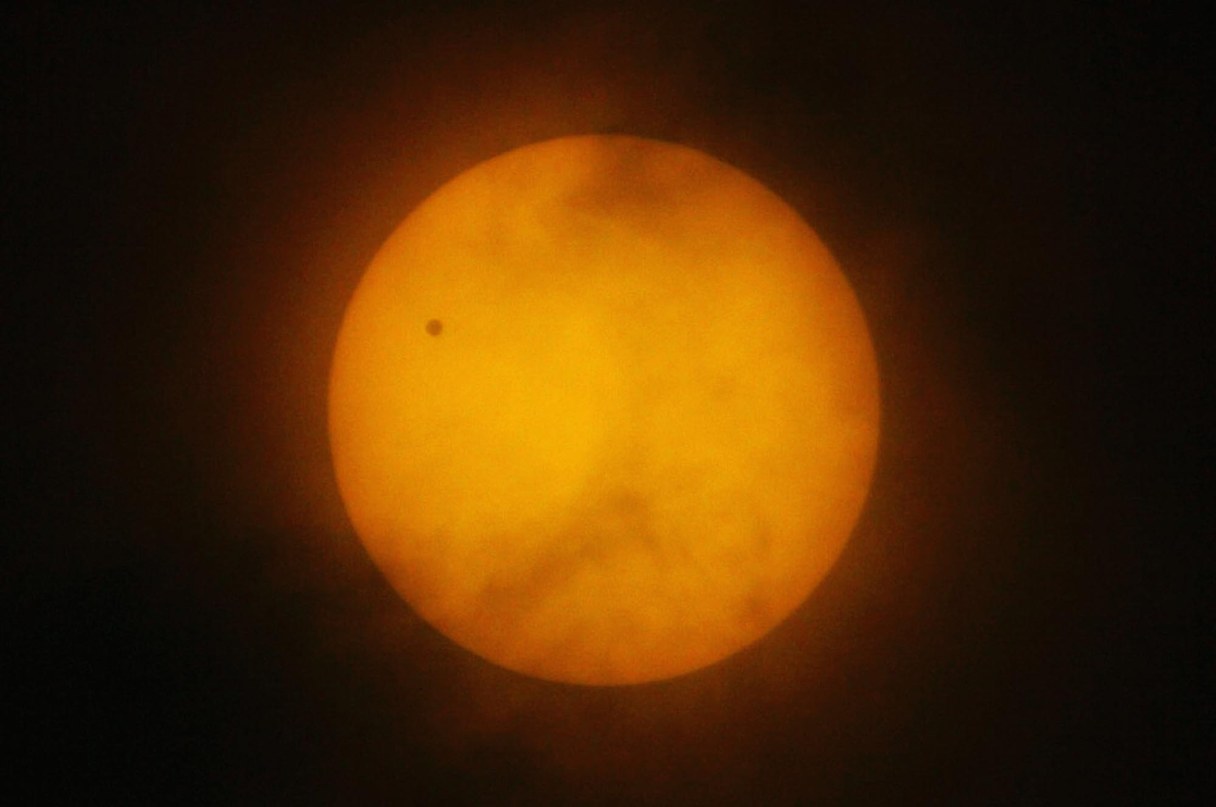
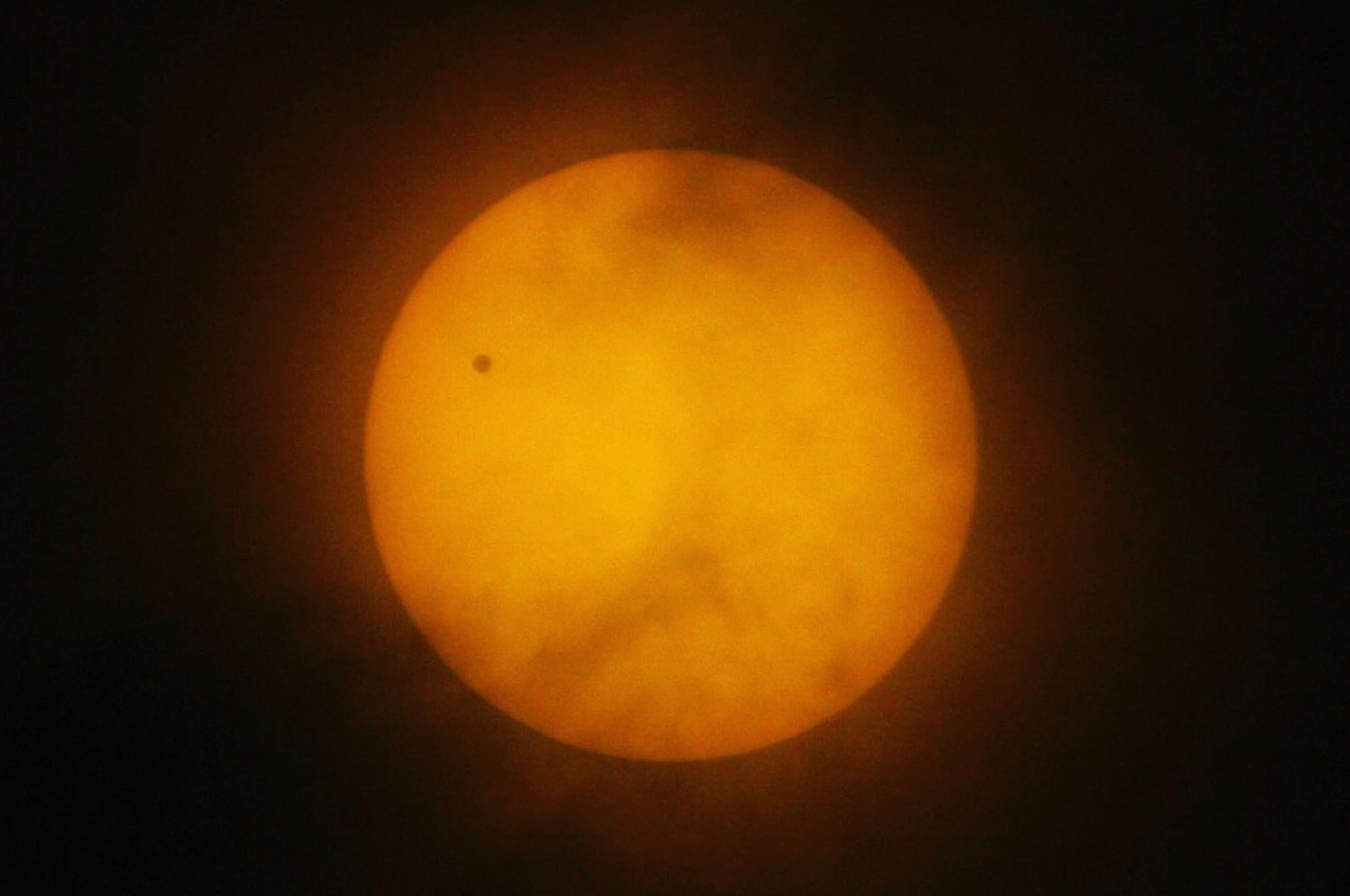
 A tiny dot of the planet Venus is seen on the northwest side of the Sun’s disc as viewed in Manila, Philippines, on a rare astronomical occasion in this June 8, 2004 file photo. On June 5, 2012, Venus will pass across the face of the sun, producing a silhouette that no one alive today will likely see again. Transits of Venus are very rare, coming in pairs separated by more than a hundred years. This June’s transit, the bookend of a 2004-2012 pair, won’t be repeated until the year 2117. Fortunately, the event is widely visible. Observers on seven continents, even a sliver of Antarctica, will be in position to see it. (AP Photo/Bullit Marquez)
ALICIA CHANG
LOS ANGELES (AP) – It’s a spectacle that won’t repeat for another century – the sight of Venus slowly inching across the face of the sun.
So unless scientists discover the fountain of youth, none of us alive today will likely ever witness this celestial phenomenon again, dubbed a “transit of Venus.”
It’s so unique that museums and schools around the globe are hosting Venus viewing festivities – all for a chance to see our star sport a fleeting beauty mark. Even astronauts aboard the International Space Station plan to observe the event.
The drama unfolds Tuesday afternoon from the Western Hemisphere (Wednesday morning from the Eastern Hemisphere.)