
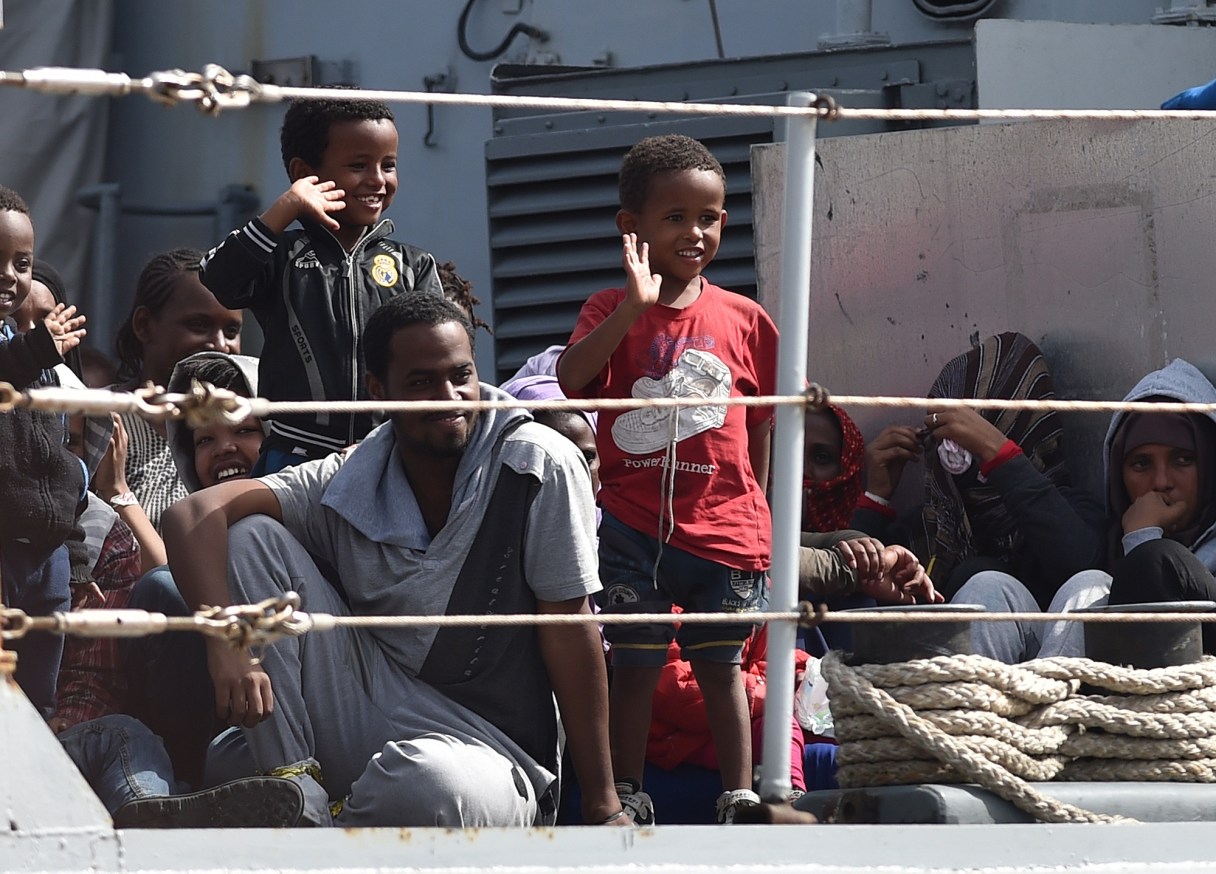
BRUSSELS (AP) – The world’s leading migration group is urging the European Union to accept far more asylum seekers than the 20,000 it has planned to take under a new EU scheme to resettle people in need of protection.
The number of desperate migrants crossing the Mediterranean to get to Europe is rising, with more than 80,000 landing so far this year. The International Organization for Migration estimates that 1,820 other migrants have died or gone missing on that journey.
“The 20,000 quota is commendable. We’re glad for it,” IOM Director General William Lacy Swing told EU lawmakers on Tuesday, but he added that Europe “needs to go much, much further.”
Swing said the “drivers of migration are such that large-scale migration is going to remain a mega-trend of our century.”
He said the 20,000 migrant figure should serve as a starting point to “try to build a level of confidence” to go further.
The EU plan to resettle asylum seekers from non-EU countries and a temporary scheme to better share those migrants already in Europe will be unveiled Wednesday in Brussels. It’s part of the EU response to a massive influx of migrants across the seas that has left countries like Italy, Greece, Malta, Germany and Sweden carrying the biggest burdens.
The plan, which has already been criticized by several EU nations, aims to make other EU nations do more for the front-line countries.
“It is a proposal that for the moment – even if it is not perfect – would represent an enormous step forward compared to what there is today, because it introduces the element of solidarity,” the EU’s foreign policy chief, Federica Mogherini, told reporters.