
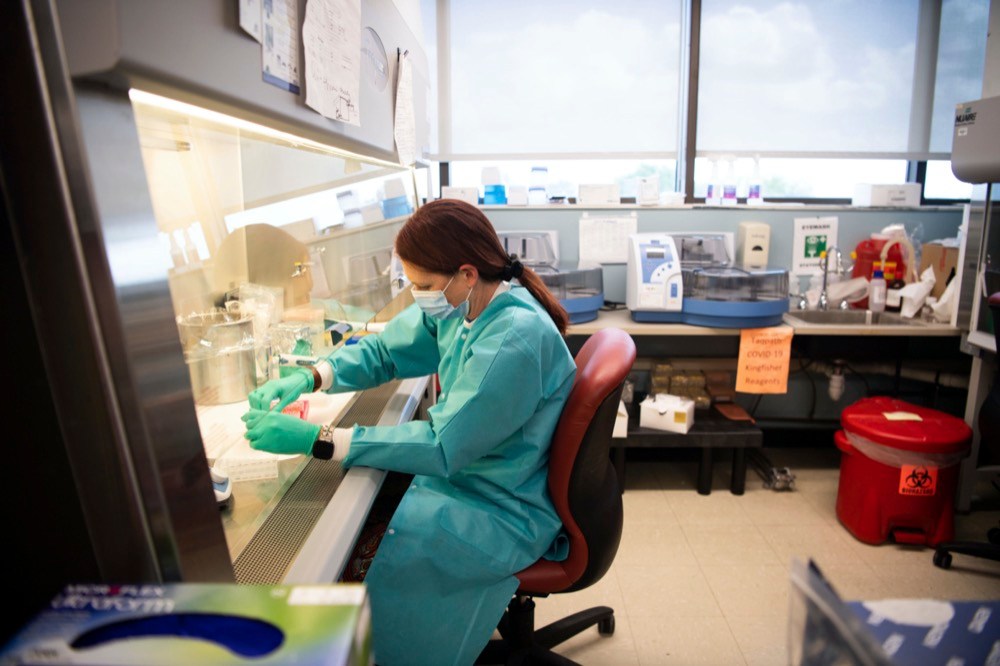
NASHVILLE, Tenn. (AP) – Once a week, in an unremarkable brick building in East Nashville, a few dozen samples of the coronavirus undergo a journey that is nothing short of extraordinary.
Lab workers use magnetic beads to strip the microscopic virus of its genetic code, duplicate it millions of times, and then feed a plethora of DNA into a machine that reads it rung-by-rung. Each time the machine recognizes a bit of genetic code, it records a tiny flash of color-coded fluorescent light, amounting to gigabytes of data on an incomprehensible number of flashes that is sent for analysis by a supercomputer in Florida.
When the results come back, the secrets of the genetic code have been laid bare. Each sample of coronavirus can now be identified by a truer name: alpha or gamma or delta or mu.
This is “whole genome sequencing,” one of the newest tools in the Tennessee government’s effort to understand the spread of coronavirus variants and the pandemic overall. Until recently, this kind of detailed COVID-19 testing was largely limited to Tennessee labs run by universities and a few private companies, but the state lab added the capability to sequence the virus on a small scale in July after months of planning, officials said.
Currently, the state lab can sequence only about 75 to 90 COVID-19 samples a week, although it has plans to add equipment that will boost this capacity into the hundreds, deputy lab director Kara Levinson said.