
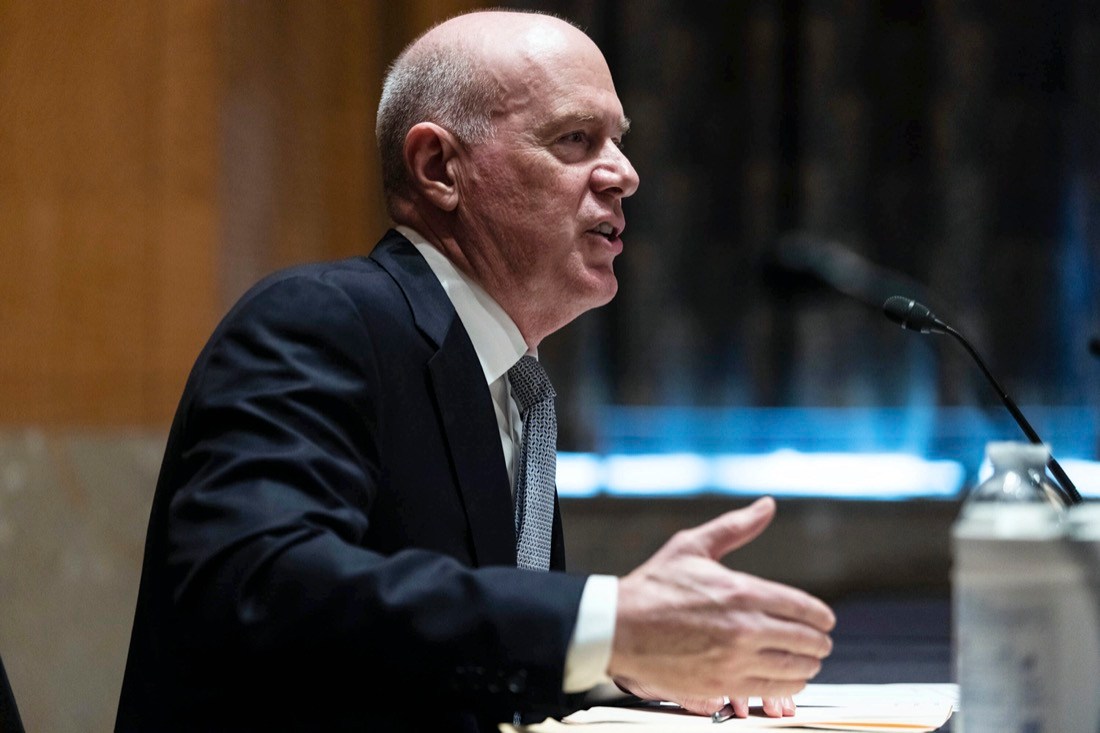
WASHINGTON (AP) – A pipeline company CEO on Tuesday defended his decisions to abruptly halt fuel distribution for much of the East Coast and pay millions to a criminal gang in Russia as he faced down one of the most disruptive ransomware attacks in U.S. history.
Colonial Pipeline CEO Joseph Blount said he had no choice, telling senators uneasy with his actions that he feared far worse consequences given the uncertainty the company was confronting as the attack unfolded last month.
“I know how critical our pipeline is to the country,” Blount said, “and I put the interests of the country first.”
His testimony to the Senate Homeland Security Committee on the May 7 cyberattack provided a rare window into the dilemma faced by the private sector amid a storm of ransomware attacks in which overseas hackers breach a company’s network and encrypt their data, demanding a ransom to release it back to them.
U.S. authorities tell companies not to pay the ransom, arguing the crooks may not provide the keys to unencrypt the data and that the payments will encourage future attacks and help sustain criminal networks typically based in Russia and Eastern Europe. Blount chose to disregard that advice within the first 24 hours of the attack and paid the equivalent of $4.4 million in bitcoin to retrieve the company’s data. U.S. officials said Monday they had recovered much of the payment.