
Tuesday, November 10, 2026Nov 10

$1.2 million awarded for Alabama-based breast cancer research

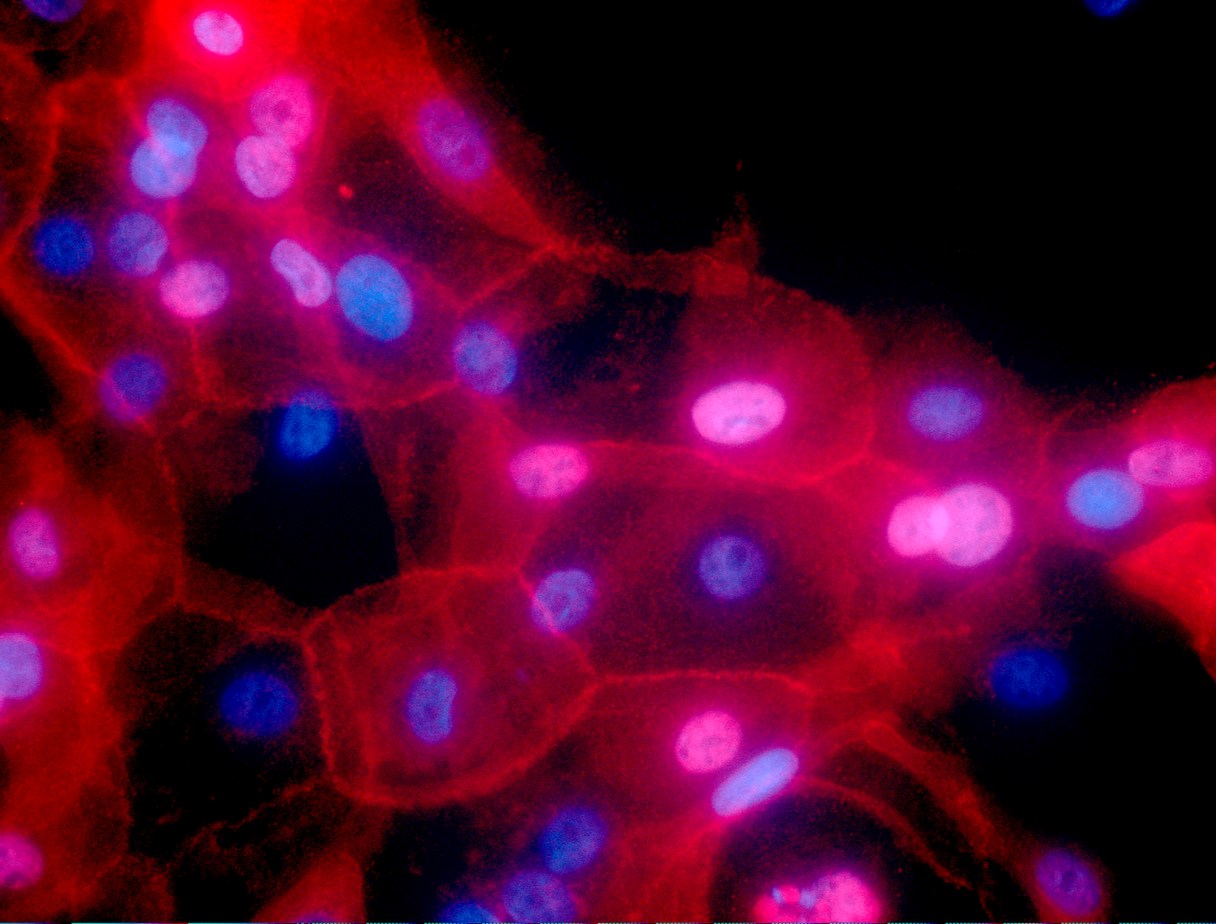
This undated fluorescence-colored microscope image made available by the National Institutes of Health in September 2016 shows a culture of human breast cancer cells. Environmental risks and heredity get the most blame for cancer, but new research released on Thursday, March 23, 2017 suggests random chance may play a bigger role than people realize: Healthy cells naturally make mistakes when they multiply, typos in your DNA that can leave new cells carrying cancer-prone genetic mutations. (Ewa Krawczyk/National Cancer Institute via AP)
This undated fluorescence-colored microscope image made available by the National Institutes of Health in September 2016 shows a culture of human breast cancer cells. Environmental risks and heredity get the most blame for cancer, but new research released on Thursday, March 23, 2017 suggests random chance may play a bigger role than people realize: Healthy cells naturally make mistakes when they multiply, typos in your DNA that can leave new cells carrying cancer-prone genetic mutations. (Ewa Krawczyk/National Cancer Institute via AP) This undated fluorescence-colored microscope image made available by the National Institutes of Health in September 2016 shows a culture of human breast cancer cells. Environmental risks and heredity get the most blame for cancer, but new research released on Thursday, March 23, 2017 suggests random chance may play a bigger role than people realize: Healthy cells naturally make mistakes when they multiply, typos in your DNA that can leave new cells carrying cancer-prone genetic mutations. (Ewa Krawczyk/National Cancer Institute via AP)

BIRMINGHAM, Ala. (AP) — More than $1.2 million is being awarded to fund 20 breast cancer research projects across Alabama using money from donations, government and sales of specialty license plates.

The Breast Cancer Research Foundation of Alabama announced the funding Friday for projects at sites including the University of Alabama at Birmingham, Auburn University, the University of South Alabama, the University of Alabama, CerFlux, Southern Research and the HudsonAlpha Institute for Biotechnology.

The grants often are used as seed money for developing studies that are needed to compile data needed for additional funding, according to a statement from the foundation.

The foundation said it has provided more than $12 million since 1996.