
Tuesday, November 10, 2026Nov 10

Laser co-creator Charles Townes, a Nobel laureate, dies

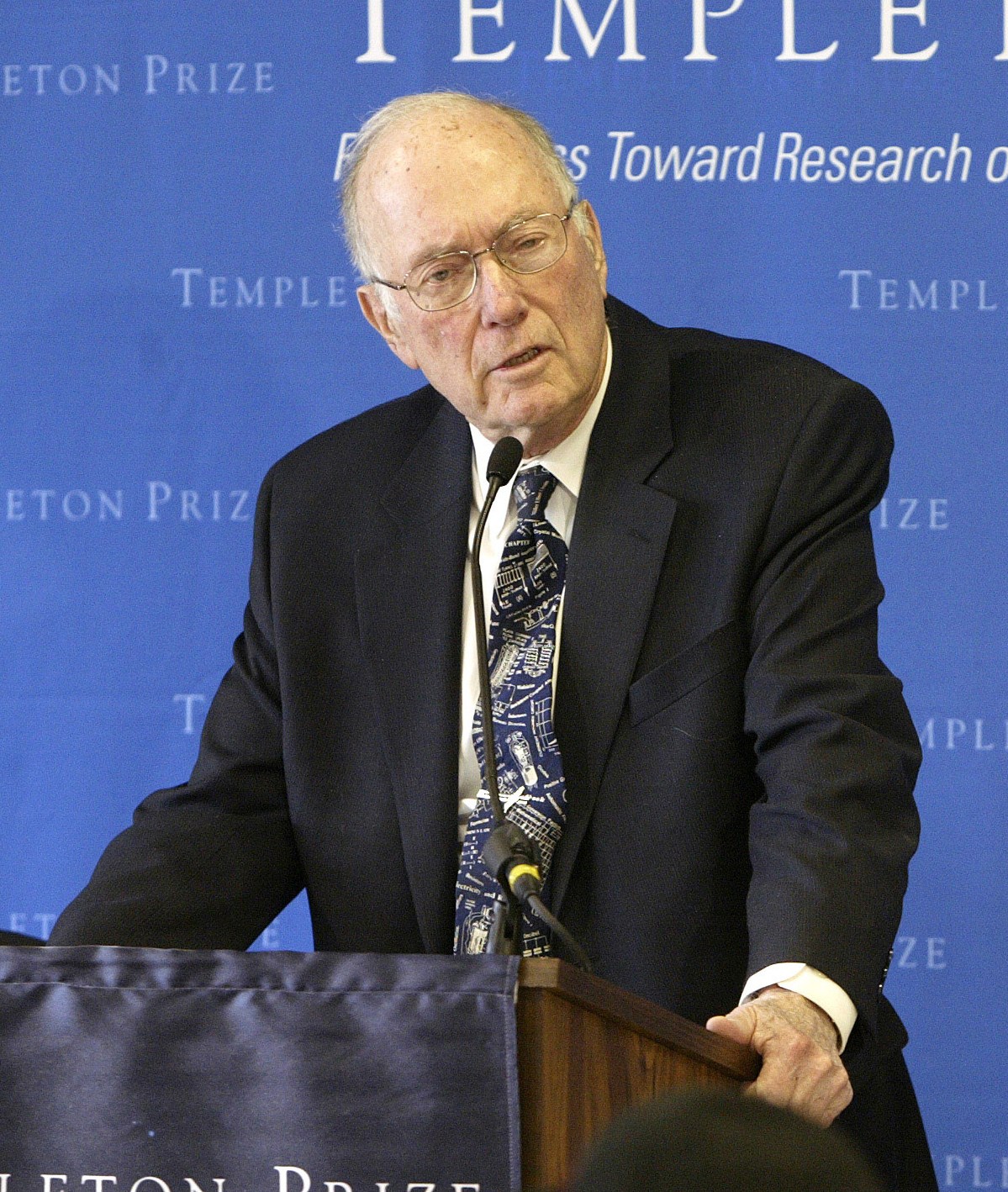
File - In this March 9, 2005, file photo, Charles Townes speaks after winning the Templeton Prize in New York. Townes, the co-inventor of the laser and a Nobel laureate in physics, has died. He was 99. Officials at the University of California, Berkeley, where Townes was a professor emeritus, said he had been in poor health before he died Tuesday, Jan. 27, 2015, on the way to an Oakland, Calif., hospital. (AP Photo/Gregory Bull, File)
File - In this March 9, 2005, file photo, Charles Townes speaks after winning the Templeton Prize in New York. Townes, the co-inventor of the laser and a Nobel laureate in physics, has died. He was 99. Officials at the University of California, Berkeley, where Townes was a professor emeritus, said he had been in poor health before he died Tuesday, Jan. 27, 2015, on the way to an Oakland, Calif., hospital. (AP Photo/Gregory Bull, File) File - In this March 9, 2005, file photo, Charles Townes speaks after winning the Templeton Prize in New York. Townes, the co-inventor of the laser and a Nobel laureate in physics, has died. He was 99. Officials at the University of California, Berkeley, where Townes was a professor emeritus, said he had been in poor health before he died Tuesday, Jan. 27, 2015, on the way to an Oakland, Calif., hospital. (AP Photo/Gregory Bull, File)

BERKELEY, Calif. (AP) – Charles H. Townes’ inspiration for the predecessor of the laser came to him while sitting on a park bench, waiting for a restaurant to open for breakfast.

On the tranquil morning hours of April 26, 1951, Townes scribbled a theory on scrap paper that would lead to the laser, the invention he’s known for and which transformed everyday life and led to other scientific discoveries.

Townes, who was also known for his strong spiritual faith, famously compared that moment to a religious revelation.

The 99-year-old Nobel Prize-winning physicist died Tuesday.

In 1954, that theory was realized when Townes and his students developed the laser’s predecessor, the maser (microwave amplification by stimulated emission of radiation).