
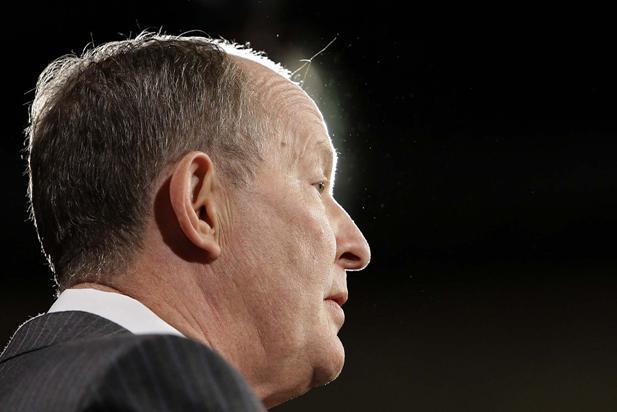
 Sen. Lamar Alexander
Has it been six years already? It sure doesn’t seem like six years have passed since the last time Sen. Lamar Alexander, R-Tenn., slinked back to Tennessee to launch his bid for re-election. But there he was last Saturday, at press conferences in Nashville and Knoxville, hoping to reinvent history, ignore facts and stretch the truth in his efforts to make Tennesseans forget what a sad excuse for a U.S. Senator he has become.
Six years ago, after his first term, he was already being criticized. His votes in support of bloated budget bills, raising the debt ceiling and funding ridiculous green-energy boondoggles with billions of tax dollars befuddled conservative state lawmakers, thought leaders, policy wonks and, ultimately, voters.
Now, with a second term in the U.S. Senate coming to an end, Alexander has even more explaining to do. Besides his now-typical votes to increase federal spending and expand government powers, he infuriated many conservatives by supporting an $85 billion jobs bill and championing the START nuclear weapons reduction treaty with Russia in 2010. He also killed jobs and increased electric bills in Tennessee by voting in favor of the ridiculous Mercury and Air Toxics Standards regulations that do almost nothing to improve air quality or health.
Last year, Alexander left his post as the third-ranking Republican in the U.S. Senate in an effort to escape some of the Republican Party’s principled stances, which he found incompatible with his own brand of deal-making. In other words, he liked making alliances with Democrats more than he liked the idea of being in the leadership. Since then, he has been busy hanging conservative, limited government policies out to dry in an effort to push various examples of liberal legislative lunacy.
Just last week, Alexander attempted to put a national online sales tax into a defense appropriations bill.