
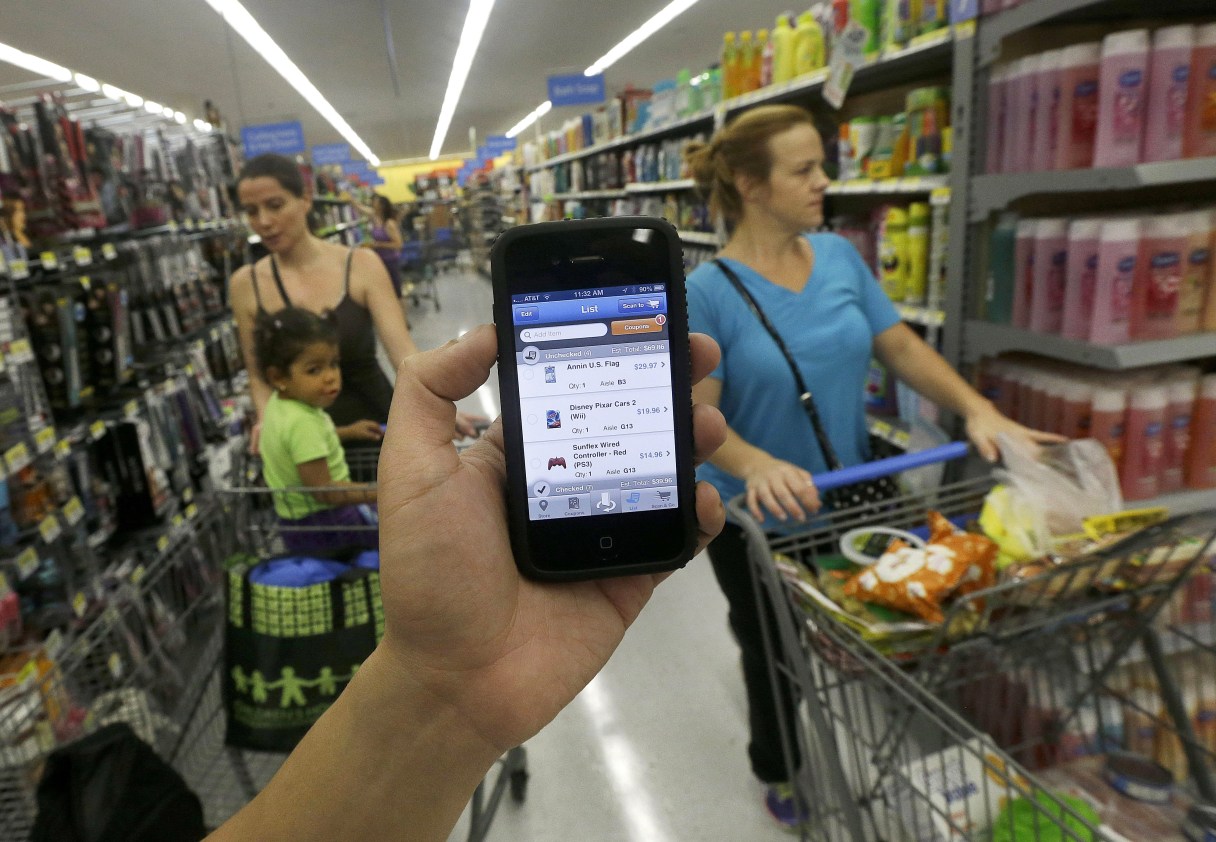
NEW YORK (AP) – NEW YORK – Wal-Mart thought shoppers would jump at the opportunity to use a smartphone app to scan items they want to buy as they walk through store aisles. In theory, they could speed through self-checkout.
But customers had trouble using the “Scan & Go” app during tests in 200 stores, so Wal-Mart nixed it.
Instead of looking at the app as a failure, though, Wal-Mart took what it learned from “Scan & Go” to create another service: It found that customers like being able to track their spending, an insight that became the impetus for a program that enables shoppers to store electronic receipts.
The story behind “Scan & Go” illustrates how traditional retailers increasingly are using the nimbler approach to innovating that Silicon Valley startups are known for. Rather than perfecting a program before rolling it out – as most retailers do – they’re doing more testing and refining as they go along. If the tests work, they’re rolled out nationally. If they don’t, retailers shutter them and incorporate what they learn into other projects.
The test-and-learn approach comes as retailers face intense competition for U.S. shoppers, many of who are still struggling financially. Wal-Mart, for instance, has had sales declines at its established U.S. discount stores for over a year. The industry also is fighting to keep pace with rapidly changing technology and online retailers like Amazon.com that lure customers with low prices and beefed up services.