
As the new Moccasin Bend National Archaeological District begins to take shape, telling the stories of the area – from paleo-American Indian villagers to Civil War earthwork builders – takes on more importance.
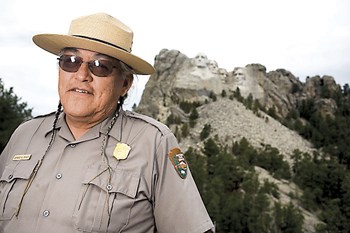
Gerard Baker, the second speaker of the Moccasin Bend Lecture series, knows something about finding and telling those stories, especially when it comes to including all the stories that are part of the area’s history.
Baker, a Mandan-Hidatsa Indian and a retired National Park Service superintendent and deputy director for Native American relations, changed the interpretive messages of Mount Rushmore Park in South Dakota and Little Bighorn Battlefield in Montana to include the stories of American Indians.
“What’s important is that everybody’s story is important. Every history is important,” he said in an interview earlier this week. “And history is absolutely exciting. So are our natural resources.”
On Monday at 7 p.m. at the Tennessee Aquarium, Baker’s topic, “Whose Story?” will touch on the sometimes-controversial changes he made at Mount Rushmore, set aside to celebrate 150 years of American history, and at Little Bighorn, long known as Custer’s Last Stand.
IF YOU GOAll lectures are at 7 p.m. at the Tennessee Aquarium.* Monday: Gerard Baker, National Park Service superintendent, deputy director for Native American relations, Mandan-Hidatsa Indian. Topic: “The National Park Service: Whose Story?” He will explain the process of expanding interpretive programs to include all peoples’ stories.* Nov. 8: A. Wilson Greene, historian and author of “The Blue, the Gray and the Red: Indian Campaigns of the Civil War,” will speak on the same subject with a local flavor.
“Visitors want to know all of the history – all of what shaped a place or battle,” Baker said. “You’re not diminishing that [celebrated] history. You’re adding on more. True historians are going to understand that.”
Baker’s talk is aimed with a view toward how the story of Moccasin Bend might be told. It’s timely, according to Shelley Andrews, executive director of the Friends of Moccasin Bend National Park, the sponsor of the series.
“If you saw the Ken Burns ‘National Parks’ PBS series, he was the Native American voice heard frequently telling the stories of people in the parks,” Andrews said.
Contact Pam Sohn at psohn@timesfreepress.com or 423-757-6346.