
ABU DHABI, United Arab Emirates (AP) – As skyscrapers and gleaming towers rose with lightning speed across the United Arab Emirates over the past two decades, the Gulf nation’s thirst for water grew at an enormous rate – so much so that today, it threatens to dry up all of the country’s groundwater in as little as 15 years, experts say.
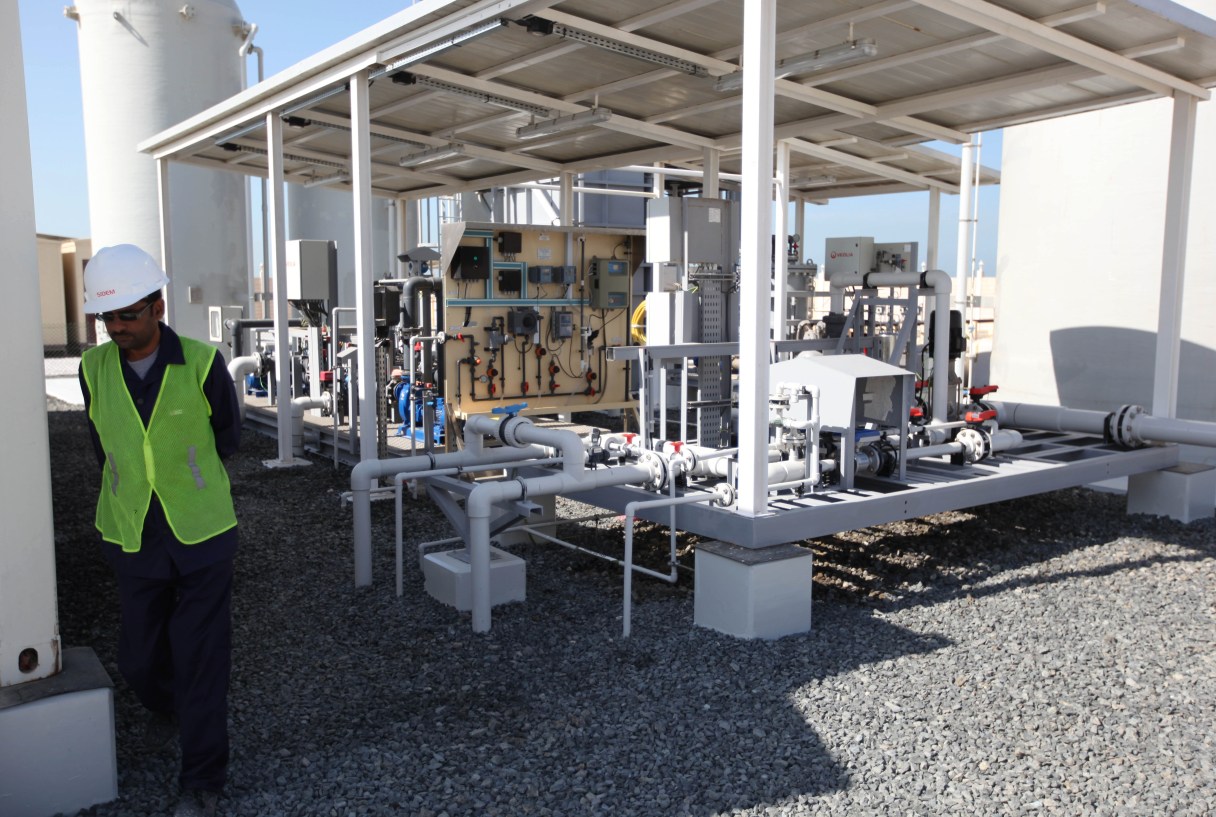
To quench that demand, cities across the seven emirates that make up the UAE rely on desalinated seawater to supply 98 percent of their drinking water, but that comes with a tremendous environmental and fiscal cost.
Now, officials are looking at new technologies to cover that demand, while acknowledging the risks ahead.
“In our region, water is more important than oil,” said Ahmad Belhoul, the CEO of Masdar, the Abu Dhabi government’s clean-energy company. “We’re trying to find solutions to address that.”
While the Emirates rose on its oil wealth, the riches spurred the development that strains the water supply in this desert nation. An academic paper published earlier this year by scientists at the United Arab Emirates University in Al Ain, one of the emirates, suggested the country’s entire supply of groundwater could be gone by 2030.