
Tuesday, November 10, 2026Nov 10

Well-known humpback whale killed in boat collision

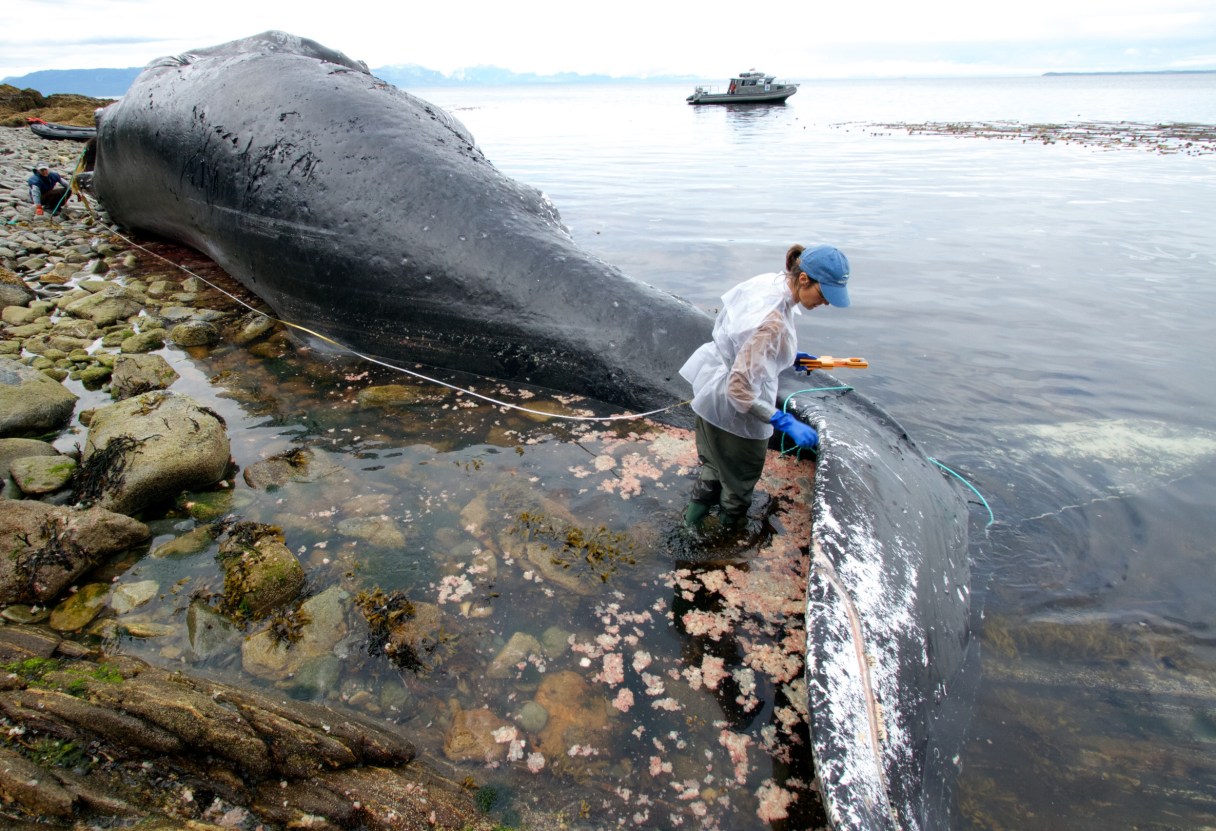
This July 2014 image provided by NOAA shows NOAA Fisheries Alaska Region Marine Mammal Stranding Coordinator Aleria Jensen, right, measuring the length of a female humpback whale while University of Alaska Fairbanks marine biology graduate student Suzie Teerlink holds the other end of the line during a necropsy near Funter Bay, Alaska. The 48-foot cetacean had been been seen in the waters of southeast Alaska for nearly 40 years but was found dead July 1, 2014. (AP Photo/NOAA)
This July 2014 image provided by NOAA shows NOAA Fisheries Alaska Region Marine Mammal Stranding Coordinator Aleria Jensen, right, measuring the length of a female humpback whale while University of Alaska Fairbanks marine biology graduate student Suzie Teerlink holds the other end of the line during a necropsy near Funter Bay, Alaska. The 48-foot cetacean had been been seen in the waters of southeast Alaska for nearly 40 years but was found dead July 1, 2014. (AP Photo/NOAA) This July 2014 image provided by NOAA shows NOAA Fisheries Alaska Region Marine Mammal Stranding Coordinator Aleria Jensen, right, measuring the length of a female humpback whale while University of Alaska Fairbanks marine biology graduate student Suzie Teerlink holds the other end of the line during a necropsy near Funter Bay, Alaska. The 48-foot cetacean had been been seen in the waters of southeast Alaska for nearly 40 years but was found dead July 1, 2014. (AP Photo/NOAA)

JUNEAU, Alaska (AP) – Federal law enforcement officials are investigating after a 48-foot female whale well-known in the waters of southeast Alaska was killed in a collision with a boat.

A tour-boat operator found the whale, which had been seen in the waters of southeast Alaska for nearly 40 years, near Funter Bay on July 1. The carcass was hauled to a nearby beach, where a necropsy was performed July 3, officials said Friday.

“The left mandible was fractured and the right mandible was traumatically dislocated from the cranium,” Dr. Kathy Burek of Alaska Veterinary Pathology Services, the lead veterinarian on the necropsy, said in a statement Friday. “Cause of death was determined to be ship strike.”

During the necropsy, tissue and organ samples were collected, including stomach contents. National Oceanic and Atmospheric Administration officials said analysis of the eye and ear plug should be able to determine the whale’s age.

The whale has been known by several names, including Max, Aequorea or No. 539. It was first documented in Glacier Bay, near Juneau, in 1975. Records indicate she had at least five calves between 1982 and 2005. Her offspring have produced at least three other calves, officials said.