
While efforts to keep the wilderness “wild” started long a go with well-known conservationists like Aldo Leopold and John Muir, groups like Tennessee Wild still carry the torch of protecting the land today.
Tennessee Wild, a coalition of organizations seeking wilderness designation for parts of the Cherokee National Forest, began from a desire to expand the land that the Tennessee Wilderness Act of 1986 protects while educating the public about the importance of land preservation through snorkeling, hiking and other nature outings.
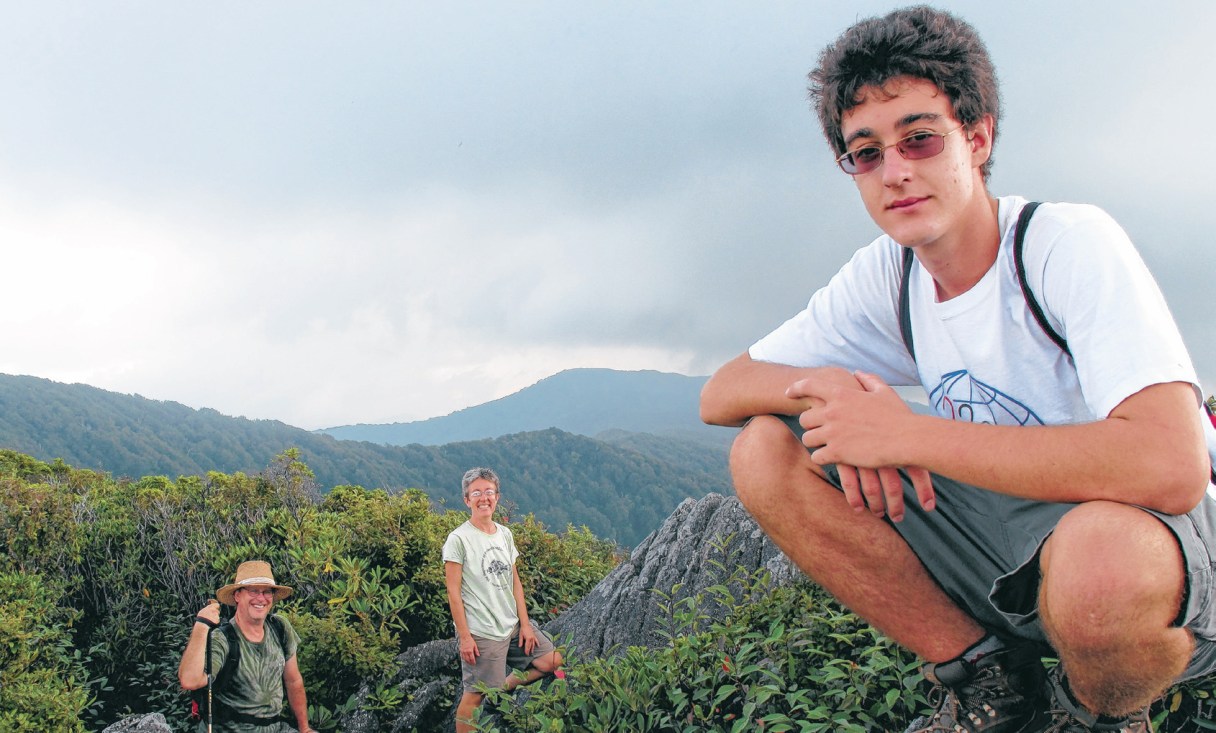
 Hill, Paola and Emilio Craddock, from left, participate in a Tennessee Wild hike at The Hangover – Joyce Kilmer Slickrock Wilderness. Tennessee Wild will have another outing there May 5.
“You won’t protect what you don’t know and love,” says Jeff Hunter, naturalist and Tennessee Wild campaign director. “We take people out to the forest to show people the areas that could be protected. It’s a way to outreach and create advocates. We try to connect people to their public lands and inspire them to protect them.”
The group is currently pushing for Congress to pass the Tennessee Wilderness Act of 2010 to expand the existing Big Frog and Little Frog Wilderness Areas (Polk County), the Joyce Kilmer Slickrock Wilderness Area (Monroe County) in the southern Cherokee, the Big Laurel Branch Wilderness (Carter and Johnson counties) and the Sampson Mountain Wilderness (Washington and Unicoi counties) in the northern Cherokee.
The Tennessee Wilderness Act of 2010 is slated to have a floor vote in the United States Senate in the coming year. Reintroduced by Sen. Lamar Alexander and cosponsored by Sen. Bob Corker, it could protect nearly 20,000 acres of wilderness in Tennessee’s Cherokee National Forest and create the first new wilderness areas in Tennessee in 25 years.