
Bats began chattering as they woke up, communicating with each other while flying around inside the cave and gathering for their next foraging expedition.
Then, they started trickling out, slowly at first, before flying out by the hundreds, the gray bat colony creating a cloud of sorts against the darkening Southeast Tennessee sky.
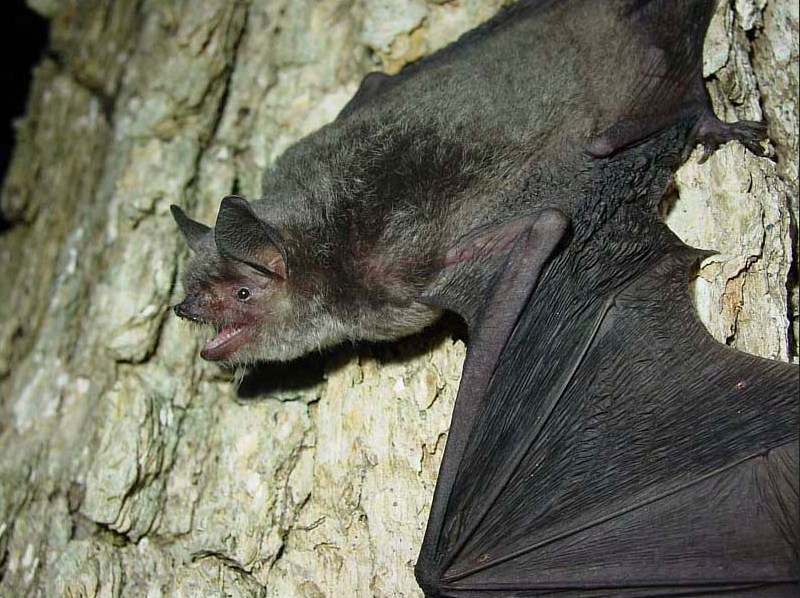
 A female gray bat is shown in Monroe County, Kentucky.
“It almost looks like smoke,” TVA terrestrial zoologist Liz Hamrick said, describing the scene of a recent bat count event at Nickajack Cave.
For about 45 minutes, the bats flew out. A team of counters tallied more than 102,000 of them in yet another sign of this species’ resilience against the white-nose syndrome that is decimating bat populations across the nation.
“Gray bats seem to be unique compared to the rest of our cave-dwelling species in the area,” Hamrick said. “Because we have not seen the population decline for gray bats that we have for the other species.”