
Tuesday, November 10, 2026Nov 10

States await election security reviews as primaries heat up

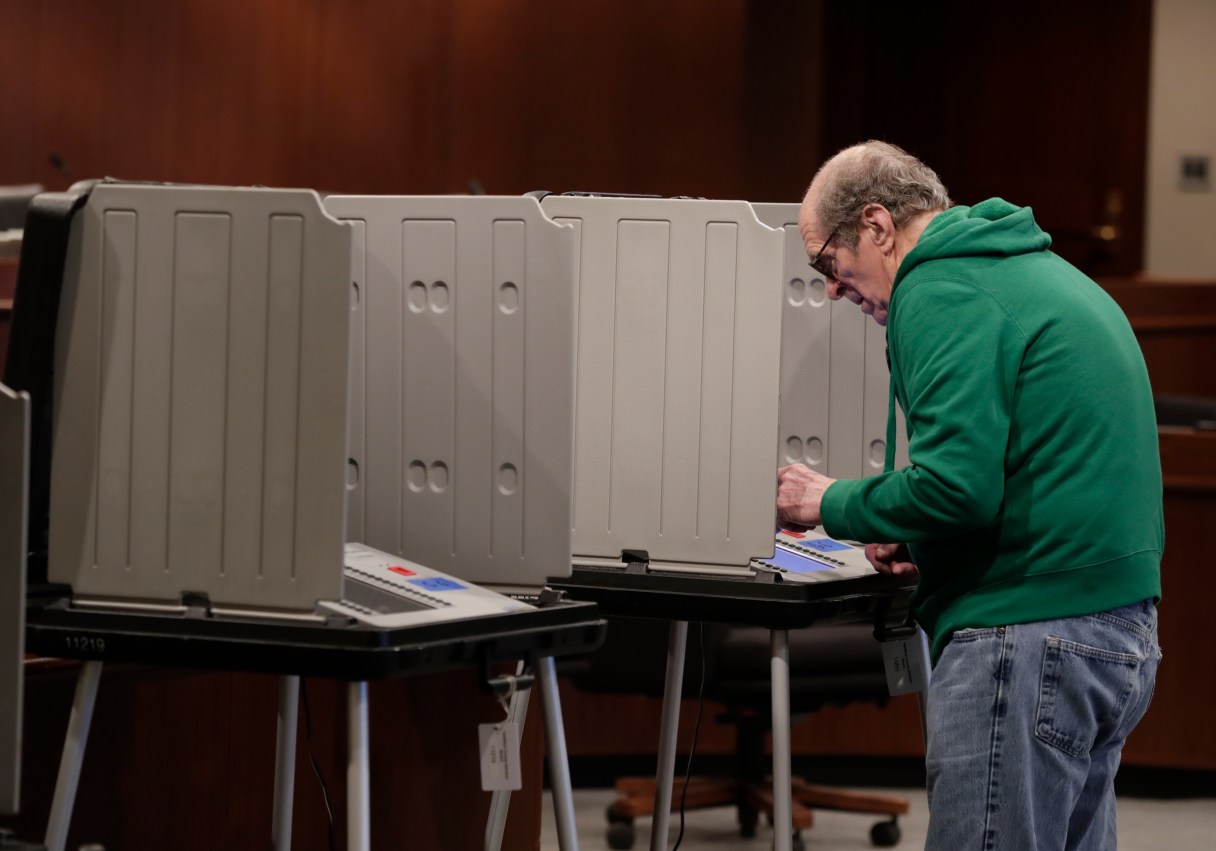
In this Friday, April 27, 2018 photo, a voter prepares his ballot during early voting at the Hamilton County Government Center in Noblesville, Ind. The U.S. Department of Homeland Security is facing a backlog of requests for comprehensive cybersecurity reviews of state election systems. Among those still waiting is Indiana, which is one of four states with primaries on Tuesday, May 8, 2018. (AP Photo/Michael Conroy)
In this Friday, April 27, 2018 photo, a voter prepares his ballot during early voting at the Hamilton County Government Center in Noblesville, Ind. The U.S. Department of Homeland Security is facing a backlog of requests for comprehensive cybersecurity reviews of state election systems. Among those still waiting is Indiana, which is one of four states with primaries on Tuesday, May 8, 2018. (AP Photo/Michael Conroy) In this Friday, April 27, 2018 photo, a voter prepares his ballot during early voting at the Hamilton County Government Center in Noblesville, Ind. The U.S. Department of Homeland Security is facing a backlog of requests for comprehensive cybersecurity reviews of state election systems. Among those still waiting is Indiana, which is one of four states with primaries on Tuesday, May 8, 2018. (AP Photo/Michael Conroy)

With the midterm congressional primaries about to go into full swing, the Department of Homeland Security is playing catch-up in helping to ensure that state election systems are secure against cybertampering by the Russians or others bent on mischief.

The department said it has completed on-site risk assessments of election systems in just nine of 17 states that have formally requested them so far. It has pledged to do so by November for every state that asks.

The security reviews are designed to identify any weaknesses that could be exploited by hackers; such examinations are routinely conducted in the private sector. They are just one tool, although an important one, in ensuring a computer network has a robust defense.

Homeland Security officials attribute the backlog to increased demand for such reviews since the 2016 presidential election and say they are devoting more money and shifting resources to reduce wait times. The reviews typically take two weeks each.

“Elections remain a top priority,” said Matt Masterson, the department’s senior adviser for cybersecurity.