
Tuesday, November 10, 2026Nov 10

California land quickly sinking in drought costs farmers

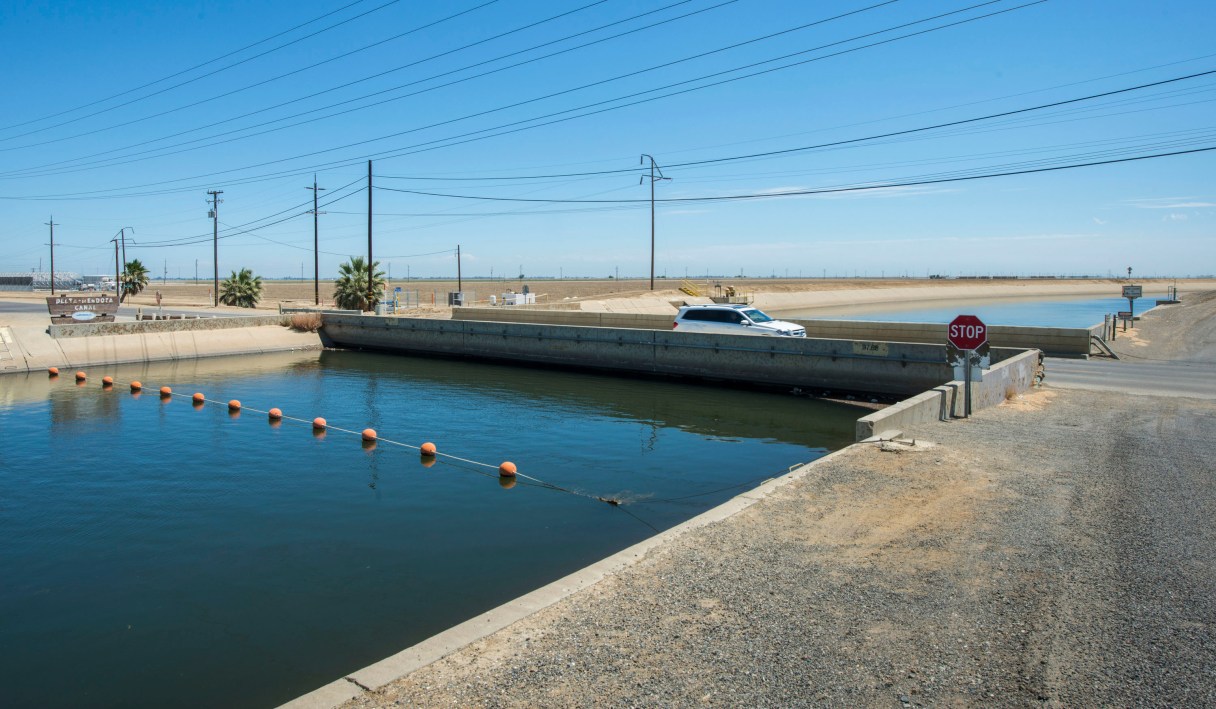
This July 23, 2015 photo provided by the California Department of Water Resources shows The Russell Avenue bridge, over the Delta Mendota Canal in Firebaugh, Calif., The  drought has caused the bridge to subside until there’s almost no space between bottom of bridge decking and canal water surface. A NASA scientist says in a report released Wednesday, Aug. 19, 2015 that parts of California’s Central Valley are sinking faster than ever as groundwater is being pumped during the state’s historic drought. (Florence Low/ California Department of Water Resources via AP)
This July 23, 2015 photo provided by the California Department of Water Resources shows The Russell Avenue bridge, over the Delta Mendota Canal in Firebaugh, Calif., The drought has caused the bridge to subside until there’s almost no space between bottom of bridge decking and canal water surface. A NASA scientist says in a report released Wednesday, Aug. 19, 2015 that parts of California’s Central Valley are sinking faster than ever as groundwater is being pumped during the state’s historic drought. (Florence Low/ California Department of Water Resources via AP) This July 23, 2015 photo provided by the California Department of Water Resources shows The Russell Avenue bridge, over the Delta Mendota Canal in Firebaugh, Calif., The drought has caused the bridge to subside until there’s almost no space between bottom of bridge decking and canal water surface. A NASA scientist says in a report released Wednesday, Aug. 19, 2015 that parts of California’s Central Valley are sinking faster than ever as groundwater is being pumped during the state’s historic drought. (Florence Low/ California Department of Water Resources via AP)

FRESNO, Calif. (AP) – Land in Central California’s agricultural region is sinking so quickly because of the state’s historic drought that it is forcing farmers to spend millions of dollars upgrading irrigation canals and putting roads, bridges and other infrastructure at risk.

The Central California Irrigation District recently spent $4.5 million to raise the walls of a canal, and the district’s manager, Christopher White, says they’re about to invest another $2.5 million to replace a bridge that’s now below the canal’s water line.

“It’s a vivid picture of what subsidence can do,” said White, who serves 1,900 farmers on the San Joaquin Valley’s west side that grow crops such as tomatoes, cotton, fruit and almonds in three counties.

Sinking land has occurred for decades in California because of excessive groundwater pumping during dry years, but NASA data released Wednesday by the state’s Department of Water Resources shows the pace has dramatically quickened as the state endures its fourth year of drought.

The study done by NASA’s Jet Propulsion Laboratory shows the ground is sinking nearly two inches each month in some places, placing roads, bridges and vital canals that deliver water throughout the state at growing risk of damage.