
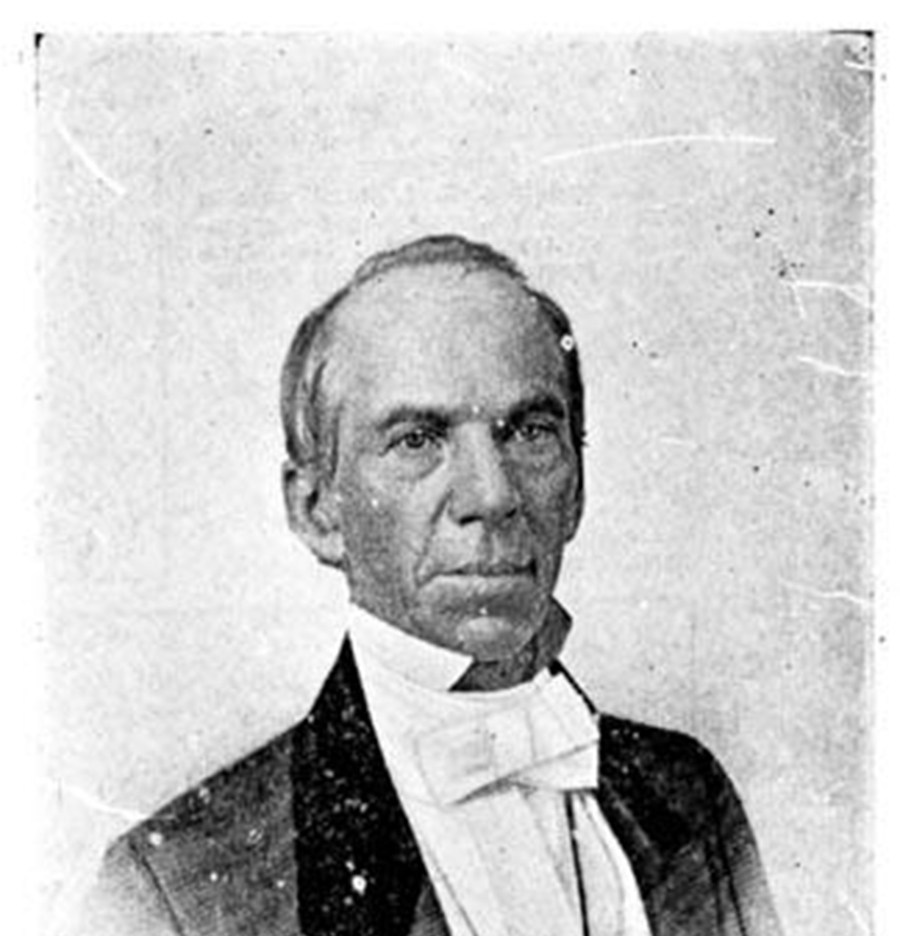
Before the last Cherokees departed on the Trail of Tears in the late fall of 1838, entrepreneurs were laying plans to acquire the lands they vacated.
Among them were wealthy investors in South Carolina and Georgia, who formed the Hines and Hargrove land acquisition companies. James Anderson Whiteside, a 35-year-old lawyer in nearby Pikeville, Tenn., bought a one-ninth interest in these syndicates from local representatives Samuel and George Williams. He quickly became instrumental in guiding the future of the new town of Chattanooga.
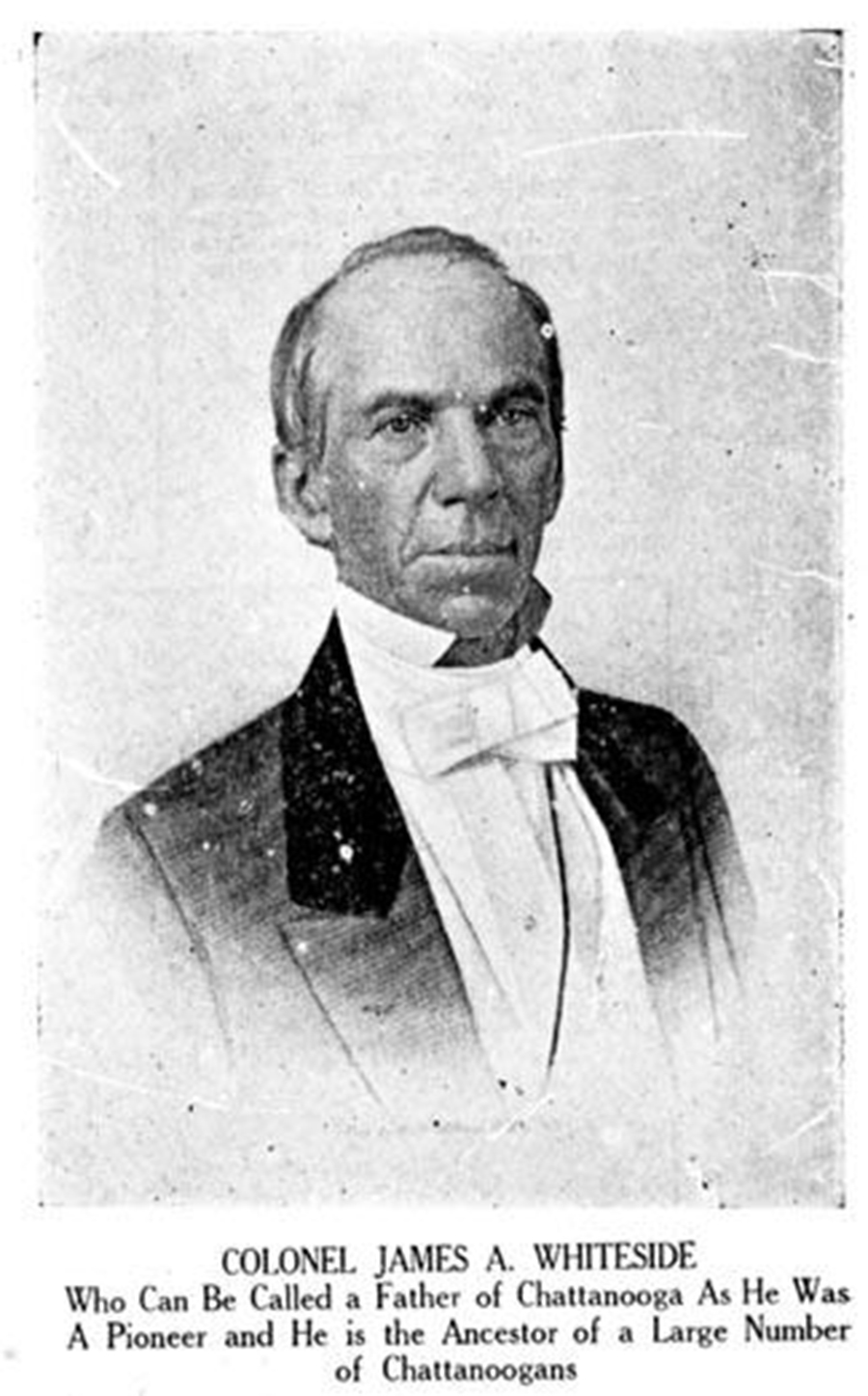 James A. Whiteside
Born Sept. 1, 1803, to Jonathan and Thankful Anderson Whiteside near Danville, Ky., he migrated with his family to Overton County and then to Pikeville. He became a lawyer and was elected to the state legislature, where he met his wife Mary Jane Massengale of Grainger County. They married Feb. 5, 1829, and set up housekeeping in Pikeville, where their five children were born.
The Whitesides moved to Chattanooga in September 1838. Two years later they occupied a fine brick house on Poplar Street. His wife died in April of 1843, and 10 months later he married the children’s music teacher, Harriet Leonora Straw, with whom he had nine more children.
He took the lead in promoting railroad development and was influential in securing the location of the Tennessee terminus of the Western & Atlantic Railroad for Chattanooga.