
Thursday, October 29, 2026Oct 29

This story is free to read.

Some elephants learning to avoid dangerous areas: Expert

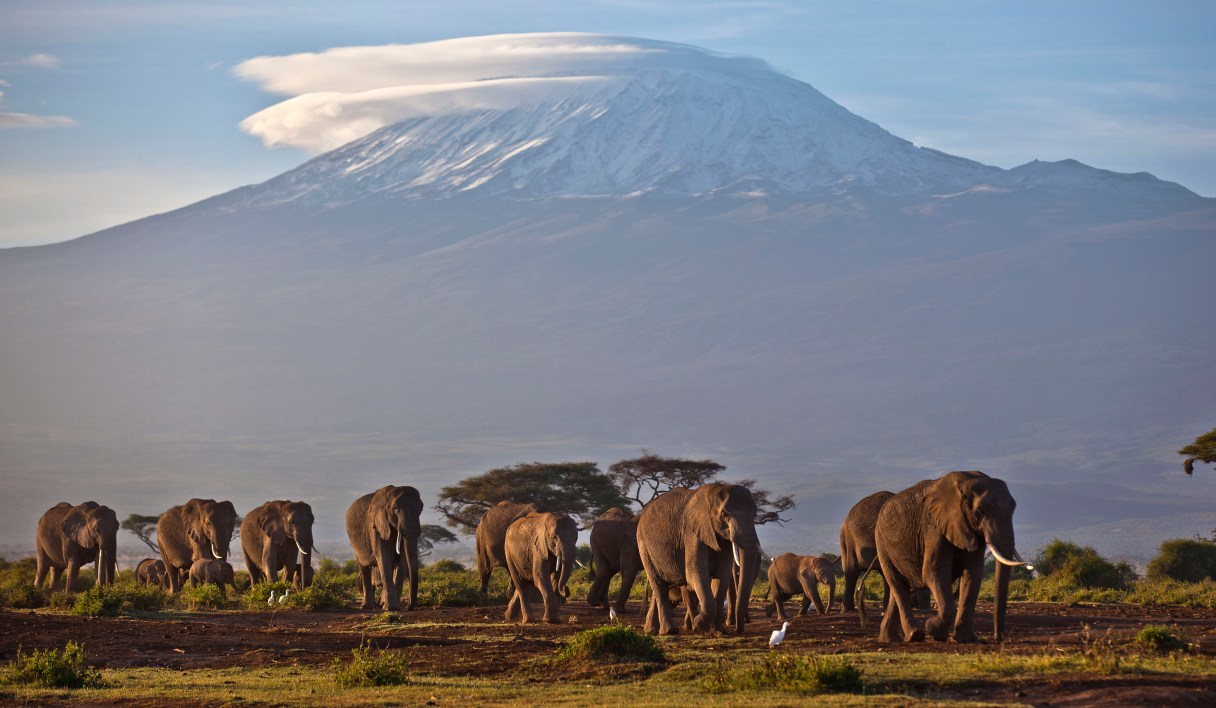
FILE--In this file photo of Monday Dec.17, 2012, a herd of adult and baby elephants walks in the dawn light as the highest mountain in Africa, Tanzania's Mount Kilimanjaro, is seen in the background, in Amboseli National Park, southern Kenya. Some African elephant herds are adapting to the danger of poaching by moving out of risky areas, according to one conservation group. The plight of elephants is a key issue at the meeting of the Convention on International Trade in Endangered Species of Wild Fauna and Flora, or CITES, which began over the weekend and ends Oct. 5. (AP Photo/Ben Curtis, File)
FILE--In this file photo of Monday Dec.17, 2012, a herd of adult and baby elephants walks in the dawn light as the highest mountain in Africa, Tanzania's Mount Kilimanjaro, is seen in the background, in Amboseli National Park, southern Kenya. Some African elephant herds are adapting to the danger of poaching by moving out of risky areas, according to one conservation group. The plight of elephants is a key issue at the meeting of the Convention on International Trade in Endangered Species of Wild Fauna and Flora, or CITES, which began over the weekend and ends Oct. 5. (AP Photo/Ben Curtis, File) FILE--In this file photo of Monday Dec.17, 2012, a herd of adult and baby elephants walks in the dawn light as the highest mountain in Africa, Tanzania's Mount Kilimanjaro, is seen in the background, in Amboseli National Park, southern Kenya. Some African elephant herds are adapting to the danger of poaching by moving out of risky areas, according to one conservation group. The plight of elephants is a key issue at the meeting of the Convention on International Trade in Endangered Species of Wild Fauna and Flora, or CITES, which began over the weekend and ends Oct. 5. (AP Photo/Ben Curtis, File)

NAIROBI, Kenya (AP) – Some African elephant herds are adapting to the danger of poaching by moving out of risky areas, according to one conservation group.

The plight of elephants is a key issue at the meeting of the Convention on International Trade in Endangered Species of Wild Fauna and Flora, or CITES, which began over the weekend and ends Oct. 5.

Radio tracking data of elephants since 1998 in northern Kenya show how “exquisitely sensitive to risk they are,” said Frank Pope, operations manager of Save the Elephants.

Africa had 1.3 million elephants in the 1970s but has only 500,000 today, according to wildlife experts.

In northern Kenya’s Shaba reserve, “you can almost pick out the borders of the reserve by where the elephants go,” Pope said. “There is no fence, there is no cutting, there is nothing to visually mark it, but the elephants know, ‘I am safe here, I’m not safe here.'”