
Tuesday, November 10, 2026Nov 10

Tennessee Gov. Bill. Lee takes heat from left and right over sharing COVID-19 ‘sick lists’ with law enforcement

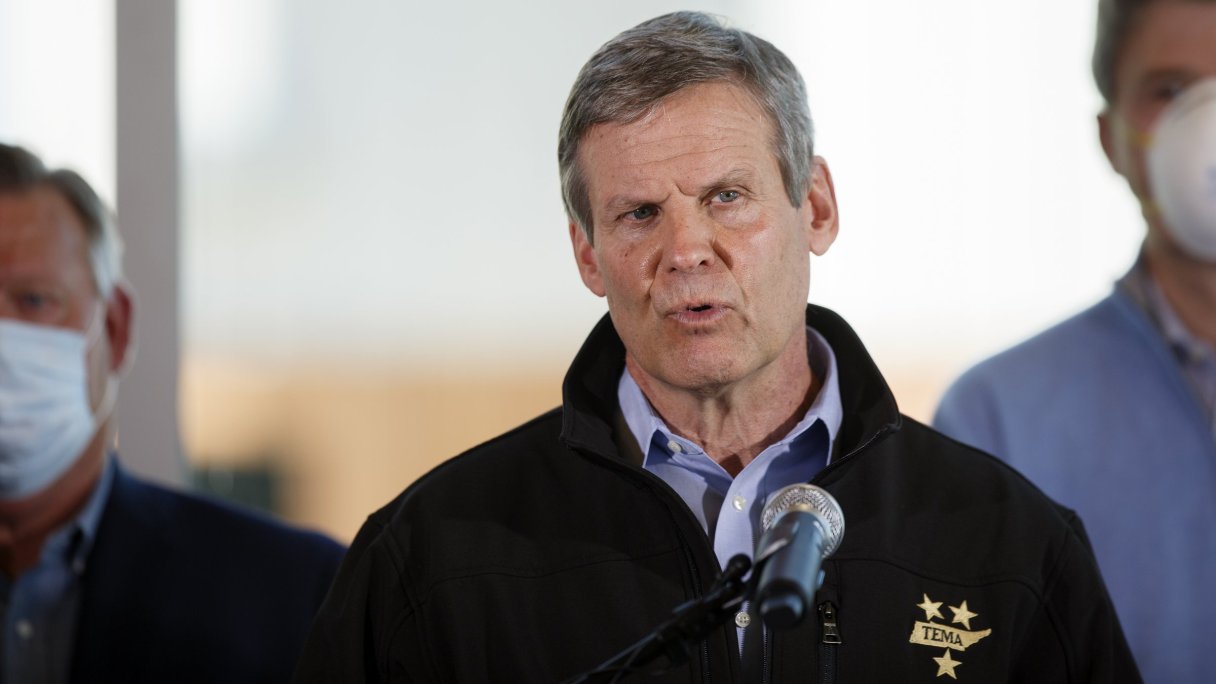
Staff photo by C.B. Schmelter / Flanked by Chattanooga Mayor Andy Berke, right, and Hamilton County Mayor Jim Coppinger, Gov. Bill Lee, center, speaks during a press conference at Wilson Air Center on Tuesday, April 14, 2020 in Chattanooga, Tenn. Violent storms and an EF-3 tornado tore through eastern Hamilton County and Northwest Georgia Sunday night and Monday morning.
Staff photo by C.B. Schmelter / Flanked by Chattanooga Mayor Andy Berke, right, and Hamilton County Mayor Jim Coppinger, Gov. Bill Lee, center, speaks during a press conference at Wilson Air Center on Tuesday, April 14, 2020 in Chattanooga, Tenn. Violent storms and an EF-3 tornado tore through eastern Hamilton County and Northwest Georgia Sunday night and Monday morning. Staff photo by C.B. Schmelter / Flanked by Chattanooga Mayor Andy Berke, right, and Hamilton County Mayor Jim Coppinger, Gov. Bill Lee, center, speaks during a press conference at Wilson Air Center on Tuesday, April 14, 2020 in Chattanooga, Tenn. Violent storms and an EF-3 tornado tore through eastern Hamilton County and Northwest Georgia Sunday night and Monday morning.

NASHVILLE – As Tennessee Gov. Bill Lee deliberates privacy concerns about identifying COVID-19 patients for law enforcement, the head of the Tennessee Sheriffs’ Association weighed in last week with a letter to Lee calling the information “vital to our first responders.”

The association president, Montgomery Sheriff John S. Fuson, thanked Lee for having instructed the state Department of Health “to release the minimum amount of protected health information of those who have tested positive for COVID-19.”

“This information,” Fuson wrote, “is vital to our first responders as it helps them identify and properly prepare themselves for contact with citizens that have tested positive for the virus.”

His letter also said that first responders are granted access to the information under federal health privacy laws.

“This provision of the law not only helps prevent the spread of infectious disease, access to this information is literally saving the lives of the thousands of men and women serving on the front line of this,” Fuson said.