
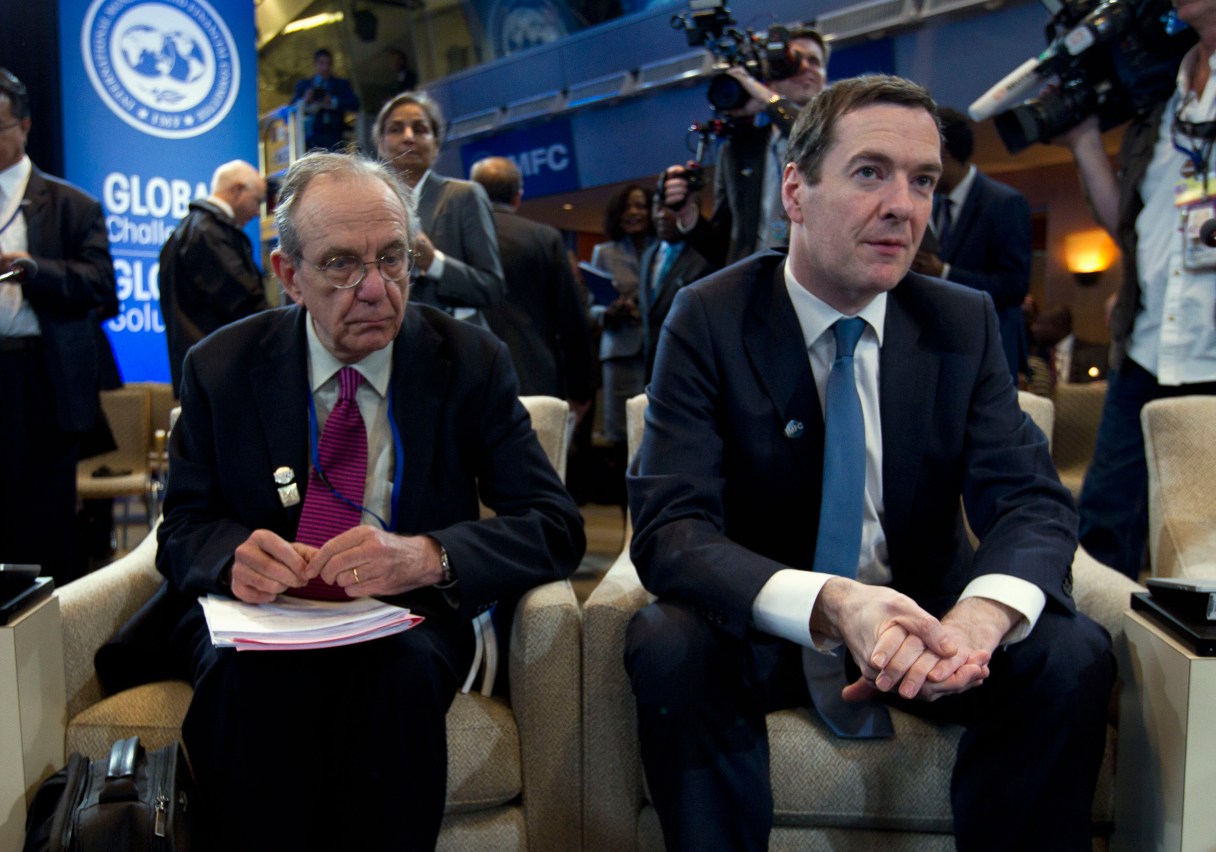
LONDON (AP) – Britain’s Treasury chief has put a price tag on it: Leaving the European Union would cost each household the equivalent of $6,100.
The estimate is based on a 200-page analysis of the long-term costs and benefits of EU membership and its alternatives that George Osborne published Monday ahead of the June 23 referendum.
The U.K. economy would be 6 percent smaller in 2030 than currently forecast if the country were to leave the EU and replace it with a trade agreement similar to the one Canada is currently negotiating, according to the Treasury’s analysis. Opponents rejected the estimate as absurd.
“The conclusions could not be clearer,” Osborne told the BBC before the release. “Britain would be permanently poorer if we left the European Union, to the tune of 4,300 pounds ($6,100) for every household in the country. That’s a fact everyone should think about as they consider how to vote, and as chancellor, I’m clear we’re stronger, safer and better off in the European Union.”
Osborne said the analysis looked at the benefits the U.K. receives from being inside the EU. It also considered alternatives that range from relying only on World Trade Organization rules, like Russia and China, to negotiating a Norway-style agreement in which Britain would gain access to the single market but be required to pay into the EU budget and accept the free movement of people. The Canadian option represents the middle ground, Osborne said.