
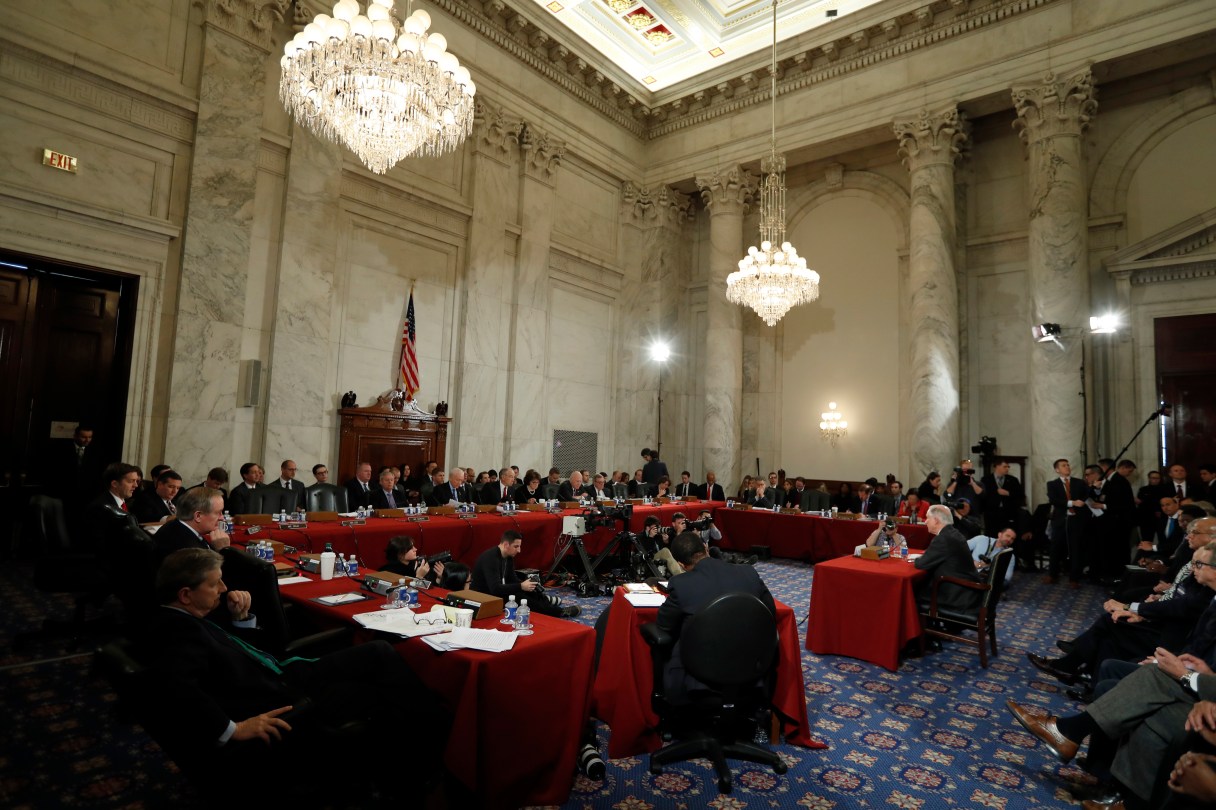
Under the U.S. Constitution, the Senate has sole authority to confirm a president’s nominee to serve in the Cabinet. And while President-elect Donald Trump can’t officially nominate anyone until he becomes president on Jan. 20, the Senate is getting an early start this week on his choices for several top jobs in his administration.
The action began Tuesday with Trump’s pick for attorney general, Jeff Sessions, a longtime senator from Alabama, and retired Marine Gen. John Kelly, named by Trump to head the Department of Homeland Security.
By holding hearings before Inauguration Day, the Senate can move quickly once Trump takes the oath of office and formally submits his Cabinet nominees for approval.
Republicans have a narrow majority in the Senate, meaning the hearings are unlikely to make or break nominations. Most, if not all, will go through.
But the hearings offer senators an opportunity to explore the backgrounds of Trump’s team and plans for the agencies they will soon lead. For Democrats, the hearings offer a high-profile stage to challenge Trump’s proposals.