
Tuesday, November 10, 2026Nov 10

Account shows ECB fears of deflation as it weighed stimulus

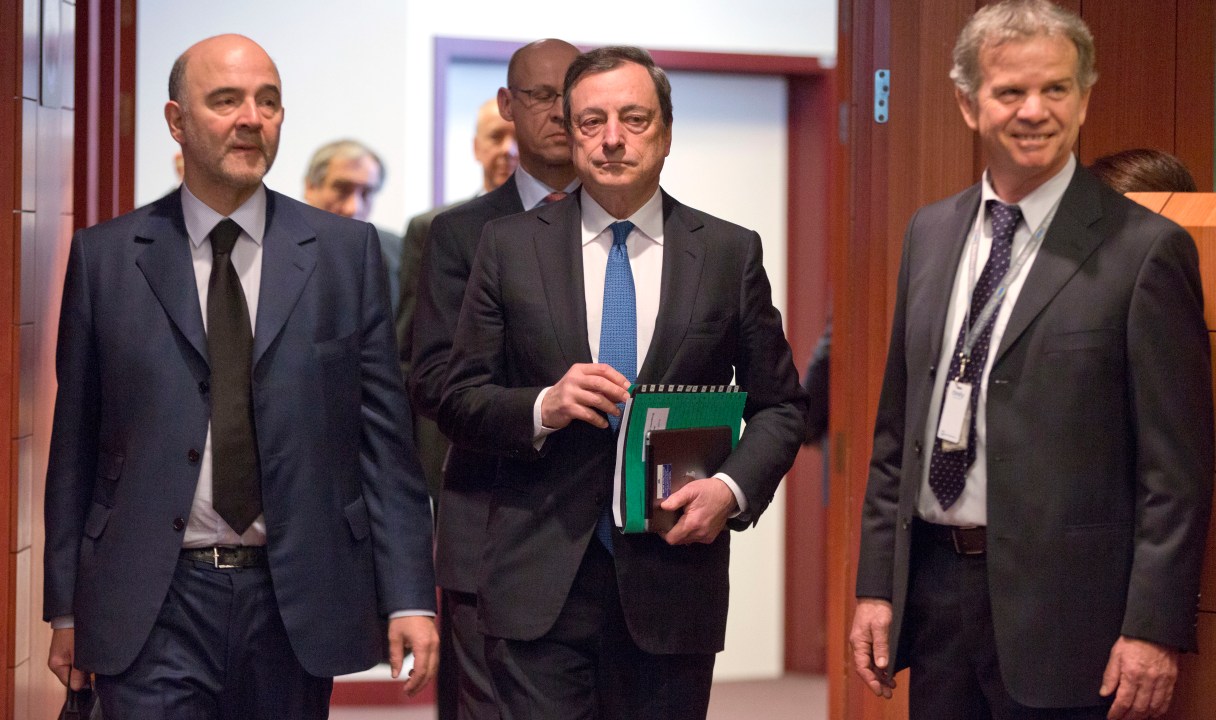
European Central Bank Governor Mario Draghi, center, and European Commissioner for Monetary Affairs Pierre Moscovici, left, arrive for a meeting of eurogroup finance ministers at the EU Council building in Brussels on Monday, Feb. 16, 2015. Greece’s radical left government and its European creditors headed into new talks Monday on the debt-heavy country’s stuttering bailout program, but expectations are low despite a fast-approaching deadline for some kind of deal. (AP Photo/Virginia Mayo)
European Central Bank Governor Mario Draghi, center, and European Commissioner for Monetary Affairs Pierre Moscovici, left, arrive for a meeting of eurogroup finance ministers at the EU Council building in Brussels on Monday, Feb. 16, 2015. Greece’s radical left government and its European creditors headed into new talks Monday on the debt-heavy country’s stuttering bailout program, but expectations are low despite a fast-approaching deadline for some kind of deal. (AP Photo/Virginia Mayo) European Central Bank Governor Mario Draghi, center, and European Commissioner for Monetary Affairs Pierre Moscovici, left, arrive for a meeting of eurogroup finance ministers at the EU Council building in Brussels on Monday, Feb. 16, 2015. Greece’s radical left government and its European creditors headed into new talks Monday on the debt-heavy country’s stuttering bailout program, but expectations are low despite a fast-approaching deadline for some kind of deal. (AP Photo/Virginia Mayo)

FRANKFURT, Germany (AP) – The European Central Bank’s governing council members wrestled with fears that falling prices could become ingrained in the eurozone economy before a “large majority” decided last month to launch a 1 trillion euro monetary boost.

That’s according to an account of the ECB’s historic closed-door deliberations on Jan. 22, when it acted to revive the economy of the 19-country eurozone.

With Thursday’s publication of the account, the ECB joins the U.S. Federal Reserve and the Bank of England, which both reveal minutes of their meetings weeks afterward.

The ECB launched its latest stimulus plan after finding that the effect of earlier stimulus efforts such as cheap loans to banks “was more limited” than expected.

Some members argued the risk of outright deflation was “relatively small.” That view ran into “broad agreement” that the risk “even if uncertain” was too great to hold off on taking action.