
Thursday, November 12, 2026Nov 12

Alaska’s busy volcano: Seawater, magma figure in eruptions

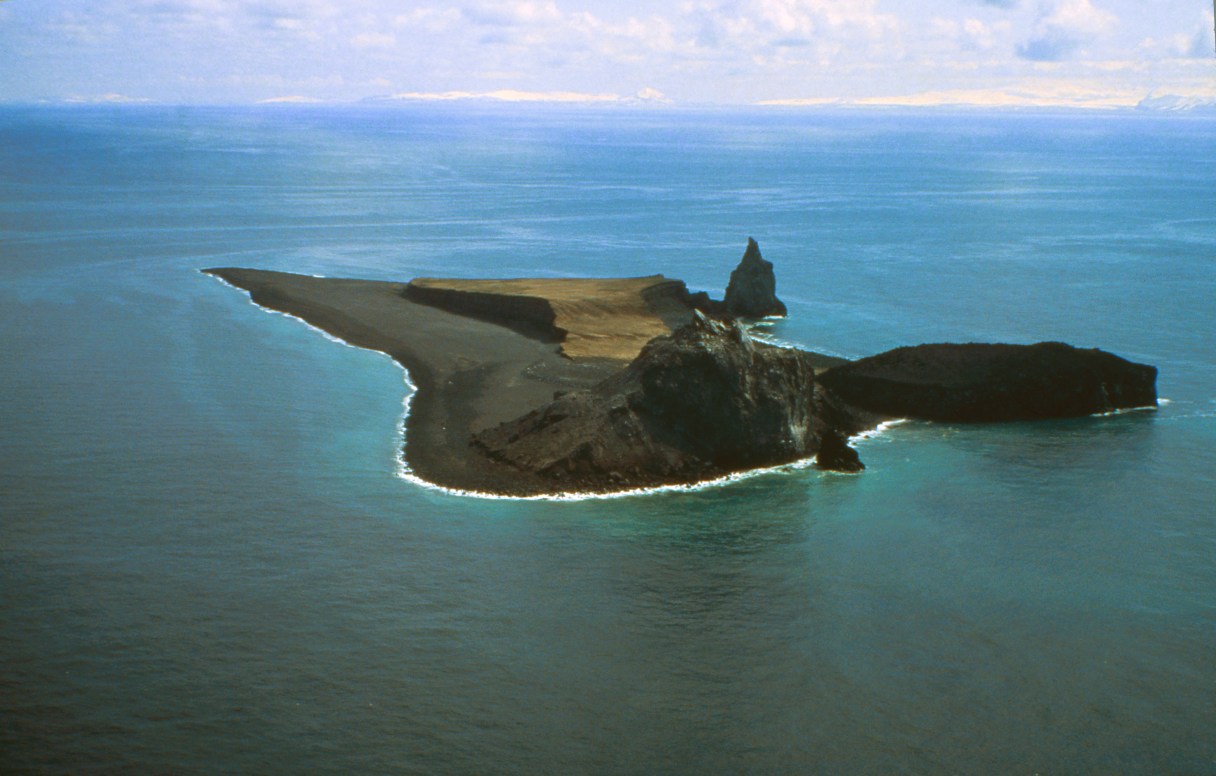
In this May 10, 1994, aerial photo provided by Alaska Volcano Observatory/U.S. Geological Survey shows the Bogoslof Island looking south. Trace amounts of ash and the smell of sulfur reached an Alaska city 61 miles away after the latest eruption of Bogoslof Volcano in the Aleutian Islands. Bogoslof Volcano erupted late Monday night, Jan. 30, 2017, and its ash cloud reached 25,000 feet high. The Alaska Volcano Observatory says Bogoslof was quieting down Tuesday. (T. Keith/Alaska Volcano Observatory/U.S. Geological Survey via AP)
In this May 10, 1994, aerial photo provided by Alaska Volcano Observatory/U.S. Geological Survey shows the Bogoslof Island looking south. Trace amounts of ash and the smell of sulfur reached an Alaska city 61 miles away after the latest eruption of Bogoslof Volcano in the Aleutian Islands. Bogoslof Volcano erupted late Monday night, Jan. 30, 2017, and its ash cloud reached 25,000 feet high. The Alaska Volcano Observatory says Bogoslof was quieting down Tuesday. (T. Keith/Alaska Volcano Observatory/U.S. Geological Survey via AP) In this May 10, 1994, aerial photo provided by Alaska Volcano Observatory/U.S. Geological Survey shows the Bogoslof Island looking south. Trace amounts of ash and the smell of sulfur reached an Alaska city 61 miles away after the latest eruption of Bogoslof Volcano in the Aleutian Islands. Bogoslof Volcano erupted late Monday night, Jan. 30, 2017, and its ash cloud reached 25,000 feet high. The Alaska Volcano Observatory says Bogoslof was quieting down Tuesday. (T. Keith/Alaska Volcano Observatory/U.S. Geological Survey via AP)

ANCHORAGE, Alaska (AP) – Alaska’s remote Bogoslof Island is only 169 acres, a third the size of the average American farm. And it’s highest “peak” is just 490 feet, half as tall as the Eiffel Tower.

Like other Aleutian islands, it’s swarming with sea lions. But it’s what’s below the surface that sets Bogoslof apart.

The tiny island is the summit of an active, underwater volcano that extends down 5,500 feet, with its base on the floor of the Bering Sea.

Since mid-December, the volcano has erupted more than two dozen times, sending up clouds of ice crystals and rock fragments that airliners must dodge as they fly between North America and Asia.

The explosiveness is partly due to the volcano magma’s interaction with seawater, and the ash clouds could be a regular feature in 2017, said Chris Waythomas, a U.S. Geological Survey research geophysicist at the Alaska Volcano Observatory.