
Tuesday, November 10, 2026Nov 10

This will be South Sudan’s hungriest year ever, experts say

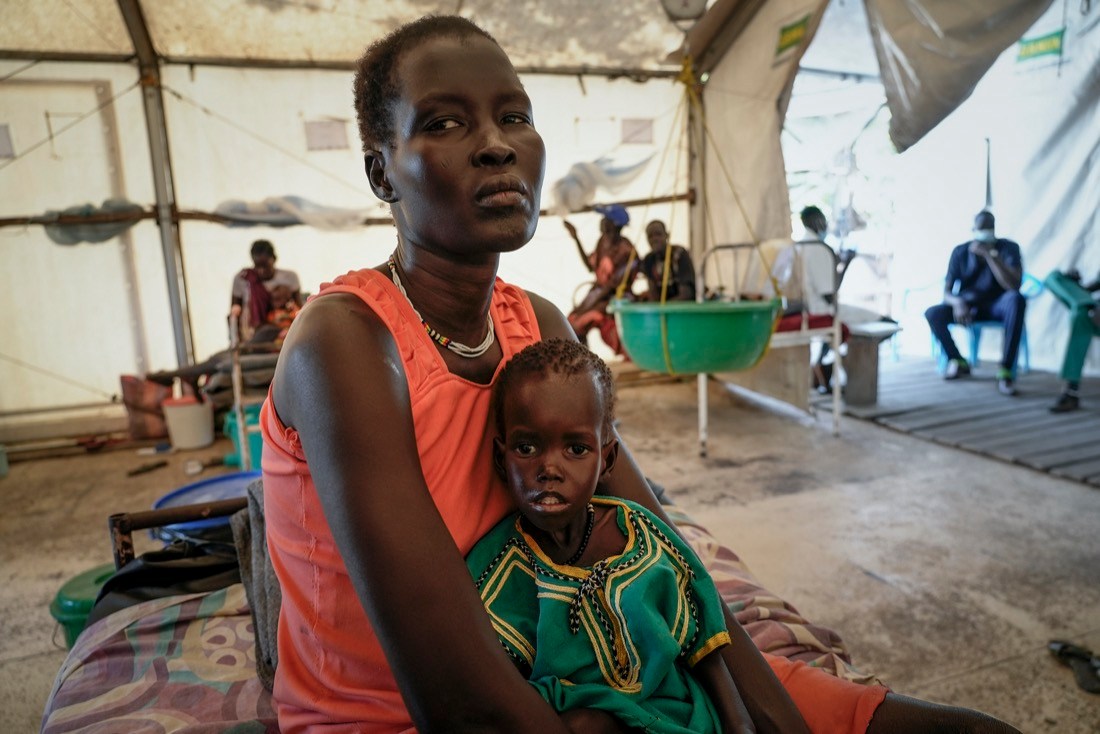
Nyayiar Kuol holds her severely malnourished 1-year-old daughter Chuoder Wal in a hospital run by Medicines Sans Frontieres (Doctors Without Borders) in Old Fangak in Jonglei state, South Sudan Tuesday, Dec. 28, 2021. Aid groups say more people than ever in the country will face hunger this year, because of the worst floods in 60 years as well as conflict and the sluggish implementation of the peace agreement that has denied much of the country basic services. (AP Photo/Sam Mednick)
Nyayiar Kuol holds her severely malnourished 1-year-old daughter Chuoder Wal in a hospital run by Medicines Sans Frontieres (Doctors Without Borders) in Old Fangak in Jonglei state, South Sudan Tuesday, Dec. 28, 2021. Aid groups say more people than ever in the country will face hunger this year, because of the worst floods in 60 years as well as conflict and the sluggish implementation of the peace agreement that has denied much of the country basic services. (AP Photo/Sam Mednick) Nyayiar Kuol holds her severely malnourished 1-year-old daughter Chuoder Wal in a hospital run by Medicines Sans Frontieres (Doctors Without Borders) in Old Fangak in Jonglei state, South Sudan Tuesday, Dec. 28, 2021. Aid groups say more people than ever in the country will face hunger this year, because of the worst floods in 60 years as well as conflict and the sluggish implementation of the peace agreement that has denied much of the country basic services. (AP Photo/Sam Mednick)

OLD FANGAK, South Sudan (AP) – Nyayiar Kuol cradled her severely malnourished 1-year-old daughter as they traveled for 16 hours on a crowded barge to the nearest hospital to their home in rural South Sudan. For months she had been feeding her four children just once a day, unable to cultivate because of disastrous flooding and without enough food assistance from the government or aid groups. She worries her daughter might die.

“I don’t want to think about what could happen,” she said.

Seated on her hospital bed in Old Fangak town in hard-hit Jonglei state, the 36-year-old Kuol tried to calm her daughter while blaming the government for not doing more. Nearly two years have passed since South Sudan formed a coalition government as part of a fragile peace deal to end a five-year civil war that plunged pockets of the country into famine, and yet Kuol said nothing has changed.

“If this country was really at peace, there wouldn’t be hunger like there is now,” she said.

More people will face hunger this year in South Sudan than ever, said aid groups. That’s because of the worst floods in 60 years, as well as conflict and the sluggish implementation of the peace agreement that has denied much of the country basic services.