
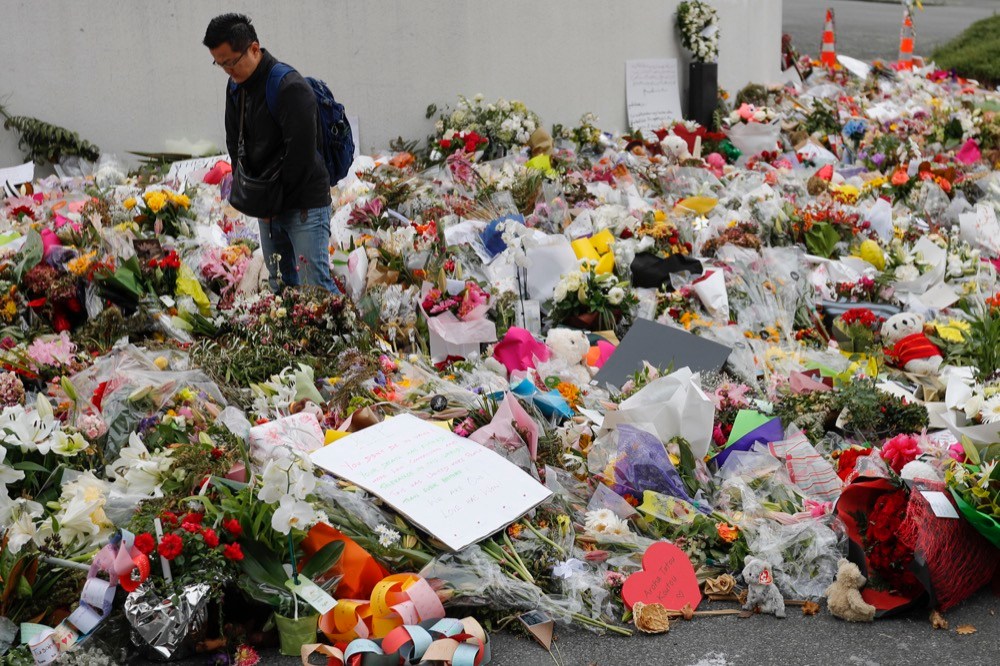
New Zealand’s official privacy watchdog has described Facebook as “morally bankrupt” and suggested his country follow neighboring Australia’s lead by making laws that could jail executives over streamed violence such as the Christchurch mosque shootings.
Privacy Commissioner John Edwards comments on Twitter on Monday follow previous criticisms of Facebook’s response to a gunman using the platform to livestream some of the slaughter of 50 worshippers.
Facebook said in a statement it was “deeply committed” to strengthening policies, improving technology and “working with experts to keep Facebook safe.”
Edwards told Radio NZ governments need to come together and “force the platforms to find a solution” to the livestreaming of atrocities.
Australia last week passed laws that include prison terms for executives for failing to quickly remove “abhorrent violent material.”
Nissan votes Ghosn off company board
Nissan shareholders voted Monday to remove Carlos Ghosn from the company’s board, severing one of its last ties to an executive who once was hailed as the automaker’s savior.
Ghosn, Nissan’s longtime chairman who helped pull the company out of a slump nearly 20 years ago, is now in a Tokyo jail, where he faces four charges ranging from underreporting his executive compensation to “aggravated breach of trust.”
He was released on bail in early March, but Japanese prosecutors rearrested him late last week, accusing him of using a Nissan subsidiary to enrich himself. Ghosn and a close associate, Greg Kelly, who was charged with helping him underreport his compensation, have denied all wrongdoing.
Nissan removed Ghosn from his position as chairman in November, shortly after he was arrested, but the board could not remove him as a director until Monday’s special meeting.
Nissan’s chief executive, Hiroto Saikawa, and the board of directors began the session with an apology.
Nissan’s top management “is in a state of soul searching,” Saikawa said. “We have to admit that there was a significant problem with our corporate governance.”
Pinterest plans IPO at $15-$17 per share
Pinterest, among the gaggle of tech companies hoping to go public this year, set a conservative price range Monday for its initial public offering. It hopes to raise as much as $1.5 billion in its initial offering of shares.
The digital scrapbooking site said in a regulatory filing that it will put about 75 million shares up for sale at a price between $15 and $17 each. That, at the higher end, could put the value of the company at around $9 billion. But it falls below the estimated $12 billion value from earlier sales of shares to private investors, according to reports two years ago.
Companies set their price range for an initial public offering with a tricky calculus set by investment banks and underwriters. They don’t want to set the bar too low, but going too high can lead to a sell-off.