
Thursday, October 29, 2026Oct 29

This story is free to read.

Obama’s Hiroshima visit stirs differing views across Pacific

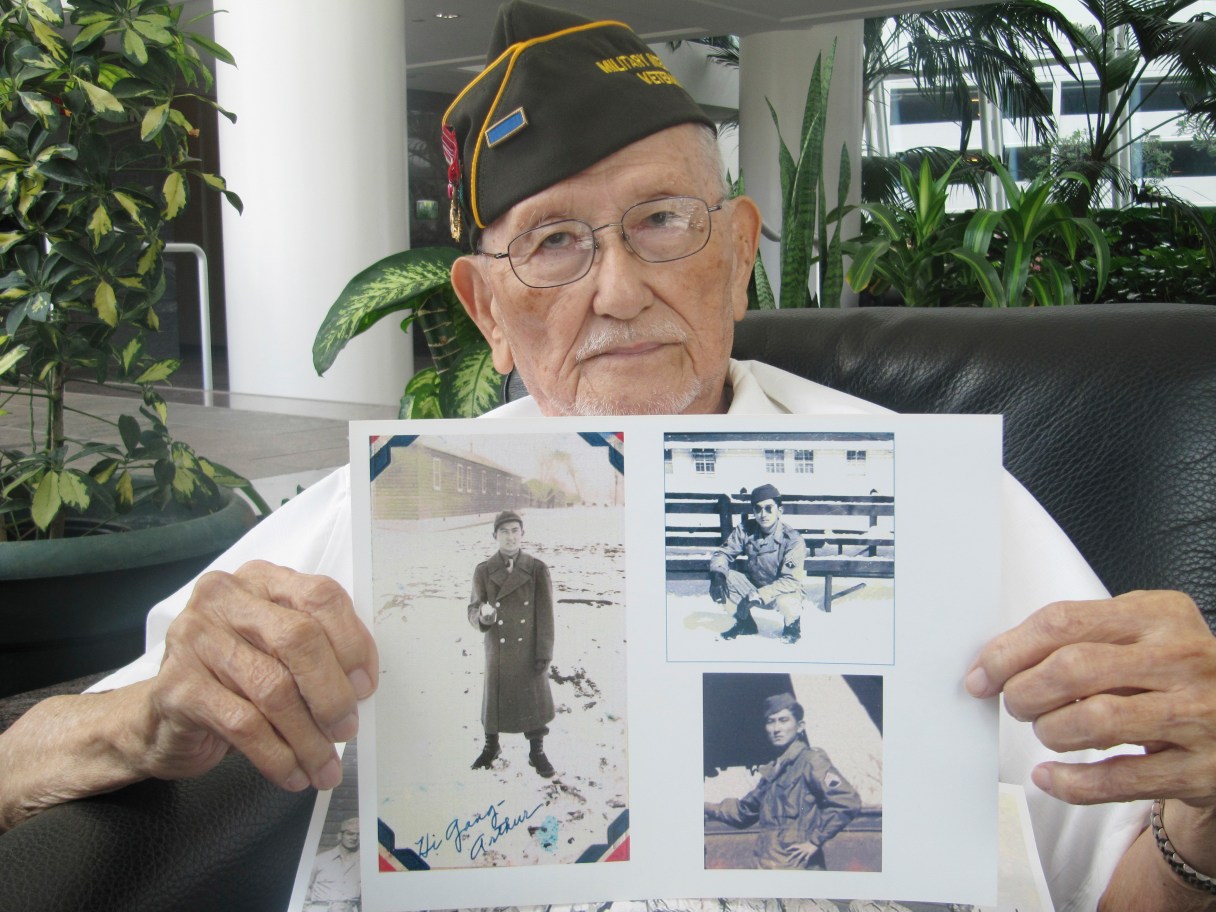
In this May 3, 2016, photo, Arthur Ishimoto, 93, a Japanese-American and U.S. Army Military Intelligence Service veteran, poses with archival photographs of himself as he is interviewed in Honolulu. Two very different visions of the hell that is war are seared into the minds of World War II survivors on opposite sides of the Pacific. Collectively, they help explain the differing reactions to President Barack Obama's decision to become the first sitting American president to visit the memorial to atomic bomb victims in Hiroshima later this week. Ishimoto said it's good for Obama to visit Hiroshima to "bury the hatchet", but there's nothing to apologize for. (AP Photo/Audrey McAvoy)
In this May 3, 2016, photo, Arthur Ishimoto, 93, a Japanese-American and U.S. Army Military Intelligence Service veteran, poses with archival photographs of himself as he is interviewed in Honolulu. Two very different visions of the hell that is war are seared into the minds of World War II survivors on opposite sides of the Pacific. Collectively, they help explain the differing reactions to President Barack Obama's decision to become the first sitting American president to visit the memorial to atomic bomb victims in Hiroshima later this week. Ishimoto said it's good for Obama to visit Hiroshima to "bury the hatchet", but there's nothing to apologize for. (AP Photo/Audrey McAvoy) In this May 3, 2016, photo, Arthur Ishimoto, 93, a Japanese-American and U.S. Army Military Intelligence Service veteran, poses with archival photographs of himself as he is interviewed in Honolulu. Two very different visions of the hell that is war are seared into the minds of World War II survivors on opposite sides of the Pacific. Collectively, they help explain the differing reactions to President Barack Obama's decision to become the first sitting American president to visit the memorial to atomic bomb victims in Hiroshima later this week. Ishimoto said it's good for Obama to visit Hiroshima to "bury the hatchet", but there's nothing to apologize for. (AP Photo/Audrey McAvoy)

TOKYO (AP) – Two very different visions of the hell that is war are seared into the minds of World War II survivors on opposite sides of the Pacific.

Michiko Kodama saw a flash in the sky from her elementary school classroom on Aug. 6, 1945, before the ceiling fell and shards of glass from blown-out windows slashed her. Now 78, she has never forgotten the living hell she saw from the back of her father, who dug her out after a U.S. military plane dropped an atomic bomb on the city of Hiroshima, Japan.

Lester Tenney saw Japanese soldiers killing fellow American captives on the infamous Bataan Death March in the Philippines in 1942. “If you didn’t walk fast enough, you were killed. If you didn’t say the right words you were killed, and if you were killed, you were either shot to death, bayonetted, or decapitated,” the 95-year-old veteran said. He still has the bamboo stick Japanese soldiers used to beat him across the face.

Different experiences, different memories are handed down, spread by the media and taught in school. Collectively, they shape the differing reactions in the United States and Japan to Barack Obama’s decision to become the first sitting American president to visit the memorial to atomic bomb victims in Hiroshima later this week.

The U.S. dropped a second atomic bomb on Nagasaki three days after Hiroshima, and Japan surrendered six days later, bringing to an end a bloody conflict that the U.S. was drawn into after Japan’s surprise attack on Pearl Harbor in December 1941.